

Key Takeaways
- Nutrient density measures nutritional value per calorie, not just price or serving size.
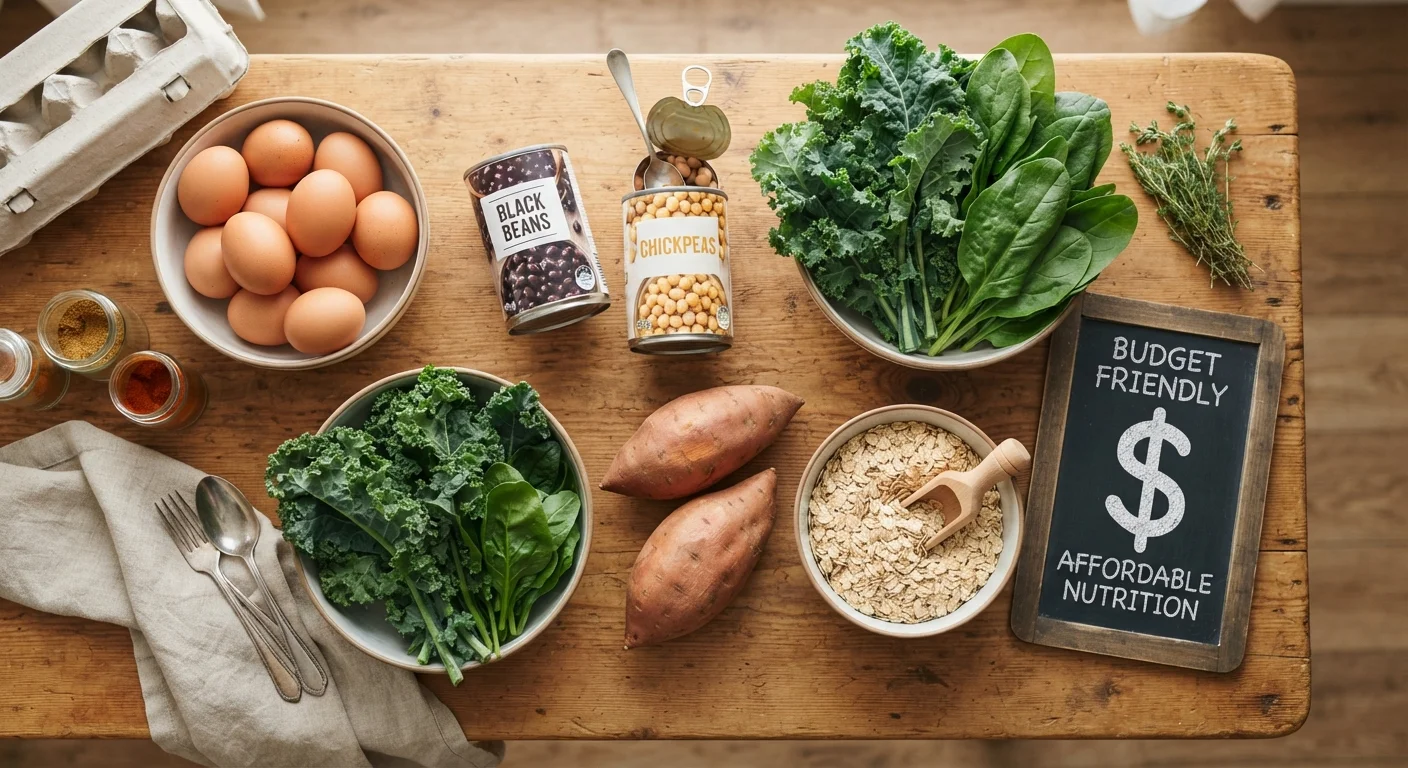
- Many of the most nutrient-dense foods - like eggs, canned beans, and leafy greens - are also among the most affordable.
- Prioritizing nutrient-dense foods can help families eat well without increasing their grocery budget.
- Ultra-processed foods tend to be calorie-dense but nutrient-poor, offering less long-term value for the money.
- Whole grains, legumes, and frozen vegetables consistently rank high in both nutrition and cost-effectiveness.
Nutrient Density
Nutrient density describes how much nutritional value - vitamins, minerals, fiber, protein, and other beneficial compounds - a food provides relative to the number of calories it contains. A food is considered nutrient-dense when it delivers a high concentration of these beneficial components without excessive calories. The concept helps consumers compare foods beyond just their price or calorie count, revealing which choices offer genuine nourishment.
Nutrition researchers and public health bodies, including the USDA and the Dietary Guidelines Advisory Committee, use nutrient density as a key framework for evaluating diet quality across populations.
Why Nutrient Density Is the Metric Grocery Budgets Need
Most families evaluate food purchases by price per ounce or calories per serving. Both are useful signals - but neither tells you how much actual nutrition you're getting. That's where nutrient density fills a gap. Rather than asking "how much does this cost?" or "how many calories does this have?", nutrient density asks a more useful question: how much nutritional work does each calorie do?
The concept isn't just an academic framework. The USDA's Dietary Guidelines for Americans explicitly encourage choosing foods with high nutrient density as a foundation for healthy eating patterns across all life stages. When families make nutrient density a lens for shopping decisions, they often find that the most nourishing choices are not the most expensive ones.
Think of it as applying the logic of value-per-dollar to food - similar to how cost-per-use thinking helps you evaluate whether a household purchase was truly worth it. The price tag alone rarely tells the whole story.
~$0.25
Estimated cost per serving of cooked lentils
According to USDA Economic Research Service data, dried legumes consistently rank among the most affordable protein and fiber sources available in U.S. grocery stores.
87%
Americans falling short of vegetable intake recommendations
The USDA Dietary Guidelines Advisory Committee has found that most Americans do not meet recommended daily vegetable intake - a gap closely linked to low consumption of nutrient-dense foods.
3x
More calcium per calorie in leafy greens vs. many snack foods
Nutrient profiling research published in nutrition journals consistently shows that dark leafy greens outperform processed snack foods on multiple key nutrient-to-calorie ratios.
What Makes a Food Nutrient-Dense - and What Doesn't
Nutrient-dense foods tend to share a few characteristics: they are relatively unprocessed, contain meaningful amounts of vitamins and minerals, and provide fiber, protein, or healthy fats alongside their calories. Examples consistently highlighted by nutrition researchers include:
- Leafy greens (spinach, kale, collard greens) - high in vitamins A, C, and K, iron, and calcium relative to their calorie count
- Legumes (lentils, black beans, chickpeas) - rich in plant-based protein, fiber, folate, and iron at a very low cost per serving
- Eggs - provide high-quality protein, choline, B vitamins, and key minerals in a compact, affordable package
- Oats - a whole grain delivering beta-glucan fiber, manganese, and B vitamins
- Canned or frozen fish (such as sardines or salmon) - concentrated sources of omega-3 fatty acids, vitamin D, and protein
- Sweet potatoes - high in beta-carotene, potassium, and fiber
By contrast, many heavily marketed packaged foods - chips, sweetened cereals, processed snack bars - are calorie-dense but nutrient-poor. They deliver energy quickly but comparatively little in the way of vitamins, minerals, or fiber. This is sometimes described as providing "empty calories."
Nutrient Density Is One Tool Among Several
While nutrient density is a valuable concept, it works best alongside other considerations - including portion sizes, food allergies, cultural food preferences, and individual health conditions. A food's overall role in a balanced diet matters more than any single metric. Families with specific health concerns, including young children, pregnant individuals, or those managing chronic conditions, should work with a registered dietitian or healthcare provider for personalized guidance.
Translating Nutrient Density Into Smarter Grocery Spending
Understanding nutrient density is most useful when it changes how you shop. A few practical principles can help families apply this concept at the store:
- Anchor meals around legumes and whole grains. Dried or canned beans, lentils, and brown rice are among the highest-value foods by any nutritional metric - and among the least expensive per serving.
- Choose frozen vegetables without hesitation. Freezing typically preserves nutrients well, and frozen produce often costs significantly less than fresh equivalents. Frozen spinach, broccoli, and peas are reliable staples.
- Compare unit costs across formats. A larger bag of oats almost always delivers more nutrition per dollar than individual packets. Canned fish frequently offers more omega-3s per dollar than fresh fillets.
- Limit ultra-processed foods not just for health, but for value. A bag of chips may feel inexpensive, but compared to a bag of lentils, it delivers a fraction of the nutrition at a similar or higher price per calorie.
For a deeper look at building nourishing meals on a realistic budget, see our guide on feeding a family on a budget without cutting nutritional corners.
This article is for general informational and educational purposes only and does not constitute medical or dietary advice. Consult a qualified healthcare professional or registered dietitian for guidance specific to your family's health needs.