

Key Takeaways
- Audit what your child already owns before buying a single new item for the school year.
- Buying one size up in durable basics can add months of wear during growth spurts.
- A small number of mix-and-match pieces creates more outfit combinations than a large, mismatched wardrobe.
- Proper clothing care significantly extends how long school clothes last.
- Hand-me-downs and secondhand pieces can fill wardrobe gaps without increasing spend.
Summary
22 items · 30-60 minutes
Start with a Clear-Out, Not a Shopping Cart
The most common wardrobe mistake families make before the school year is reaching for a shopping list before taking stock of what already exists. A thorough audit of your child's current clothes takes less than an hour and often reveals that you need far fewer new items than you assumed.
Lay out everything your child currently owns. Check for fit, condition, and whether the item meets school dress code requirements. Be honest: clothes that are visibly worn, stained beyond repair, or already too small should be removed. What remains forms your baseline - the items that can carry through to the new term with no extra spend.
If you have younger children coming up, consider setting aside outgrown items that are still in good condition. Our guide on making hand-me-downs work covers how to assess, clean, and store these pieces so they stay presentable for the next wearer.
Once you know your baseline, you can identify genuine gaps. These gaps - not a generic shopping list - should drive every purchasing decision that follows.
Pre-Season Audit
Core Wardrobe Building
Budget and Spending Controls
Care and Longevity
Build Around Versatile, Durable Pieces
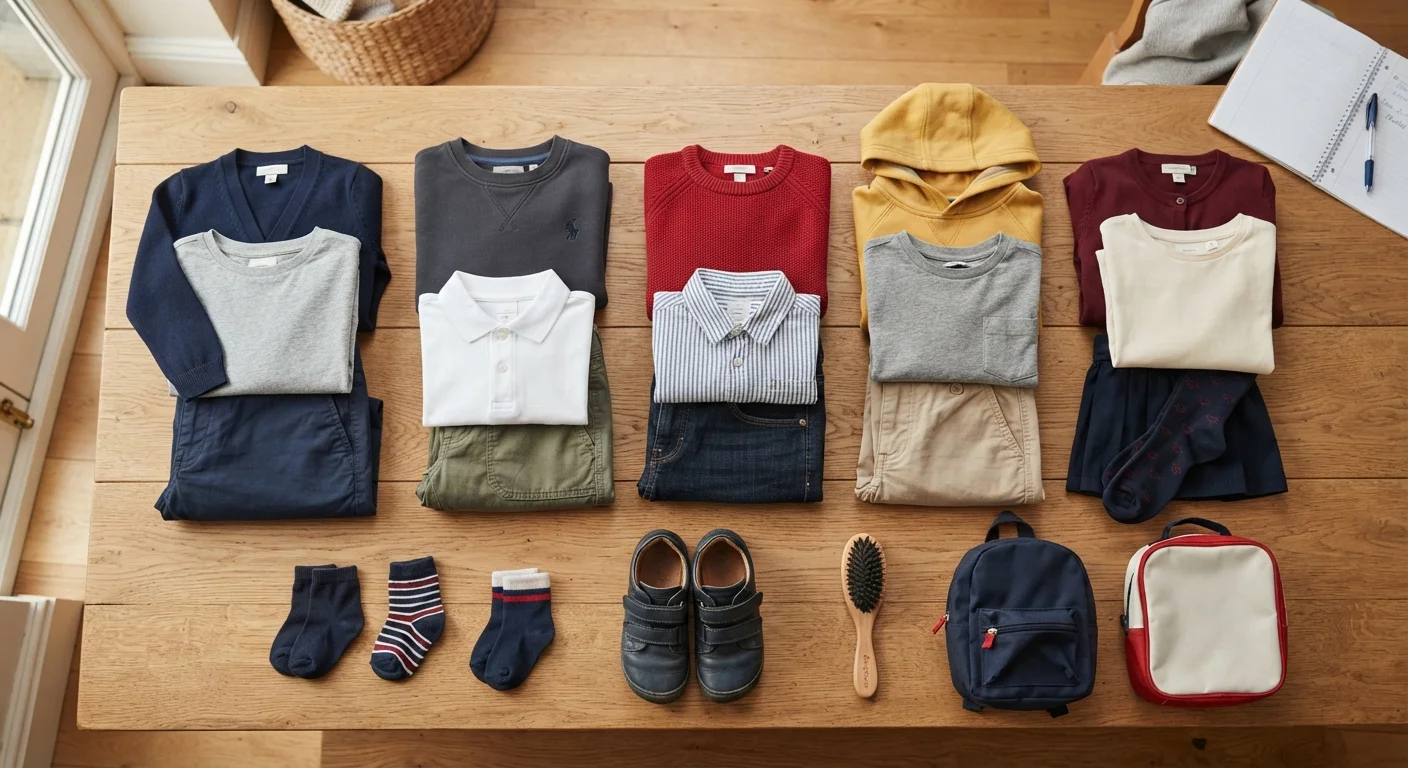
School wardrobes work best when built on a core of items that mix and match easily. A child who owns five neutral tops and three bottoms can create more than a dozen distinct outfit combinations, whereas fifteen poorly coordinated pieces may produce far fewer wearable options.
Durability matters as much as versatility. Fabrics that hold their shape through repeated washing - cotton-polyester blends for everyday tops, reinforced knees on trousers - will outlast cheaper alternatives that look worn after a few weeks. When budget allows, prioritizing quality in the items worn most frequently (school trousers, everyday footwear) tends to reduce overall annual spend.
Avoid Over-Buying 'Just in Case'
It's tempting to stock up heavily at the start of the school year, but children's sizing can shift unexpectedly mid-year. Purchasing too far ahead in larger sizes risks items being skipped entirely if a child's proportions change in ways that don't match standard size increments. Buy what's needed for the near term and revisit at natural mid-year checkpoints.
Sizing strategy also matters for growing children. Buying bottoms with adjustable waistbands and selecting tops at the upper end of your child's current size range can extend wear by several months. For a deeper look at making clothes span seasonal transitions, see our article on dressing kids for every season without buying new each time.
Accessories - a neutral-toned jacket, a single backpack that coordinates with most outfits - round out the wardrobe without requiring significant investment. Think of them as multipliers for the core pieces already in rotation.
Measuring tape
Take accurate height, waist, and chest measurements before purchasing to avoid sizing guesswork.
Laundry mesh bags
Protect delicate school items and small accessories during machine washing to extend their lifespan.
Clothing labels or iron-on name tags
Label all school clothes to reduce loss, particularly essential for younger children.
Storage bins or vacuum bags
Store next-size-up clothing and out-of-season pieces in an organized, accessible way.
Budget Discipline and Longer-Term Planning
Clothing budgets for school-age children are easier to manage when treated as an annual plan rather than a series of reactive purchases. Deciding upfront how much the household can allocate for the school year - and breaking that into must-have replacements versus optional upgrades - prevents the overspend that often comes from last-minute shopping.
For families new to structured clothing budgets, the family fashion on a fixed budget guide provides a practical framework for prioritizing and planning purchases with intention. Broader household budgeting strategies are also covered in our budgeting basics hub.
Clothing Care Directly Affects Annual Spend
Families that adopt consistent care habits - correct wash temperatures, prompt repairs, appropriate drying methods - typically replace school clothing less often than those who don't. This isn't a minor consideration: proper care can extend the usable life of frequently worn items by a full school term or more, effectively reducing the per-wear cost of every piece in the wardrobe.
Care habits have a direct and often underestimated impact on clothing longevity. Washing clothes at appropriate temperatures, air-drying items prone to shrinking, and addressing minor repairs promptly can meaningfully extend garment life. Our clothing care habits guide details the key practices every household can adopt. Keeping a simple seasonal review in the calendar - rather than waiting until clothes are visibly outgrown - also helps families stay ahead of wardrobe gaps without resorting to rushed, unplanned purchases. See our family fashion calendar for a practical year-round reference.