

Key Takeaways
- Most Americans consume roughly half the daily fiber their bodies need.
- Fiber supports gut health, blood sugar regulation, and cardiovascular function.
- Both types of fiber - soluble and insoluble - play distinct and complementary roles.
- Many high-fiber foods are among the most affordable items in any grocery store.
- Small, consistent food swaps can meaningfully close the fiber gap for most families.
Dietary Fiber
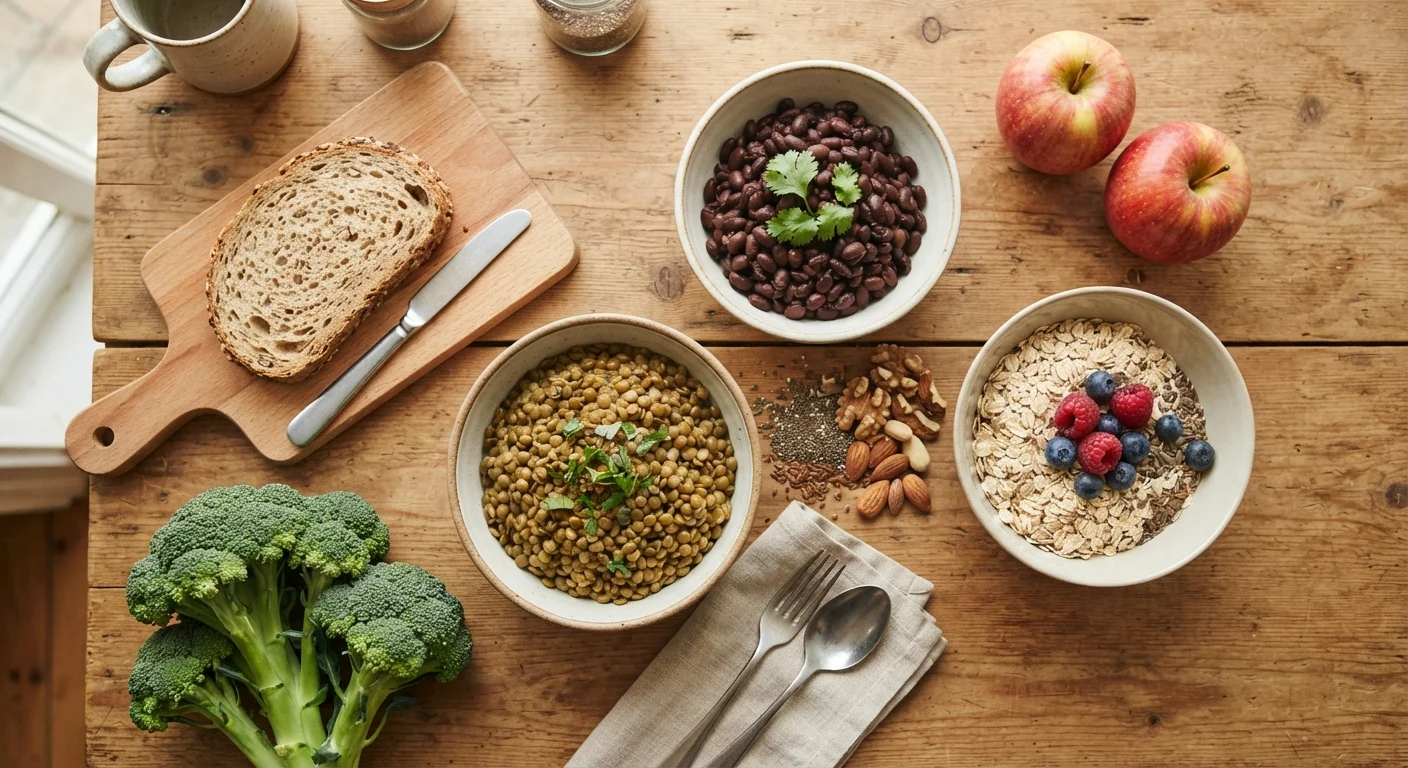
Dietary fiber is the indigestible part of plant foods - fruits, vegetables, legumes, and grains - that passes through your digestive system largely intact. Unlike other carbohydrates, your body can't break it down for energy. Instead, fiber helps regulate digestion, supports blood sugar stability, and feeds the beneficial bacteria living in your gut. It comes in two main forms: soluble fiber, which dissolves in water and forms a gel-like substance, and insoluble fiber, which adds bulk to stool and keeps things moving.
Soluble fiber (found in oats, beans, and apples) is particularly associated with modest reductions in LDL cholesterol levels; insoluble fiber (found in wheat bran and most vegetables) primarily supports bowel regularity and transit time.
The Gap Between What We Need and What We Eat
Fiber is one of the most studied nutrients in nutrition science, yet it remains one of the most consistently under-consumed. Research from the National Health and Nutrition Examination Survey (NHANES) has repeatedly found that average American adults consume somewhere in the range of 10-15 grams of fiber per day - roughly half or less of what most health guidelines recommend.
This isn't a willpower problem. It's largely a structural one. The modern American food environment is built around processed, refined products that have had fiber stripped out during manufacturing. When a family's grocery cart is dominated by white bread, packaged snacks, and processed breakfast cereals, the fiber simply isn't there - regardless of how thoughtfully meals are planned.
~10-15g
Average daily fiber intake for American adults
NHANES data consistently shows most U.S. adults consume roughly half or less of the recommended daily fiber amount.
25-38g
Recommended daily fiber for adults
The Dietary Guidelines for Americans recommend 25g/day for women and 38g/day for men, with needs varying by age and health status.
95%
Americans not meeting fiber recommendations
Fiber is recognized as a shortfall nutrient in the Dietary Guidelines for Americans, with estimates suggesting the vast majority of the population falls short.
Understanding why fiber matters starts with understanding what it actually does inside the body - and why its absence has real, measurable consequences over time.
What Fiber Actually Does in the Body
Fiber's reputation often stops at digestion, but its effects extend well beyond regularity. Here's a straightforward breakdown of what the research shows:
- Gut health: Soluble fiber ferments in the large intestine, feeding beneficial bacteria. This supports a diverse gut microbiome, which is increasingly linked to immune function and even mood regulation.
- Blood sugar control: Soluble fiber slows the absorption of sugar into the bloodstream, which helps prevent sharp spikes and crashes after meals - relevant for families managing prediabetes or trying to sustain energy through the day.
- Heart health: Adequate fiber intake - particularly soluble fiber from oats and legumes - is associated with modest reductions in LDL cholesterol levels in multiple clinical reviews.
- Satiety and weight: Fiber adds physical bulk to food and slows digestion, which contributes to feeling full longer. This can make calorie management more sustainable without strict restriction.
- Bowel regularity: Insoluble fiber increases stool bulk and speeds transit time through the colon, reducing the likelihood of constipation.
“Dietary fiber is one of the most important yet underconsumed nutrients in the American diet. Increasing intake of fiber-rich foods such as vegetables, fruits, whole grains, and legumes is one of the most impactful changes most people can make.”
— Dietary Guidelines Advisory Committee, Federal advisory body providing the scientific foundation for U.S. dietary recommendations
For value-conscious households, one underappreciated angle is that fiber-rich foods - beans, lentils, oats, cabbage, carrots - are consistently among the most affordable items in any grocery store. Eating more fiber doesn't require a premium food budget.
Why Fiber Quietly Disappears From Family Plates
Several overlapping factors push fiber out of the household diet without families noticing:
Processing removes it
When whole wheat is milled into white flour, the bran and germ are discarded - taking most of the fiber with them. The same principle applies to fruit juice versus whole fruit, or refined rice versus brown rice. See our breakdown of whole grains vs. refined grains for a closer look at how this trade-off affects the whole family.
Convenience foods aren't designed for it
Many packaged foods marketed as healthy contain only 1-2 grams of fiber per serving - meaningful if they're part of a varied diet, but insufficient on their own. Small, repeated choices at the store shape what families actually eat, often in ways that quietly work against nutritional goals.
Fiber-rich foods are sometimes seen as bland or time-consuming
Lentils, beans, and vegetables have an unfair reputation for requiring elaborate preparation. In reality, canned beans require no cooking at all, and many high-fiber foods take minutes to prepare. This is partly a myth problem - and one that evidence-based nutrition education can help correct.
Start Slow to Avoid Digestive Discomfort
If your household currently eats very little fiber, adding large amounts quickly can cause bloating or gas as the gut microbiome adjusts. Introduce one or two new fiber-rich foods per week rather than overhauling meals all at once. Drinking adequate water throughout the day also helps fiber move through the digestive system comfortably.
Practical Ways to Raise Fiber Intake Without Overhauling Meals
Dramatic dietary overhauls rarely stick. What does work is layering small, consistent changes onto existing routines - the same principle that applies to building any lasting healthy habit in a busy household.
Consider these straightforward substitutions and additions:
- Swap white rice for brown rice or add a handful of frozen peas to white rice while cooking.
- Add a can of rinsed chickpeas or black beans to soups, salads, or pasta dishes once or twice per week.
- Choose whole grain bread with at least 2-3 grams of fiber per slice, verified on the nutrition label.
- Offer whole fruit instead of juice - the fiber stays intact, and the sugar absorption is slower.
- Stir a tablespoon of ground flaxseed or chia seeds into oatmeal, yogurt, or smoothies.
- Keep raw vegetables accessible in the fridge - bell pepper strips, carrot sticks, and celery require no preparation beyond washing.
These changes don't require a larger grocery budget. In many cases, whole plant foods cost less per serving than the processed alternatives they replace, making fiber improvement one of the few nutritional goals that actually aligns with household cost management.
This article is for general informational and educational purposes only and does not constitute medical or dietary advice. Individual nutritional needs vary. Please consult a qualified healthcare professional or registered dietitian for guidance specific to your health circumstances.