

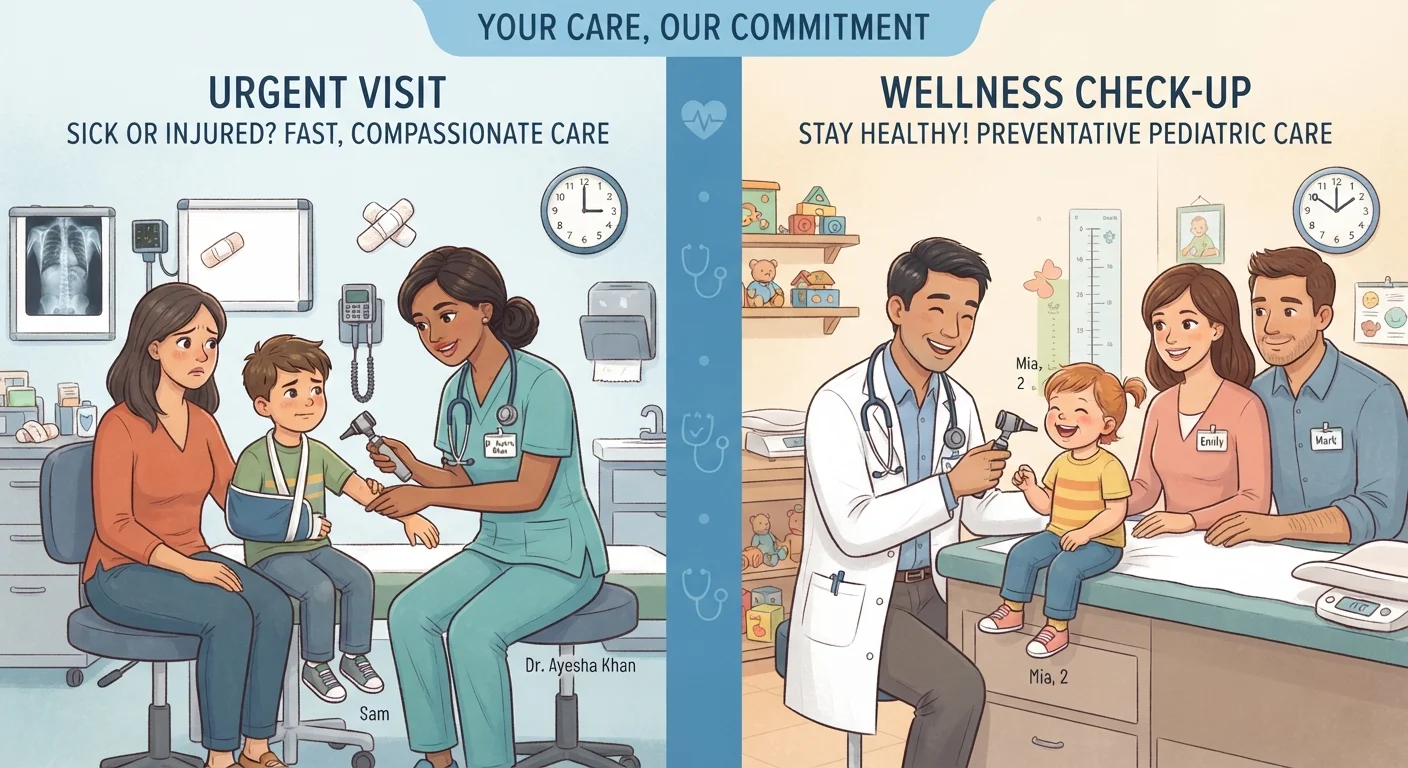
Key Takeaways
- Reactive care treats illness after symptoms appear; preventive care aims to stop illness before it develops.
- Preventive services like screenings and vaccines are often covered by insurance at no out-of-pocket cost under the ACA.
- Many chronic conditions - including type 2 diabetes and heart disease - have well-documented preventable risk factors.
- Reactive care remains essential; the two approaches work together rather than replacing each other.
- Delaying preventive appointments can increase both health risk and eventual treatment costs for families.
Option A
Reactive Healthcare
The traditional, symptom-driven approach to medical care.
Best for: Addressing acute illness, injuries, and conditions that have already developed and require immediate or short-term treatment.
Option B
Preventive Healthcare
The proactive strategy focused on stopping illness before it starts.
Best for: Families looking to reduce long-term health risks, catch conditions early, and lower overall medical burden through screenings and healthy habits.
If your family is managing an acute illness, injury, or sudden symptoms
Reactive Healthcare
Reactive care is the appropriate and necessary response when symptoms are already present. Timely diagnosis and treatment are critical in these situations.
If you want to reduce long-term risk and catch conditions early
Preventive Healthcare
Regular screenings, vaccinations, and wellness visits provide the earliest opportunity to identify risk factors before they become serious health events.
If cost management is a priority for your household
Preventive Healthcare
Many preventive services carry no cost-sharing under ACA-compliant plans, and early intervention generally costs far less than treating advanced illness.
If you have children or family members in high-risk groups
Preventive Healthcare
Age-appropriate screenings, immunizations, and well-child visits are foundational to healthy development and reducing disease burden across the lifespan.
What Each Approach Actually Means
Reactive healthcare is what most people picture when they think of a doctor's visit: something goes wrong, symptoms appear, and you seek care. This includes emergency room visits, urgent care trips, and specialist referrals triggered by a diagnosed condition. Reactive care is essential - it is the appropriate response when illness or injury has already occurred.
Preventive healthcare, by contrast, focuses on reducing the probability that illness or injury will occur in the first place, or detecting conditions at a stage when they are easier and less costly to manage. This includes annual physical exams, childhood immunizations, cancer screenings, blood pressure monitoring, and counseling on lifestyle habits like nutrition and physical activity.
The distinction matters because it shapes how families allocate time, resources, and attention toward health. For a broader overview of what preventive services typically include, see what preventive care actually covers for every family member.
| Criterion | Reactive Healthcare | Preventive Healthcare |
|---|---|---|
| When it occurs | After symptoms appear | Before symptoms develop |
| Primary goal | Treat existing illness or injury | Prevent or detect illness early |
| Typical cost structure | Variable; often higher per episode | Many services covered at $0 under ACA |
| Examples | ER visits, specialist treatment | Screenings, vaccines, annual exams |
| Frequency | As needed when illness strikes | Scheduled, regular intervals |
| Long-term health impact | Addresses existing conditions | Reduces risk of future conditions |
How They Compare Across Key Dimensions
The two approaches differ significantly in timing, cost structure, and health outcomes. Reactive care often involves higher per-visit costs - specialist fees, diagnostic tests, and sometimes hospitalization - because the condition being treated has already progressed. Preventive care, while requiring consistent engagement over time, is associated with catching conditions earlier, when treatment is typically less intensive.
Under the Affordable Care Act (ACA), most ACA-compliant health insurance plans are required to cover a defined set of preventive services - such as recommended vaccinations and screenings - without cost-sharing when delivered by an in-network provider. This makes preventive care financially accessible for many insured families, though coverage details vary by plan. Always verify your specific coverage with your insurer or a licensed benefits advisor.
75%
Of US healthcare spending on chronic disease
The CDC estimates that approximately 75% of US healthcare spending is attributable to chronic diseases, many of which have modifiable risk factors addressable through preventive care.
1 in 3
Adults with undiagnosed prediabetes
According to the CDC, roughly 1 in 3 American adults has prediabetes, and the majority are unaware - a condition detectable through routine blood glucose screening.
$0
Cost-sharing for covered preventive services
Under ACA-compliant health plans, a defined set of preventive services must be provided without copayments or deductibles when using in-network providers, per federal law.
It is worth noting that reactive and preventive care are not mutually exclusive - they are complementary. A family may attend annual wellness visits (preventive) and also visit urgent care when a child develops a fever (reactive). The goal is not to choose one over the other, but to understand how investing more consistently in prevention can reduce the frequency and severity of reactive care needs over time.
Why Families Often Default to Reactive Care - and the Hidden Cost
Several real barriers push families toward reactive-only healthcare. Busy schedules, uncertainty about what insurance covers, and the absence of obvious symptoms all make it easy to delay preventive appointments. Some families also hold the misconception that a preventive visit is unnecessary if they feel well - a misunderstanding that can have meaningful long-term consequences.
Conditions such as hypertension, prediabetes, and certain cancers often develop without noticeable symptoms until they are significantly advanced. Routine screenings exist precisely because clinical evidence supports their ability to detect these conditions at earlier, more treatable stages. Why preventive care appointments get delayed explores the real-world consequences of postponing these visits in more depth.
For families curious about common misconceptions - including doubts about vaccine safety or the value of annual check-ups - preventive care myths reviews these claims against current public health guidance.
Preventive Care Is Not One-Size-Fits-All
Recommended screenings and interventions depend on age, biological sex, family history, and individual risk factors. What counts as preventive care for a 45-year-old differs significantly from guidance for a toddler or a 70-year-old. Always work with a qualified healthcare provider to determine which preventive services are appropriate for each family member. General recommendations from bodies like the USPSTF are a useful starting point, not a personal prescription.
Building a Prevention-Forward Family Health Strategy
Shifting toward a more preventive approach does not require overhauling family life overnight. It starts with understanding which screenings and vaccines are recommended at each life stage. The U.S. Preventive Services Task Force (USPSTF) and the Advisory Committee on Immunization Practices (ACIP) publish evidence-based recommendations that clinicians use to guide preventive care. These recommendations vary by age, sex, and individual risk factors - your primary care provider is the right starting point for personalized guidance.
Mental wellness is also a recognized dimension of preventive health. Stress management, sleep hygiene, and early mental health support can reduce the risk of both psychological and physical health decline. Our mental wellness hub offers everyday strategies for children, parents, and older adults at home.
For families starting from scratch or re-engaging with the healthcare system, a complete starting point for family preventive health walks through key screenings, vaccine schedules, and how to work effectively with providers. And for a lifespan perspective - from infancy through older adulthood - preventive care across a lifetime provides stage-by-stage guidance.
This article is for general informational and educational purposes only and does not constitute medical advice. Consult a qualified healthcare provider before making decisions about your or your family's health care.