

Key Takeaways
- Mental stimulation is as important as physical exercise for a pet's overall wellbeing.
- Most effective enrichment activities cost little or nothing and use everyday household items.
- Short, consistent daily routines deliver more benefit than occasional elaborate sessions.
- Scent work, foraging, and novel environments engage a pet's natural instincts effectively.
- Bored pets are more likely to develop stress-related behaviours like chewing or excessive barking.
Why Mental Enrichment Matters for Every Pet
Physical walks and feeding schedules cover only part of what pets need to thrive. Dogs, cats, and small animals all have brains wired for problem-solving, exploration, and novelty - and when that need goes unmet, behaviour often suffers. Destructive chewing, excessive vocalisation, and repetitive pacing are among the most common signs of under-stimulation, as outlined in our guide on recognising stress signals in pets.
The encouraging reality is that mental enrichment doesn't demand specialist equipment or a large budget. Consistency and creativity matter far more than expense. The activities below are low-effort, low-cost, and grounded in what animal behaviour research tells us pets genuinely find rewarding.
Enrichment Needs Vary by Species and Age
A young, high-energy dog needs more daily mental stimulation than a senior cat. Small animals like rabbits and guinea pigs have their own enrichment requirements - foraging, tunnels, and social contact - that differ significantly from those of dogs or cats. When in doubt about what's appropriate for your specific pet's age or health condition, a veterinarian can offer tailored guidance.
Seven Low-Cost Ways to Enrich Your Pet's Day
Scatter feeding instead of bowl meals
Rather than placing food in a bowl, scatter your dog's or cat's measured meal across a patch of grass, a snuffle mat made from fleece strips, or even a folded towel. The animal has to use its nose and paws to locate every piece, which engages scent-processing areas of the brain intensively. A typical scatter-feeding session of five to ten minutes provides more cognitive work than a ten-minute walk for many dogs.
For cats, hiding small portions of dry food around a room taps into their natural hunting sequence - stalking, finding, and consuming - which indoor life rarely offers.
Scatter feeding turns a routine meal into a problem-solving session that engages the brain as much as a walk.
DIY cardboard puzzle feeders
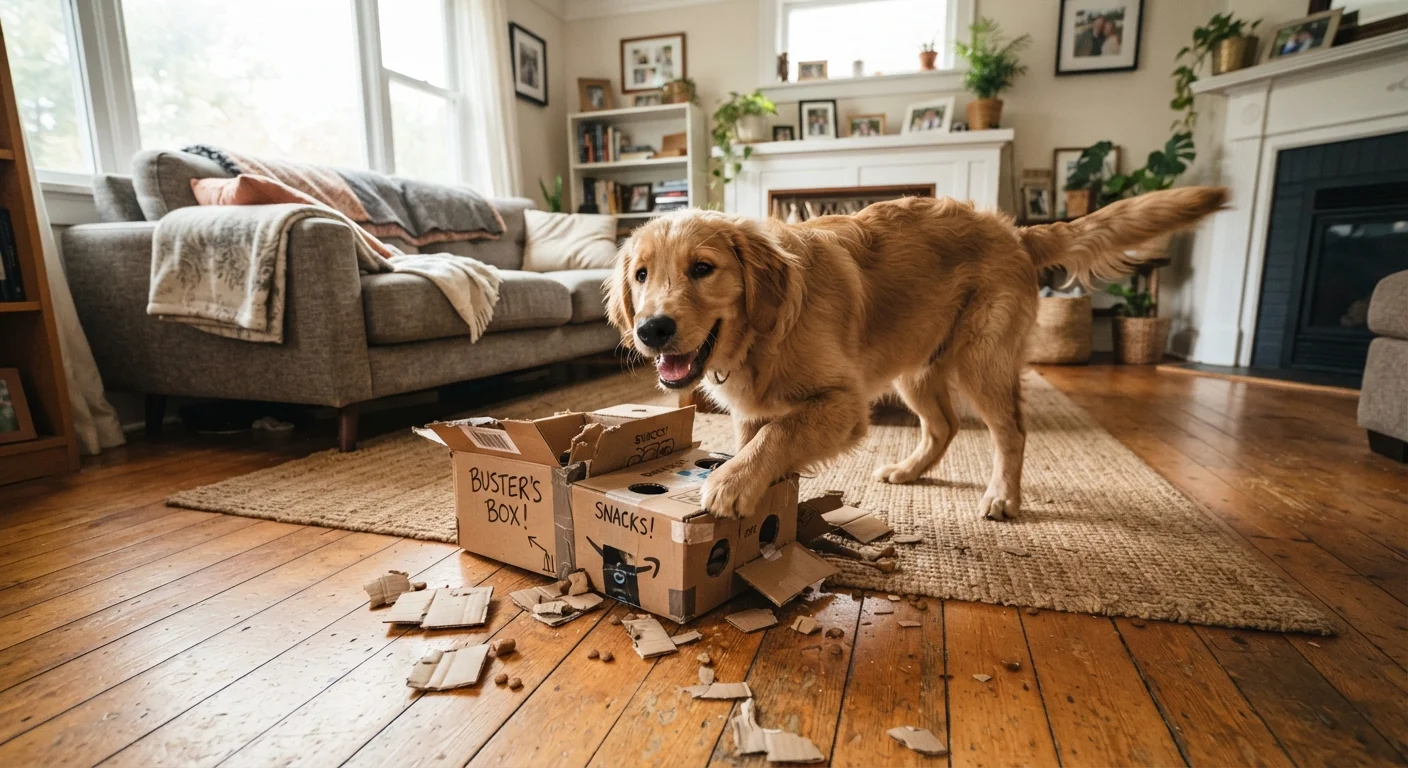
Egg cartons, toilet roll tubes, and small cardboard boxes can be fashioned into simple puzzle feeders in under two minutes. Place treats or kibble inside, fold the ends, and let your pet figure out how to access them. Adjust difficulty by taping openings more securely as your pet's skill improves.
The key principle here is mild frustration followed by success - this cycle builds persistence and confidence. Keep sessions short (five to fifteen minutes) and always ensure the animal can eventually access the reward to avoid discouraging them.
Cardboard puzzles built from household recycling can be as effective as commercial puzzle feeders costing far more.
Nose work and scent trails
A dog's sense of smell is estimated to be tens of thousands of times more sensitive than a human's, and using it is genuinely tiring in a positive way. You can create simple scent games by rubbing a treat on your hands, then hiding it under one of three cups and asking your dog to indicate which one. Gradually increase complexity by hiding scented items around a room.
Cats respond well to scent enrichment too - introducing a new safe plant, a piece of worn fabric from a family member, or rotating toys stored in a sealed bag with dried catnip provides ongoing olfactory novelty.
Engaging a dog's nose for fifteen minutes can be more tiring than a half-hour physical walk.
Rotating and 'disappearing' toys
Novelty drives curiosity. Rather than leaving all toys out permanently - which leads to rapid disinterest - store most toys away and rotate a small selection every two to three days. When a toy reappears after a week's absence, many pets engage with it as if it were new.
This strategy works well alongside creating a pet-friendly home environment that supports exploration and rest in equal measure. A well-arranged space with varied textures, heights, and hiding spots amplifies the value of even basic toys.
Rotating toys on a weekly cycle keeps pets engaged without spending a penny on new items.
Training micro-sessions throughout the day
Five-minute training sessions spread across the day - teaching a new cue, reinforcing an existing one, or working through a simple sequence - provide both mental challenge and social bonding. The effort of learning and recalling commands is cognitively demanding for most animals.
Unlike extended training blocks, brief sessions fit naturally into a family's schedule: a few repetitions before breakfast, a short session during a TV ad break, a quick practice before dinner. Using the pet's regular meal allowance as rewards means no extra food cost is involved.
Three five-minute training sessions daily deliver more mental benefit than one extended weekly session.
Window and outdoor exposure without leaving home
For cats especially, access to a safely screened window with an interesting view - birds, squirrels, street activity - provides hours of low-energy stimulation. Placing a perch or folded blanket on the windowsill makes the spot more inviting. A simple DIY bird feeder positioned near the window can turn a quiet pane into a daily nature programme.
Dogs benefit from supervised time in a secure garden or balcony where they can sniff ambient scents carried on the breeze - something a walk doesn't always replicate because the pace is dictated by the owner rather than the animal's curiosity.
A window perch with an interesting outdoor view can entertain a cat for several hours each day at zero cost.
Social interaction and handling variety
For many pets, the most meaningful enrichment is time with their people - but the quality of interaction matters. Structured play (a wand toy session, a fetch game with rules, hide-and-seek in different rooms) is more stimulating than passive co-presence. Varying who in the family leads playtime also introduces mild social novelty.
It's worth noting - as explored in our article on common pet comfort myths - that cats are not as self-sufficient as many owners assume. Most domestic cats benefit from daily interactive play just as much as dogs do.
Structured, varied interaction with family members is often the single most effective enrichment a pet can receive.
Start Small and Build Gradually
If your pet has little experience with puzzle feeders or scent games, introduce one new activity at a time and keep sessions under ten minutes initially. Some animals take a few days to understand what's expected. Patience and low-stakes repetition build confidence faster than pushing for complexity too soon.
Building Enrichment Into Your Everyday Routine
The biggest barrier to consistent enrichment isn't money - it's forgetting to do it. Tying activities to existing habits makes them stick. Hide a portion of your dog's kibble before your morning coffee. Set a cardboard foraging box out while you prep dinner. Rotate two or three activities across the week so pets encounter novelty without requiring you to invent something new each day.
If you're already thinking carefully about how you budget for your pet, this pairs well with strategies for feeding a dog on a tight budget - because the same resourceful mindset applies to both nutrition and enrichment. A stimulated, low-stress pet also tends to be a healthier one, which supports the broader goal covered in our Pet Health & Wellness hub.
This article is for general informational purposes only. For personalised guidance on your pet's health or behaviour, consult a qualified veterinarian or accredited animal behaviourist.