

Key Takeaways
- A capsule wardrobe focuses on versatility and intentional selection, not on owning as little as possible.
- It differs from minimalism - the goal is function and value, not a specific item count.
- Capsule thinking works at every age, from school-age children to working adults.
- Families can reduce clothing decision fatigue and overspending by applying this framework.
- A capsule wardrobe is not a one-time project - it requires seasonal reassessment.
Capsule Wardrobe
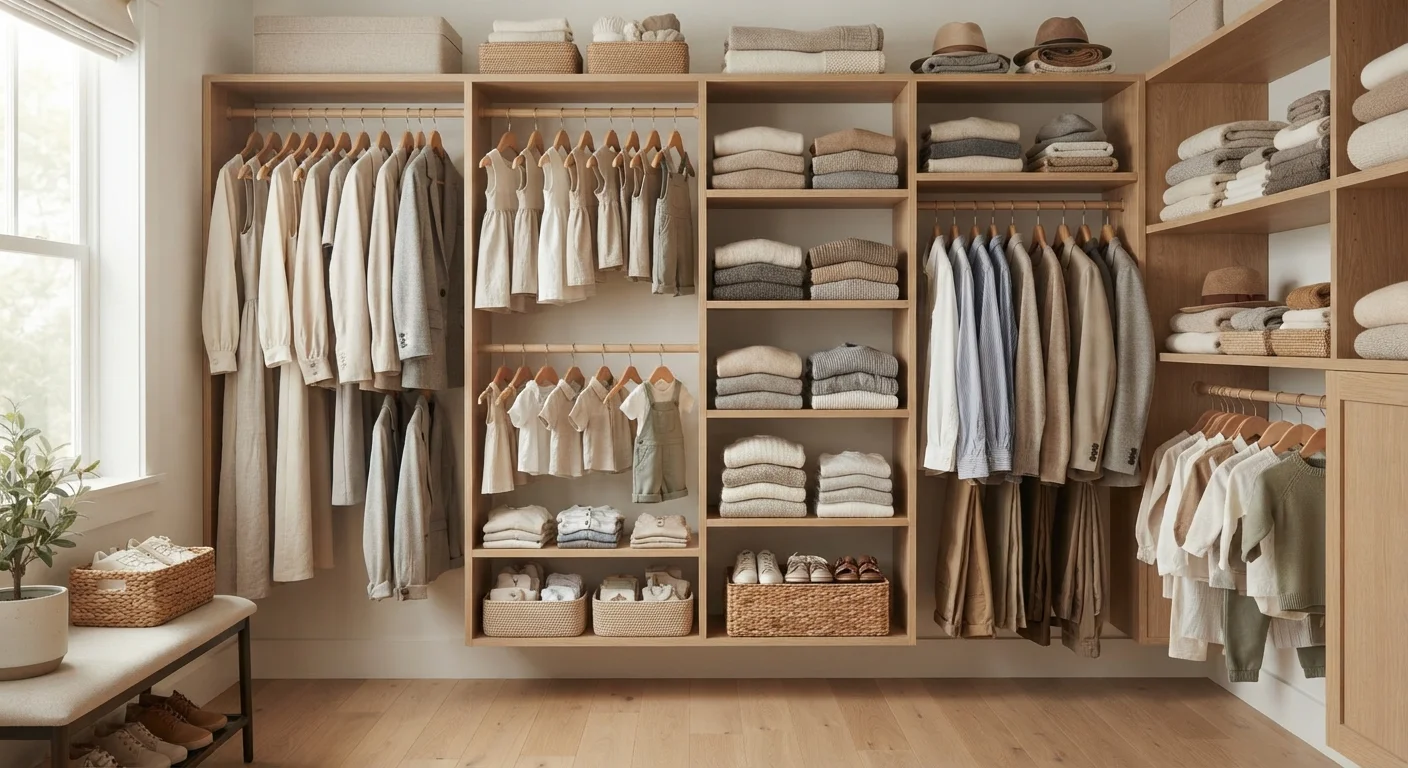
A capsule wardrobe is a curated, small collection of clothing where every item serves a clear purpose and works well with the other pieces in the set. Rather than owning many garments, the goal is to own fewer, more versatile ones that can be mixed and matched across different occasions. The concept applies to any family member - adults, teens, and children alike.
The term was coined by London boutique owner Susie Faux in the 1970s and later popularized by designer Donna Karan, though the approach has since evolved well beyond its fashion-industry origins.
The Core Idea: Fewer Pieces, More Purpose
A capsule wardrobe is built on one straightforward principle: every item you own should earn its place. That means each garment works with multiple others, fits your actual life, and gets worn regularly - not just held in reserve for an occasion that rarely comes.
This is different from simply owning less clothing. A person with a cluttered closet full of ill-fitting impulse purchases and someone who has thoughtfully curated 30 versatile pieces are in very different positions - even if the minimalist technically owns fewer items. The capsule concept is about intentional selection, not arbitrary reduction.
For families, this distinction matters. A household managing clothing for multiple people across different ages, activities, and seasons needs a practical framework, not an aesthetic philosophy. The capsule model provides exactly that: a way to ask, for each item, does this genuinely serve us?
Start With an Audit, Not a Shopping List
Before adding any new pieces, go through what you already own and identify what gets worn versus what sits untouched. Most households already own the foundation of a capsule - they just need to edit out the items that don't integrate with the rest. Shopping comes after, not before, this step.
How It Differs from Minimalism - and Why That Matters
Minimalism as a lifestyle movement encourages reducing possessions broadly - sometimes to extreme degrees. A capsule wardrobe has a much narrower, more pragmatic scope. Its goal is a wardrobe that functions well for your real life, not a wardrobe that looks good in a photo or hits a particular item count.
In practice, this means a parent who coaches youth sports on weekends and attends client meetings during the week may have a larger capsule than a retired adult with a quieter schedule. A teenager involved in theater, athletics, and a part-time job may genuinely need more categories of clothing than a younger sibling. The capsule framework accommodates these differences because it's built around your actual needs, not an idealized template.
This framing also removes the guilt that often accompanies the concept. Owning a larger capsule isn't a failure - it's the appropriate response to a more varied life. What matters is that the collection is intentional, not that it's small.
The 'Right' Capsule Size Varies by Lifestyle
Widely cited capsule counts - often 30 to 40 items - were originally developed with adult professional wardrobes in mind. Families with young children, varied climates, or members who participate in sports or activities may find these numbers don't directly apply. Use them as loose reference points rather than firm targets.
Applying the Concept Across the Family
The capsule model scales differently depending on the family member. For adults, the focus is on versatile staples that transition between contexts - workwear that doubles as casual wear, for example. See our guide to getting more outfits from fewer pieces for a deeper look at how adults can apply this in practice.
For school-age children, the calculus shifts. Growth spurts, school dress codes, and the sheer pace of active childhood mean the capsule needs more frequent reassessment. The principle remains the same - select pieces that work together and cover real needs - but the timeline is shorter. Our article on building a school-year wardrobe for growing children walks through exactly this challenge.
Across all ages, the household benefits from thinking about clothing as a system rather than a series of individual purchases. When each person's wardrobe is intentional, the family spends less time managing laundry overload, making last-minute shopping trips, and replacing items that were never quite right to begin with.
~20%
Clothes worn regularly from the average wardrobe
Consumer behavior research consistently suggests most people wear only a small fraction of what they own on a regular basis, indicating significant wardrobe inefficiency.
3-4x
More outfit combinations per item in a coordinated wardrobe
Wardrobe stylists and organizational experts note that a small, intentionally coordinated collection typically yields far more wearable combinations than an unplanned larger one.
Common Misconceptions - and Realistic Expectations
One of the most persistent myths about capsule wardrobes is that they require significant upfront spending on expensive, high-quality clothing. While durability does matter, the concept doesn't mandate a particular price point. Families operating on tight budgets can apply capsule thinking just as effectively - the focus is on selecting wisely from what's available and accessible, not on purchasing premium goods.
For a grounding framework on spending with intention, family fashion on a fixed budget offers practical starting points. If you're thinking about the broader picture of household spending, budgeting basics covers the fundamentals of managing family finances with purpose.
Another misconception is that building a capsule wardrobe is a one-time event. In reality, it's an ongoing practice. Seasonal shifts, changing body shapes, new job requirements, and children growing out of clothing all mean the wardrobe needs regular review. Think of it less as a finished project and more as a maintained system - one that gets easier to manage the longer you apply it. The Family Fashion Calendar provides a useful framework for timing those reviews throughout the year.
“A capsule wardrobe should serve your life as it actually is - not the life you think you should be living. Start with your real daily routine and build outward from there.”
— Susie Faux, London boutique owner credited with coining the capsule wardrobe concept