

Key Takeaways
- Mindfulness means paying deliberate attention to the present moment - no special equipment needed.
- Research suggests regular mindfulness practice can support stress regulation across all age groups.
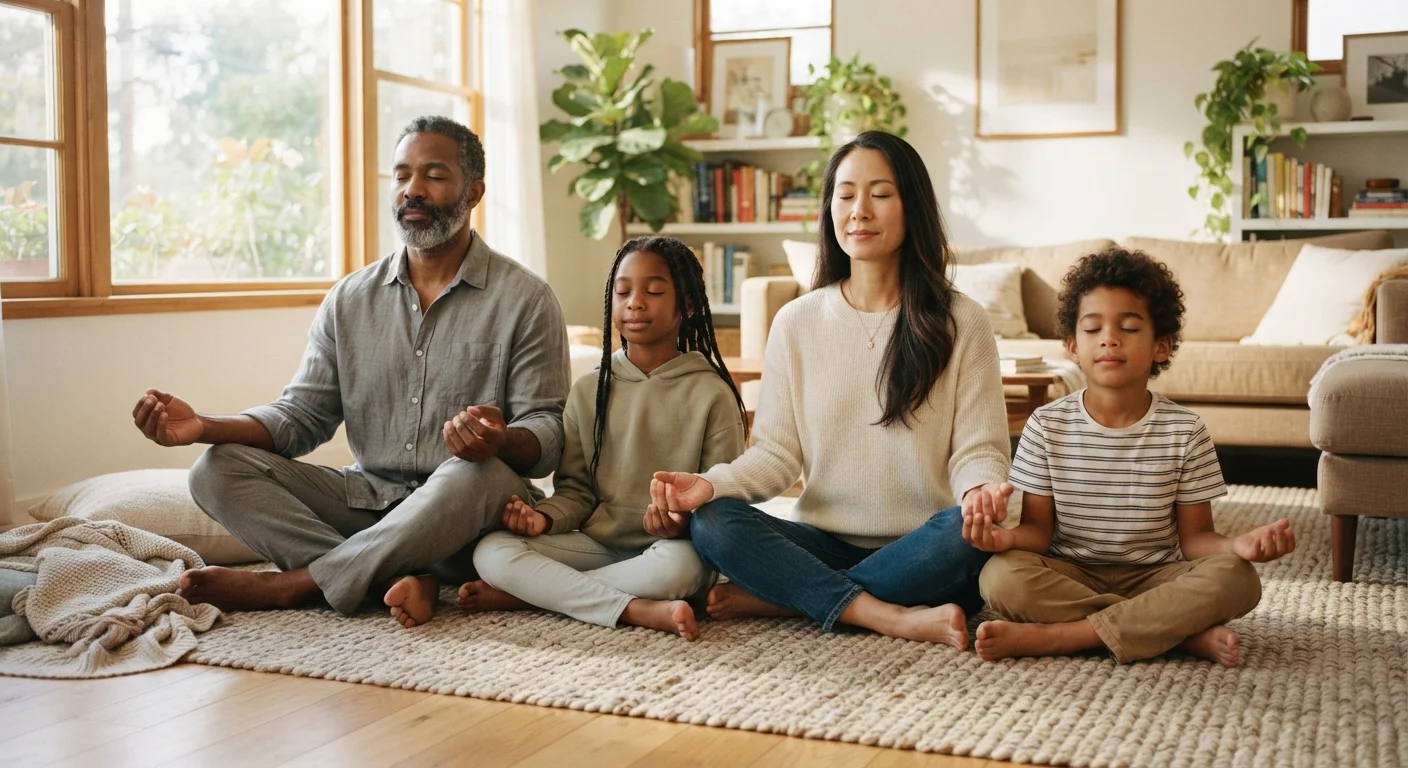
- Families can start with moments as short as one minute woven into existing daily routines.
- Mindfulness is not about clearing your mind - it's about noticing thoughts without judgment.
- Children as young as five can benefit from simple, age-appropriate mindfulness exercises.
Start here
What Mindfulness Actually Means
Next
Why It Matters for Families
Then try
Simple Ways to Start Together
Clear the air
Common Misconceptions to Drop
Build a habit
Making It Stick Without Pressure
What Mindfulness Actually Means
Mindfulness is simply the practice of paying deliberate, non-judgmental attention to what is happening right now - in your body, your surroundings, and your thoughts. That's it. No incense required.
The term entered mainstream healthcare largely through the work of researchers who adapted traditional contemplative practices into structured programs that could be studied clinically. Today, mindfulness is part of established approaches used in hospitals, schools, and therapy practices across the United States.
Mindfulness
The practice of paying deliberate, non-judgmental attention to the present moment - including thoughts, feelings, and sensations.
Emotional regulation
The ability to recognize and manage one's emotional responses rather than reacting impulsively. It's a skill that can be strengthened with practice.
Body scan
A mindfulness exercise where you slowly move your attention through different parts of your body, noticing sensations without trying to change them.
Present-moment awareness
Consciously directing attention to what is happening right now, rather than ruminating on the past or worrying about the future.
Non-judgmental observation
Noticing thoughts or feelings without labeling them as good or bad - simply acknowledging that they exist.
The core skill is noticing - observing your breath, your senses, or your emotions without immediately reacting to them. Over time, that small pause between a feeling and a response becomes a useful tool for the whole family.
Why It Matters for Families
American families navigate a high-pressure environment: packed schedules, screen saturation, financial stress, and the ongoing demands of parenting. Research published in peer-reviewed psychology journals consistently links mindfulness practice to reduced self-reported stress, improved emotional regulation, and better sleep quality in both adults and children - though it's important to note that results vary between individuals.
For parents, building even a brief mindfulness habit can model emotional regulation skills for children. Kids who observe adults pausing before reacting - taking a breath, naming a feeling - absorb those strategies through everyday observation. For more foundational mental wellness concepts, see our plain-language mental health glossary for terms that help frame these conversations with children.
Start With One Minute Per Day
Pick a trigger that already happens in your household - the morning coffee brewing, the school drop-off, or sitting down for dinner. Attach one minute of intentional breathing or sensory awareness to that existing moment. Habit stacking like this dramatically increases follow-through for busy families.
Mindfulness also pairs naturally with other wellness habits. The foundational habits that support mental wellness across age groups - sleep, movement, and routine - are each strengthened when families approach them with greater intentionality.
Simple Ways to Start Together
The most effective entry points for families are the ones that require no setup and fit inside moments that already exist:
- Mindful meals: Before eating, take five seconds to notice the smell, color, and texture of food. No phones at the table is a helpful companion rule.
- Body scan at bedtime: Starting from the feet and moving upward, spend 60 seconds mentally checking in with each part of the body. Children often find this calming and even fun.
- Three slow breaths: Before a stressful transition - leaving for school, starting homework - take three deliberate breaths together as a reset.
- Sound spotting: Sit quietly for 60 seconds and list every distinct sound you hear. This works for children as young as five and grounds attention quickly.
None of these require apps, subscriptions, or expertise. They can be introduced one at a time rather than all at once.
Common Misconceptions to Drop
Several persistent myths keep families from trying mindfulness:
Mindfulness Is Secular in Clinical Settings
Although mindfulness has roots in Buddhist meditation, the version used in evidence-based healthcare programs is non-religious and non-spiritual. Families of any background or belief system can use these techniques without adopting any particular worldview. The focus is entirely on attention and awareness as mental skills.
- "You have to clear your mind."
- The goal is not a blank mind - that's nearly impossible. The practice is noticing when your mind wanders and gently returning attention. Wandering is expected, not a failure.
- "It takes a long time to work."
- Even very brief, consistent practice has been associated with measurable reductions in perceived stress in research settings. A few minutes a day is a reasonable starting point.
- "It's only for anxious or struggling people."
- Mindfulness is a general wellness tool, much like physical exercise. It doesn't require a problem to solve - it builds a capacity that benefits everyone.
For a broader look at family mental wellness strategies, the comprehensive family mental wellness resource covers warning signs, support options, and age-specific approaches under one roof.
Making It Stick Without Pressure
Consistency outperforms intensity every time when building a new habit. Families who try to overhaul their routines quickly tend to abandon the effort. A more durable approach: attach one small mindfulness moment to something that already happens daily.
Treat it lightly. If a child doesn't want to participate one evening, don't force it. Modeling the practice yourself is more persuasive than insisting on participation. Over weeks, curiosity usually wins.
Track nothing obsessively. The point is awareness, not performance. The moment mindfulness becomes another item to check off a list, it loses its purpose.
This article is for general informational and educational purposes only. It is not a substitute for professional medical or mental health advice, diagnosis, or treatment. If you or a family member are experiencing mental health challenges, please consult a qualified healthcare professional.