

Key Takeaways
- Matter is an open standard designed to make smart home devices work across different brands and platforms.
- Devices with Matter support can connect to Amazon Alexa, Google Home, Apple HomeKit, and Samsung SmartThings simultaneously.
- Matter uses Wi-Fi and Thread for device communication, and Bluetooth for initial setup.
- Older devices cannot be automatically upgraded to Matter, but some manufacturers have issued software updates for select models.
- For families starting a smart home, choosing Matter-certified devices reduces future compatibility risk.
Matter Protocol
Matter is a universal smart home connectivity standard that allows devices from different manufacturers to communicate with each other directly. It was developed by a large industry alliance so that a smart bulb, lock, or thermostat can work with any Matter-compatible app or voice assistant - regardless of brand. Think of it as a common language that smart home devices all agree to speak.
Matter operates primarily over Wi-Fi and Thread (a low-power mesh networking protocol), and uses Bluetooth Low Energy for device setup. It is maintained by the Connectivity Standards Alliance (CSA).
Why Smart Home Compatibility Has Been So Frustrating
For years, buying smart home devices felt like navigating a maze. A smart plug from one brand refused to work with another brand's app. A voice assistant that controlled your lights couldn't manage your thermostat. Families found themselves locked into one ecosystem or managing three separate apps just to run a connected home.
This happened because manufacturers built their own proprietary systems - each one a walled garden. To understand why this was structurally difficult to solve, it helps to know how devices actually talk to each other. Our guide to wireless protocols like Zigbee, Z-Wave, Wi-Fi, and Thread explains the underlying communication layers involved.
Matter was created specifically to address this fragmentation at the application level - meaning the layer where devices announce their identity, capabilities, and controls to apps and voice assistants.
Matter Is an Alliance Effort, Not One Company's Product
Matter is maintained by the Connectivity Standards Alliance (CSA), a nonprofit industry group whose members include Apple, Google, Amazon, Samsung, and hundreds of other technology companies. No single company owns or controls the standard. This structure is intentional - it prevents any one platform from gaining a gatekeeping advantage over the others.
How Matter Actually Works
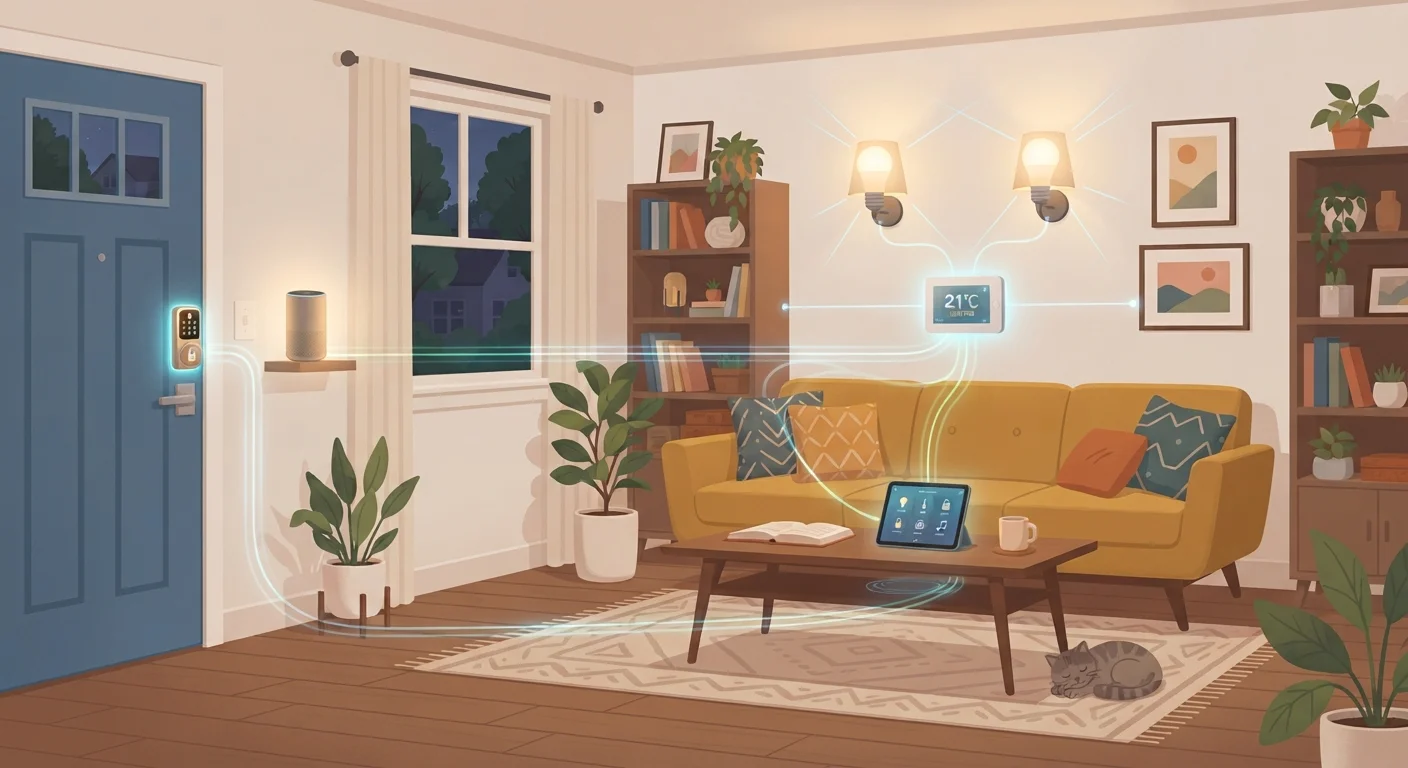
Matter operates on a principle of shared language. When a device is Matter-certified, it broadcasts its capabilities using a standardized format that any Matter-compatible controller can read and act on. This means a single smart lock could appear simultaneously in your Amazon Alexa app, your Google Home app, and your Apple Home app - and you could control it from any of them.
Setup is handled via Bluetooth Low Energy. You scan a QR code on the device, and it joins your local network through a process called commissioning. From that point, the device communicates over Wi-Fi or Thread depending on its hardware design.
One important concept is multi-admin: a single Matter device can be added to multiple apps or ecosystems at the same time. You do not have to pick one controller and stick with it - all your household members can use their preferred platform.
300+
CSA member companies involved in Matter
The Connectivity Standards Alliance, which governs Matter, includes over 300 member organizations spanning major tech companies and device manufacturers.
4
Major platforms supporting Matter at launch
Amazon Alexa, Google Home, Apple HomeKit, and Samsung SmartThings all announced Matter support, representing the vast majority of US smart home users.
What Device Types Matter Covers
At launch, Matter covered the most common smart home device categories: lighting, smart plugs, thermostats, door locks, window blinds, and security sensors. The standard has since expanded to include robot vacuums, air quality monitors, and additional appliance categories as the Connectivity Standards Alliance continues releasing new specification versions.
Not every product in a category is automatically covered - individual devices must go through certification to carry the Matter badge. When shopping, look for the Matter logo or the phrase "Works with Matter" on packaging or product listings.
For families planning a new smart home setup, choosing Matter-certified devices from the start reduces the risk of finding yourself locked into a single vendor. See our practical guide to building your first smart home for a step-by-step planning approach.
Check for the Matter Logo Before Buying
When evaluating new smart home devices, look specifically for Matter certification rather than assuming a device is compatible because it works with a well-known platform. A device that says 'Works with Alexa' may still require the Alexa app exclusively, while a Matter-certified device gives you platform flexibility. The CSA maintains a public database of certified products you can reference.
What Matter Means for Your Household Budget
Compatibility standards have real financial consequences for families. When you're locked into one ecosystem, you may feel pressure to replace working devices simply because they don't integrate with a new addition to your home. Matter reduces that replacement pressure by making devices genuinely interoperable over time.
That said, Matter is not a guarantee that all future devices will be affordable or that your existing collection becomes instantly compatible. Treat it as a risk-reduction tool when making new purchasing decisions - not a retroactive fix for what's already on your shelf.
Understanding how smart home ecosystems connect and interact can help you make more informed decisions before you spend. And if you have concerns about the data your connected devices collect, our article on smart home privacy and data collection covers what to know and how to limit exposure.