

| Coverage Type | Liability (Required in nearly all U.S. states) |
| What Liability Covers | Injuries and property damage you cause to others |
| What Collision Covers | Damage to your vehicle from crashes (Subject to deductible; capped at actual cash value) |
| What Comprehensive Covers | Non-collision damage: theft, weather, animals, fire (Often required by lenders on financed vehicles) |
| UM/UIM Purpose | Protects you when the other driver lacks adequate insurance |
| PIP Requirement | Mandatory in no-fault states (Requirements vary by state) |
The Six Core Auto Coverage Types
Auto insurance isn't a single product - it's a bundle of distinct coverage types, each designed to handle a different kind of loss. Most families carry several at once, but many don't know where one ends and another begins. Here's what each type actually does.
| Coverage Type | Liability (Required in nearly all U.S. states) |
| What Liability Covers | Injuries and property damage you cause to others |
| What Collision Covers | Damage to your vehicle from crashes (Subject to deductible; capped at actual cash value) |
| What Comprehensive Covers | Non-collision damage: theft, weather, animals, fire (Often required by lenders on financed vehicles) |
| UM/UIM Purpose | Protects you when the other driver lacks adequate insurance |
| PIP Requirement | Mandatory in no-fault states (Requirements vary by state) |
Liability Coverage
Bodily injury liability pays for injuries you cause to other people in an accident. Property damage liability covers damage you cause to someone else's vehicle or property. Both are legally required in nearly every state, though minimum limits vary. Your policy card shows these as split limits (e.g., 25/50/25) or a combined single limit. See what those numbers actually mean before assuming your limits are adequate.
Collision Coverage
Collision pays to repair or replace your vehicle after it strikes another car or object - a guardrail, a pothole, or another vehicle - regardless of fault. It applies to your car only, not anyone else's. A deductible applies; you pay that amount first, and the insurer covers the rest up to the vehicle's actual cash value.
Comprehensive Coverage
Comprehensive covers damage to your vehicle from events that aren't collisions: theft, fire, flooding, hail, falling trees, and animal strikes. Like collision, it's subject to a deductible and capped at actual cash value. Lenders typically require both collision and comprehensive on financed or leased vehicles. For a side-by-side comparison of when each applies, see comprehensive vs. collision explained.
Uninsured and Underinsured Motorist Coverage
Uninsured motorist (UM) coverage steps in when the at-fault driver carries no insurance. Underinsured motorist (UIM) covers the gap when their policy limits are lower than your actual damages. Without these coverages, you could be left paying out of pocket after an accident that wasn't your fault.
Medical Payments and Personal Injury Protection
Medical payments (MedPay) covers medical expenses for you and your passengers after an accident, regardless of fault - and regardless of health insurance status. Personal injury protection (PIP) goes further, covering lost wages and other costs in addition to medical bills. PIP is required in no-fault states, where each driver's own insurer pays their medical costs first.
Putting the Pieces Together
Most drivers need a combination of these coverages, not just one. Liability is the legal floor; the other types protect your own financial position. How much of each you carry depends on your vehicle's value, your state's requirements, and how much risk you can absorb out of pocket.
Actual Cash Value (ACV)
The market value of your vehicle at the time of a loss, accounting for depreciation. This is the maximum payout for collision or comprehensive claims - not replacement cost.
Deductible
The dollar amount you pay out of pocket before your insurer covers the rest of a claim. Higher deductibles typically lower your premium but increase your cost if you file a claim.
No-Fault State
A state where each driver's own insurer pays their medical costs after an accident, regardless of who caused it. Personal injury protection (PIP) is typically required in these states.
Gap Insurance
Optional coverage that pays the difference between your vehicle's actual cash value and the remaining balance on your auto loan if the car is declared a total loss.
Declarations Page
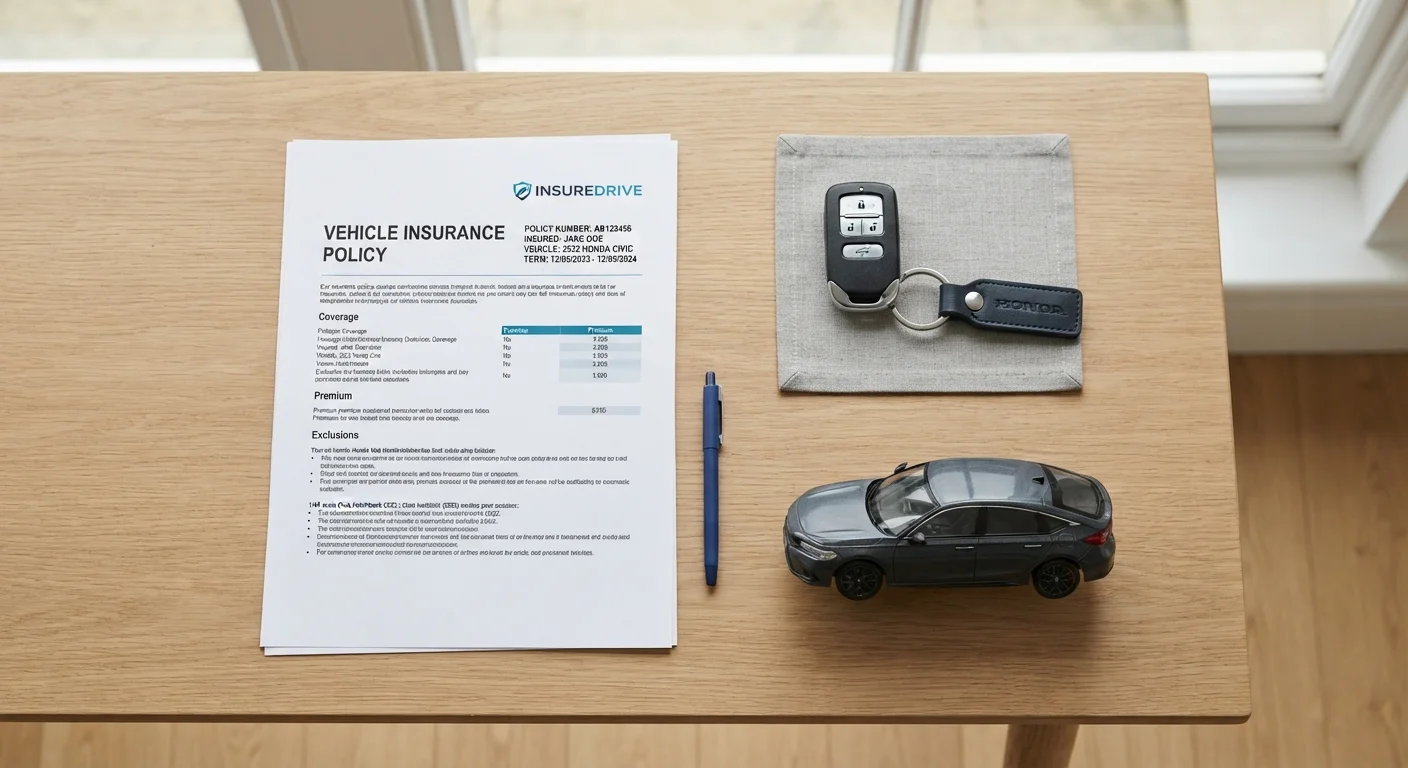
The summary page of your policy listing covered vehicles, drivers, coverage types, limits, deductibles, and premium amounts. It's the first place to look when reviewing what you have.
Families who rely on one vehicle especially can't afford extended repair gaps. That's where understanding optional add-ons - such as rental reimbursement or gap insurance - matters too. Gap insurance, for example, pays the difference between what your insurer pays (actual cash value) and what you still owe on a car loan if the vehicle is totaled.
No auto policy covers everything, and coverage limits, exclusions, and definitions vary meaningfully between providers and states. Always read the declarations page and the full policy document - not just the summary. A licensed insurance agent can explain how your specific policy responds to different scenarios. For a broader view of how auto coverage fits alongside home and health protection, see how major insurance types work together. And to understand where auto policies commonly leave gaps, see gaps between insurance policy types.
For unfamiliar terms that appear in your policy documents, our insurance terms glossary covers the most common ones in plain language.
This article is for general informational purposes only and does not constitute personalized insurance, financial, or legal advice. Coverage terms, requirements, and exclusions vary by insurer, policy, and state. Consult a licensed insurance professional and read your actual policy documents before making coverage decisions.