

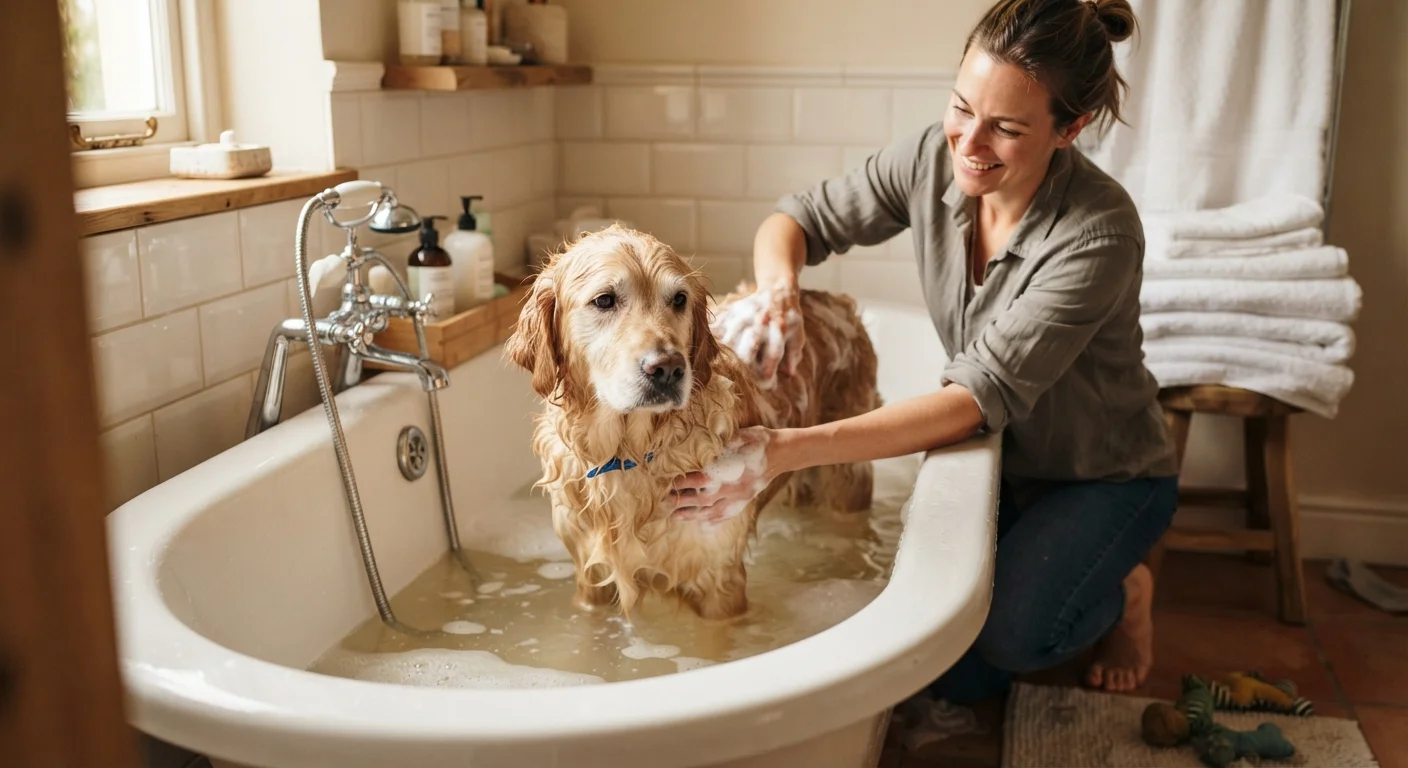
Key Takeaways
- Using human shampoo on dogs disrupts their skin's pH balance and can cause irritation.
- Getting water inside a dog's ear canal during bathing raises the risk of infection.
- Incomplete rinsing leaves residue that irritates skin and attracts dirt faster.
- Skipping a pre-bath brush means mats tighten when wet and become harder to remove.
- Rushing the drying process - especially in cold weather - can leave dogs uncomfortable and chilled.
Why Home Bathing Goes Sideways
Bathing your dog at home is one of the most straightforward ways to keep grooming costs manageable - but a handful of common missteps turn a simple routine into a wet, frustrating ordeal. The good news: most of these mistakes are easy to prevent once you know what to look for.
Before any water runs, it helps to think of bath time as a small grooming session rather than a quick rinse. That shift in mindset changes how you prepare, what products you reach for, and how much time you allow. For a broader view of how bathing fits into your pet's overall care, see our weekly grooming routine guide.
Dog Skin Is Not Like Human Skin
A dog's skin has a different pH range than human skin, making it far more sensitive to products formulated for people. Using human shampoo - even mild or baby formulas - regularly can strip protective oils and disrupt the skin barrier. Always use a shampoo specifically formulated for dogs, and consult your veterinarian if your dog has a skin condition before choosing a product.
The Most Common Bathing Mistakes - and How to Fix Them
The errors below come up repeatedly, whether you're bathing a Labrador or a Shih Tzu. Each one is fixable with a small adjustment to your prep or technique.
Using human shampoo or dish soap on your dog.
Why it happens: Human shampoos are within easy reach and seem gentle, so owners assume they'll work fine on pets.
Skipping a brush-out before getting the dog wet.
Why it happens: Brushing feels like an extra step when the goal is just to get the dog clean, so many owners jump straight to water.
Letting water run directly into the ears.
Why it happens: Handheld showerheads and cups make it easy to accidentally direct water into ear openings, especially on dogs who won't stay still.
Rinsing too quickly and leaving shampoo residue in the coat.
Why it happens: Once lathering is done, it's tempting to call it finished - especially with an impatient, wriggling dog.
Bathing too frequently or not frequently enough.
Why it happens: Owners often rely on how the dog smells rather than a consistent schedule, which can lead to either over-bathing or neglect.
Not drying the dog thoroughly before letting it roam.
Why it happens: Dogs often bolt as soon as the water stops, and owners may assume the dog will air-dry naturally without issue.
Water in the Ears Is a Real Risk
Moisture trapped in a dog's ear canal creates warm, humid conditions where bacteria and yeast can thrive. Dogs with floppy ears - such as Basset Hounds or Spaniels - are especially susceptible. Place a cotton ball loosely at the entrance of each ear before bathing (not deep inside) and dry the outer ear thoroughly afterward. If you notice head-shaking, odor, or discharge after baths, speak with your vet.
If you're already doing routine coat and ear checks between baths, you'll catch small issues - like early skin irritation or ear odor - before they become bigger problems. Our guide on at-home pet health checks walks you through what to look for.
Making the Routine Stick
Consistency matters more than perfection. A dog bathed correctly every five to six weeks will generally have a healthier coat and skin than one bathed sporadically with the wrong products.
~6 weeks
Recommended bathing interval for most dogs
Veterinary dermatologists generally suggest bathing healthy dogs every four to six weeks, though breed, coat type, and lifestyle all influence the right frequency.
2-3x
How much longer rinsing should take than lathering
Pet grooming professionals commonly note that thorough rinsing takes significantly longer than shampooing - residue left in the coat is a leading cause of post-bath skin irritation.
Prep your bathing area in advance - non-slip mat, towels within reach, correct shampoo ready - so the process feels calm and controlled for both you and your dog. A settled environment helps reduce the anxious bolting that makes rinsing difficult. You might also find it useful to think about how your home setup supports your pet's comfort overall: setting up a pet-friendly home space offers practical, budget-conscious ideas.
This article provides general pet care information and is not a substitute for advice from a qualified veterinarian. If your dog has a skin condition, recurring ear infections, or other health concerns, consult your vet before adjusting your bathing routine.