

Key Takeaways
- Pet-friendly home adjustments can be made room by room without structural changes or large budgets.
- Designated rest zones and safe surface choices reduce stress for both pets and their owners.
- Removing hazards and organizing pet supplies creates a safer, calmer environment for everyone.
- Simple enrichment setups at home support your pet's mental wellbeing alongside physical comfort.
- Consistent routines and thoughtful space planning reduce destructive behavior in dogs and cats.
What you will need
Why Your Home Layout Matters for Pets
Pets don't just occupy space - they interact with it constantly. A dog resting on cold tile during winter, or a cat unable to find a safe perch away from household foot traffic, may show signs of stress or discomfort that owners sometimes mistake for personality quirks. The good news is that a pet-friendly home doesn't require knocking down walls or replacing flooring throughout.
Most meaningful changes come from rethinking how existing spaces are used. Before you begin, it helps to review what your pet needs from their environment, particularly if they are new to your household. Once you understand those needs, small, targeted adjustments can make a significant difference in day-to-day comfort.
It's also worth checking your assumptions. Some widely held ideas about what pets need at home turn out to be inaccurate - our article on pet comfort myths offers helpful context before you invest time or money in changes.
What you will need
Step-by-Step: Creating a Pet-Friendly Home
The following steps move from safety essentials to comfort upgrades. Work through them at your own pace - even completing the first two or three will produce a noticeably safer, calmer environment for your pet.
Walk Through Your Home from Your Pet's Perspective
Get low - literally crouch or kneel to your pet's eye level in each room. Look for exposed wires, small objects that could be swallowed, unstable furniture that could tip, and gaps where a curious animal might become trapped. Make a simple room-by-room note of what you find.
Secure Hazardous Items and Areas
Address the hazards you identified. Tuck or bundle exposed cables with cable management clips. Use childproof latches on cupboards containing cleaning products, medications, or foods that are toxic to pets (such as chocolate, grapes, xylitol-containing products, and certain houseplants). Block off access to laundry appliances, fireplaces, and any rooms where supervision isn't possible.
Create a Dedicated Rest Zone
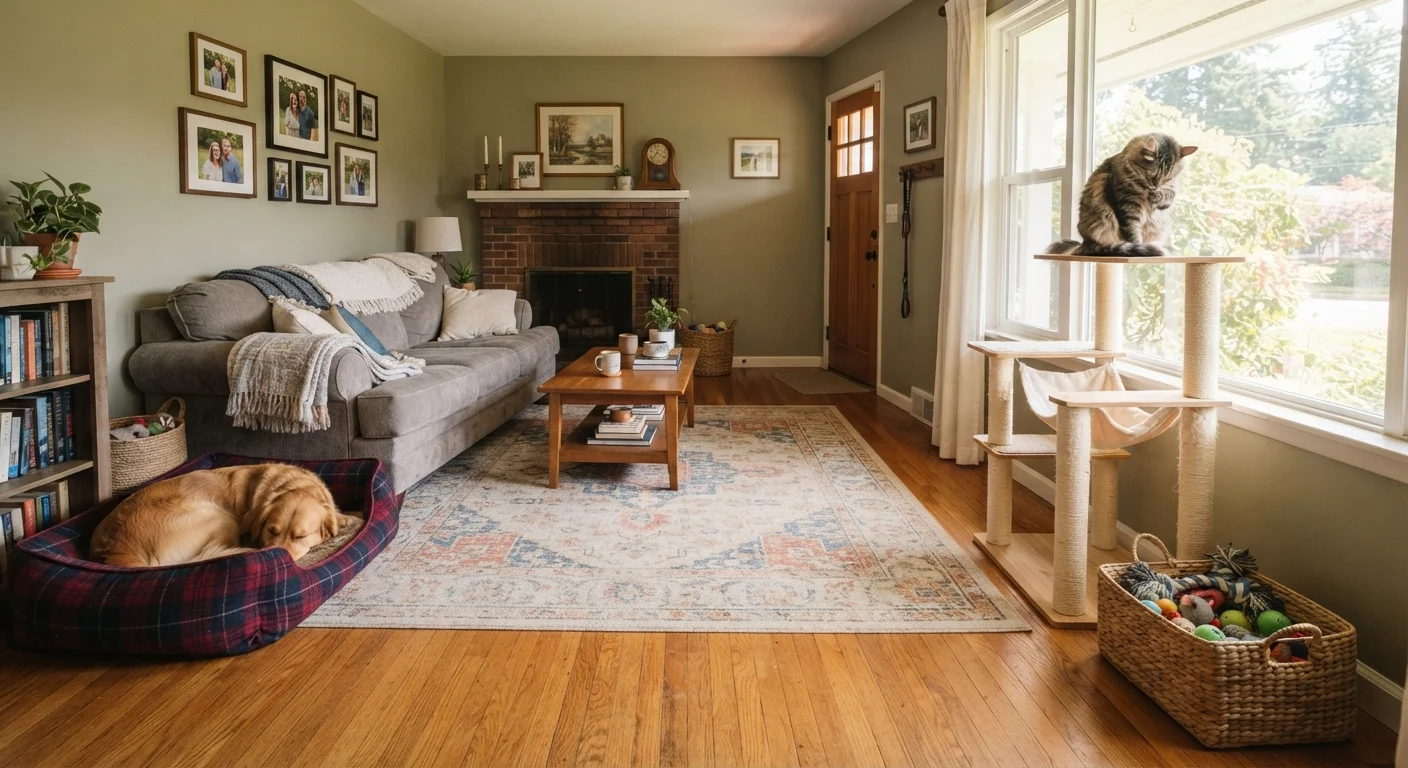
Choose a quiet corner in a frequently used room - not an isolated back room - and establish it as your pet's primary rest area. Place a washable bed or padded mat there, and keep it consistent. Dogs and cats both benefit from a predictable resting spot that smells familiar. Avoid placing the zone near heating vents, drafty windows, or high-traffic hallways.
Address Slippery Floor Surfaces
Hardwood, laminate, and tile floors can cause joint strain and anxiety in dogs, particularly older animals or those prone to slipping. Place non-slip area rugs or yoga mat offcuts along the routes your dog uses most - between their bed, the food bowl, and the main exit. Washable rugs are preferable for hygiene. For cats, slipping is less common, but textured surfaces near climbing spots reduce the risk of falls.
Set Up a Feeding Station
Designate a consistent, easy-to-clean feeding area - ideally on a hard floor surface away from heavy foot traffic. Use a splash mat or waterproof tray under the bowls to catch spills and simplify cleanup. Keep food storage containers sealed and out of reach. If you have multiple pets, position feeding stations far enough apart to reduce competition and food-guarding behavior.
Add Vertical Space and Enrichment Zones for Cats
Cats feel most secure when they can observe their environment from an elevated position. You don't need to install custom cat trees - a cleared bookshelf ledge, a sturdy windowsill with a non-slip mat, or a repositioned piece of furniture can serve the same function. Pair vertical access with a window view where possible; visual stimulation from birds, traffic, or garden movement provides low-effort enrichment throughout the day.
Organize Pet Supplies for Daily Efficiency
Gather leads, grooming tools, waste bags, and medication in one accessible location - a basket, drawer, or wall-mounted organizer near the main door works well. Clear organization reduces the chance of leaving items within a pet's reach and makes daily routines faster. Store toys in a low, open container your pet can access; this encourages independent play and reduces boredom-driven destruction.
Build Changes Into Your Routine
The most effective home adjustments are ones you'll actually maintain. Start with the two or three changes that address your pet's biggest daily friction points, then add to them gradually. Consistent small improvements tend to produce better long-term results than a single intensive overhaul that's hard to sustain. For more on building sustainable habits around pet care, see the Pet Health & Wellness hub.
Keeping Costs in Check
Pet-proofing a home doesn't have to strain your household budget. Repurposing items you already own - old blankets for bedding, sturdy shelving for cat perches, tension rods as cabinet barriers - covers many of the steps above at little or no cost. For new purchases, focus on durability over novelty; a well-made washable bed liner will outlast several cheaper alternatives.
For broader strategies on stretching your household budget without sacrificing quality, the Budget-Smart Buying hub covers practical approaches that apply equally well to pet care spending.
Once your space is set up, mental enrichment is the next piece of the puzzle. See low-cost ways to keep pets mentally stimulated every day for ideas that cost little but make a real difference in your pet's quality of life.
Seasonal Hazards Change Over Time
A pet-friendly setup that works well in summer may need adjustments in winter - heating devices, holiday decorations, and seasonal plants introduce new risks throughout the year. Revisit your home's safety setup at least twice a year. Our article on seasonal health considerations for pets outlines what to watch for across different times of year.
This article provides general information about home environment adjustments for pets and is not a substitute for advice from a qualified veterinarian. If your pet shows signs of stress, injury, or illness, consult a licensed veterinary professional.