

Key Takeaways
- Positive reinforcement works by immediately rewarding desired behaviors, making them more likely to repeat.
- Timing is critical - the reward must follow the behavior within one to two seconds to be effective.
- Short, frequent sessions of five to ten minutes tend to produce better results than long, infrequent ones.
- Punishment-based methods can cause anxiety, fear, and relationship damage without reliably teaching new behaviors.
- Most pets - dogs, cats, rabbits, and birds - respond well to reward-based approaches.
- Training is also a form of mental enrichment that supports overall pet wellness.
Reward-Based (Positive Reinforcement) Training
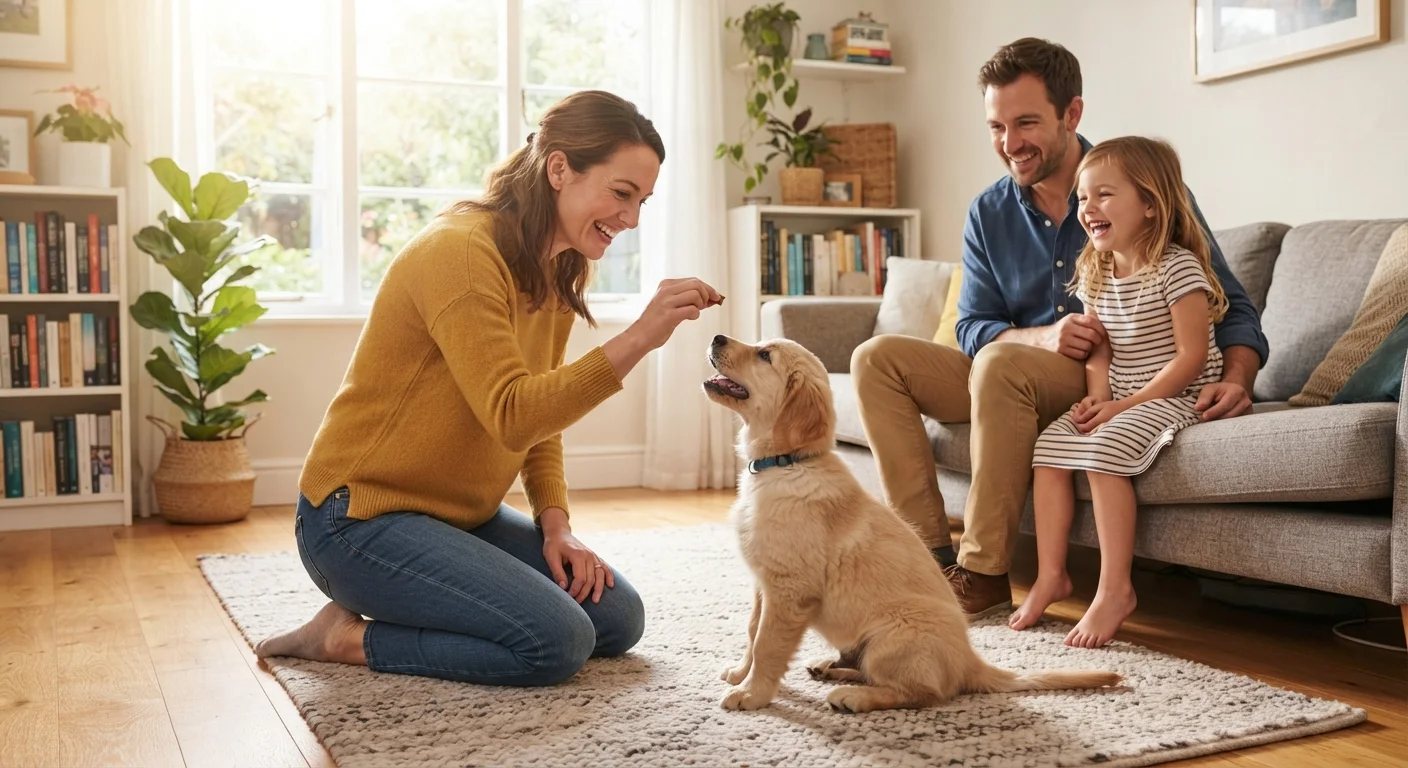
Reward-based training means giving your pet something pleasant - a treat, praise, or play - immediately after it performs a desired behavior. This increases the likelihood that the animal will repeat that behavior in the future. The approach works by building an association between the action and a good outcome, without the need for fear, pain, or physical correction.
In behavioral science, this is called positive reinforcement: adding a desirable stimulus to strengthen a response. It sits within operant conditioning, a framework developed through decades of animal learning research.
Why Reward-Based Training Works
Animals repeat behaviors that produce good outcomes. When a dog sits and immediately receives a small treat, its brain registers a connection: this action leads to something pleasant. Over repeated trials, the behavior becomes stronger and more reliable. This is not a trick - it reflects how learning is understood to work across many species, from domestic dogs and cats to parrots and rabbits.
The key word is immediately. Rewards delayed even a few seconds can reinforce the wrong behavior. If your dog sits, then wanders over to sniff the carpet, and only then receives a treat, the dog may associate the reward with sniffing - not sitting. Keeping rewards ready and delivering them within one to two seconds of the desired action makes training far more effective.
Positive reinforcement also builds trust. Because the animal is never afraid of what comes next, it tends to engage more willingly and try new behaviors more readily. This cooperative dynamic is one reason this approach is recommended by most veterinary and behavioral organizations over methods that rely on correction or fear.
“The most effective training is built on a relationship of trust. When animals feel safe and understand what earns them a reward, they learn faster and retain what they've learned far longer.”
— American Veterinary Society of Animal Behavior, Professional organization representing veterinary behavioral experts
Setting Up Effective Home Training Sessions
You do not need expensive equipment or a large space to train a pet at home. A quiet room, a handful of small, high-value treats, and five to ten minutes of focused attention are genuinely sufficient for most basic skills.
- Keep sessions short. Five to ten minutes is enough. Pets - especially young animals - lose focus quickly, and ending on a successful repetition leaves both you and your pet on a positive note.
- Train before meals. A slightly hungry pet is usually more motivated by food rewards. Avoid training immediately after a large meal when food has less value as a motivator.
- Remove distractions first. Start new behaviors in a calm, familiar environment before practicing them in busier settings. Gradually introducing distractions is a technique called proofing.
- Use a marker signal. A short, distinct sound - a click from a training clicker or a crisp verbal cue like 'yes' - tells the pet exactly which moment earned the reward. See clicker training vs. verbal cues for help choosing the right signal for your situation.
Use Small, Soft Treats for Faster Repetitions
Break treats into pea-sized pieces so your pet can consume them quickly and stay focused on the next repetition. Soft treats work better than crunchy ones for this reason - they are eaten in under a second. Keep an eye on the total treat volume across the day and adjust meal portions accordingly to avoid unintended weight gain.
Consistency matters more than session length. A family that trains the same cues the same way every day will see faster, more reliable results than one that trains intensively for a week and then stops.
Why Punishment-Based Methods Often Fall Short
Punishment - physical corrections, loud reprimands, or aversive devices - may interrupt an unwanted behavior in the moment, but it does not teach the animal what to do instead. A dog scolded for jumping on guests learns that jumping near people causes discomfort; it does not automatically learn to sit politely instead. Teaching the alternative behavior still requires deliberate practice.
There is also a welfare concern. Research consistently links punishment-based methods to elevated stress responses, avoidance behaviors, and in some cases increased aggression in dogs. The animal cannot easily understand why an unpleasant event is happening, which can erode its sense of safety and its trust in the owner.
This does not mean all unwanted behavior is simply ignored. Redirecting a pet toward an acceptable behavior - and then rewarding that behavior - is an effective and humane way to address problems. If a puppy bites during play, calmly ending the play session removes the reward (your attention) without causing distress. Boredom and under-stimulation often underlie persistent behavior problems; mental stimulation and physical activity can make a meaningful difference alongside training.
Training Counts as Mental Enrichment
Learning new cues and solving training 'puzzles' engages a pet's brain in ways that physical exercise alone does not. For many dogs and cats, a short training session can be just as tiring - and just as satisfying - as a walk or play session. Building training into your pet's routine is one practical way to support overall behavioral health.
Fitting Training Into Daily Pet Care
Training does not need to be a separate event on the calendar. Many families find it easiest to weave short practice moments into routines that already exist - asking for a 'sit' before placing a food bowl down, practicing 'stay' while preparing meals, or running through a known cue during a commercial break. These micro-sessions accumulate quickly.
Treating training as part of a broader wellness approach also helps. A well-stimulated pet that gets adequate exercise and a balanced diet is often easier to train - calmer, more focused, and less likely to act out from frustration. A consistent feeding routine can also reduce food-guarding behaviors and make treat-based training more predictable.
When a behavior problem is significant, persistent, or involves aggression, consulting a certified professional - such as a veterinary behaviorist or a certified applied animal behaviorist - is always a reasonable step. General guidance is a useful starting point, but individual animals sometimes need individualized support.
This article is for general informational and educational purposes only and is not a substitute for professional veterinary or behavioral advice. Consult a qualified veterinarian or certified animal behaviorist for guidance specific to your pet's needs.