

Key Takeaways
- Dogs pull because it works - forward movement is its own reward.
- Pulling is a learned habit, not a sign of a badly behaved or dominant dog.
- Consistent, reward-based training is the most effective long-term solution.
- Equipment like front-clip harnesses can reduce pulling while training is underway.
- Short, frequent training sessions produce better results than infrequent long walks.
Lead Pulling
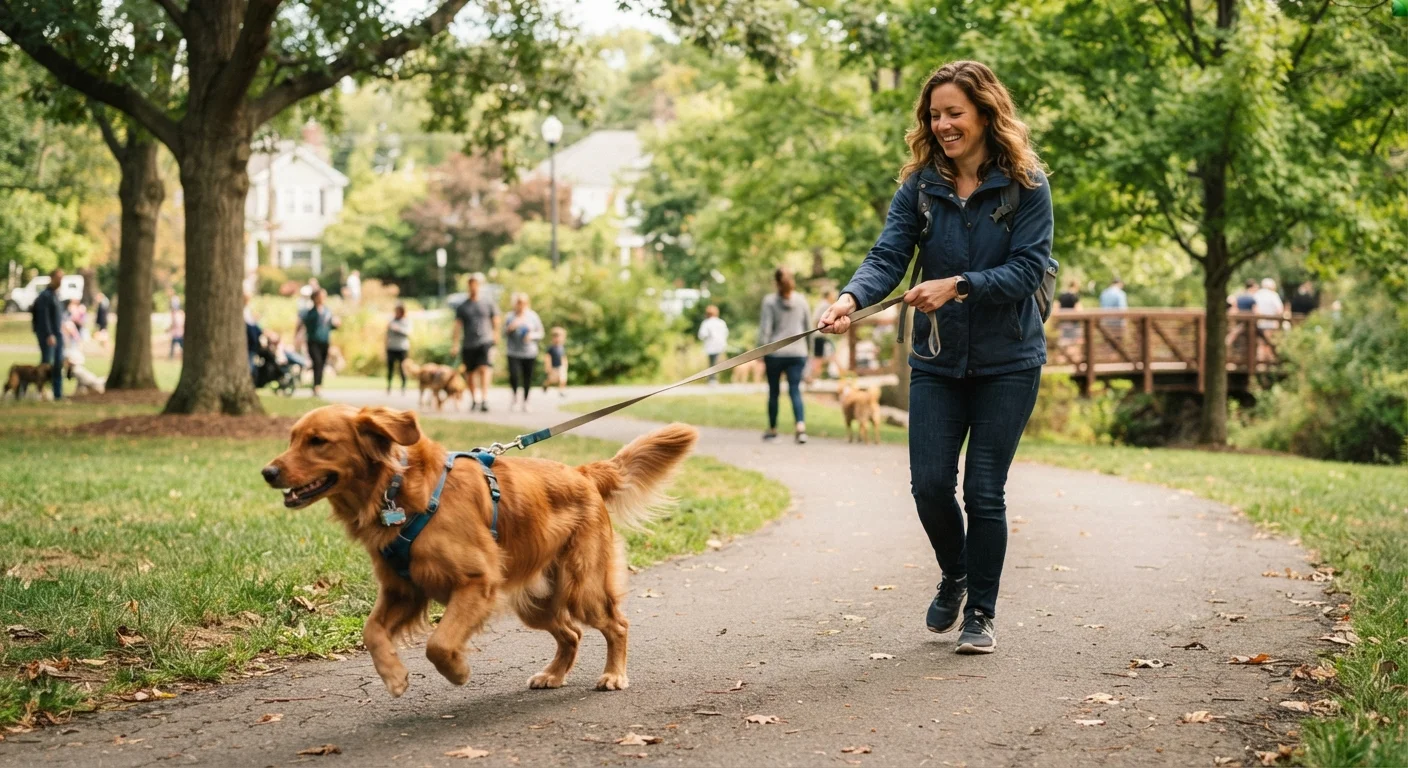
Lead pulling happens when a dog walks faster than its handler and creates tension on the leash. Dogs aren't born knowing how to walk calmly beside a person - it's a learned skill. The behavior is extremely common, especially in young or under-exercised dogs, and has nothing to do with the dog being stubborn or dominant.
In behavioral terms, lead pulling is often self-reinforcing: the dog moves forward and reaches its desired destination, which rewards the behavior regardless of the owner's intention.
Why Dogs Pull: The Simple Behavioral Truth
The most important thing to understand about lead pulling is this: dogs pull because it works. When a dog surges forward and the walk continues, the dog learns that tension on the leash equals progress. There is no malice or defiance involved - the behavior is simply being reinforced every time the dog reaches a tree, a smell, or a friendly stranger.
Dogs also experience the world through their noses, and the pace of a human walk is often frustratingly slow compared to their natural exploratory instincts. A dog lunging toward a scent isn't being disobedient - it's doing exactly what millions of years of evolution designed it to do.
Breed and age also play a role. High-energy working breeds, scent hounds, and young dogs under two years old tend to pull more, simply because their arousal levels and curiosity are higher. But any dog that hasn't been specifically taught to walk on a loose lead will almost certainly pull to some degree.
Pulling Is Not About Dominance
Older ideas about dogs pulling in order to "be the alpha" or assert dominance over their owner are not supported by current behavioral science. Understanding that pulling is simply a self-rewarding behavior - not a power struggle - helps owners approach training with patience rather than frustration.
Training Techniques That Actually Work
The most widely supported approach among veterinary behaviorists is positive reinforcement - rewarding the behavior you want rather than punishing the behavior you don't. For loose-lead walking, this means:
- Stop and wait: The moment your dog creates tension on the lead, stop moving entirely. Only resume walking when the lead goes slack. This removes the reward (forward movement) that pulling produces.
- Mark and reward: When your dog walks beside you with a loose lead, mark that moment with a word like "yes" or a clicker, and immediately offer a small food reward. Over time, your dog learns that staying close pays off.
- Change direction: When your dog pulls, calmly turn and walk the opposite way. This teaches that pulling actually slows the journey rather than speeding it up.
For a full breakdown of these methods and how to apply them consistently, see our guide to reward-based training at home.
Start Training Before You Leave the House
Practice loose-lead walking in your hallway or yard before heading out where distractions are high. Once your dog reliably walks beside you in a low-stimulation environment, transfer that skill gradually to busier settings. This staged approach prevents early failures that can slow progress.
Equipment, Consistency, and Realistic Expectations
Training tools can support your progress without replacing it. A front-clip harness attaches the leash at the dog's chest rather than the back, which reduces the dog's ability to use its full body weight to pull. This doesn't teach the dog not to pull, but it can make walks safer and more manageable while you work on the skill.
The single biggest predictor of success is consistency. Every household member needs to use the same rules: if pulling is never rewarded, the dog learns that pulling never works. If even one person allows the dog to drag them forward occasionally, the behavior is kept alive.
Keep training sessions short - five to ten minutes of deliberate practice within a longer walk is more effective than a single marathon session. High-value treats (small pieces of plain cooked chicken or cheese) tend to hold a dog's attention better in stimulating outdoor environments.
~80%
Dog owners who report leash pulling as a problem
Leash pulling is consistently cited as one of the most common behavioral complaints among dog owners in general veterinary surveys.
2-4 weeks
Typical improvement timeframe with consistent training
Certified dog trainers generally report noticeable loose-lead improvement within a few weeks when owners apply reward-based methods daily.
Maintaining a well-trained dog also fits naturally into a broader approach to cost-effective pet ownership. A calm dog that walks well is less likely to cause accidents or escape, reducing unexpected expenses. Our guide to feeding a dog on a tight budget explores other ways to care well for your pet without overspending.
This article is for general informational purposes only and is not a substitute for professional veterinary or behavioral advice. If your dog's pulling is accompanied by aggression, fear, or other concerning behaviors, consult a licensed veterinarian or certified animal behaviorist.