

Key Takeaways
- Skipping pet dental care can lead to painful infections that spread beyond the mouth.
- Periodontal disease is one of the most common - and preventable - conditions vets see in adult pets.
- Consistent at-home brushing combined with routine vet exams forms the foundation of good oral care.
- Early warning signs like bad breath, pawing at the mouth, or reluctance to eat deserve veterinary attention.
- Professional dental cleanings are more cost-effective when performed before disease becomes advanced.
Why Pet Dental Health Gets Overlooked
Dental care for pets is one of the most consistently skipped aspects of routine ownership - not because families don't care, but because the consequences are hidden. Unlike a limp or a rash, tooth and gum disease develops quietly below the gumline, often for months before any visible sign appears.
By the time bad breath, discoloration, or behavioral changes become obvious, disease is usually already established. The good news: most dental problems in pets are preventable with consistent habits and periodic professional oversight. Understanding the common mistakes owners make is a practical starting point.
For a broader view of how routine checkups protect long-term health - including oral health - see our guide on how preventive vet visits save money over time.
80%
Dogs with periodontal disease by age 3
According to the American Veterinary Medical Association, the majority of dogs show signs of periodontal disease by their third year of life.
70%
Cats affected by dental disease by age 3
Veterinary dental specialists report that dental disease is among the most frequently diagnosed health conditions in cats seen in clinical practice.
Common Mistakes That Let Dental Disease Progress
Most dental disease in pets is the result of well-intentioned owners making a handful of very predictable errors. The mistakes below are among the most frequent that veterinary professionals encounter - and each one has a straightforward correction.
Assuming bad breath is just normal for dogs or cats.
Why it happens: Pet owners often normalize odor because they don't realize it signals active bacterial buildup or early gum disease.
Never brushing a pet's teeth because the pet resists it.
Why it happens: Many owners attempt toothbrushing without a gradual introduction, the pet reacts negatively, and the habit is abandoned entirely.
Skipping professional dental cleanings because they seem expensive or unnecessary.
Why it happens: Without visible tooth loss or dramatic symptoms, owners underestimate how much disease can exist below the gumline, where at-home care can't reach.
Relying solely on dental chews or water additives as a substitute for brushing.
Why it happens: These products are marketed prominently, making owners believe they provide complete oral care on their own.
Ignoring behavioral changes that signal mouth pain.
Why it happens: Pets rarely vocalize tooth pain the way humans do, so owners miss signals like food dropping, head tilting while eating, or sudden food aversion.
Dental Disease Can Affect Vital Organs
Bacteria from untreated periodontal disease can enter the bloodstream and potentially affect the heart, kidneys, and liver. This isn't a scare tactic - it's a documented risk that veterinarians take seriously. If your pet shows signs of mouth discomfort, consult a vet promptly rather than waiting for a routine visit.
Dental health doesn't exist in isolation. Nutrition also plays a role: certain diets support oral health better than others, and changes in eating behavior can be early signals of mouth discomfort. Learn more in our overview of signs a pet's diet may not be meeting nutritional needs.
Building a Realistic Dental Care Routine
A sustainable pet dental routine doesn't require expensive equipment or daily perfection. It requires consistency across a few key habits.
Never Use Human Toothpaste on Pets
Many human toothpastes contain xylitol and fluoride, both of which are toxic to dogs and cats. Always use a toothpaste specifically formulated for pets. If you're unsure which products are appropriate, ask your veterinarian for a recommendation at your next visit.
- Brush regularly: Aim for daily brushing, but even three to four times per week meaningfully reduces plaque accumulation. Use a soft-bristled pet toothbrush or a finger brush with pet-formulated toothpaste.
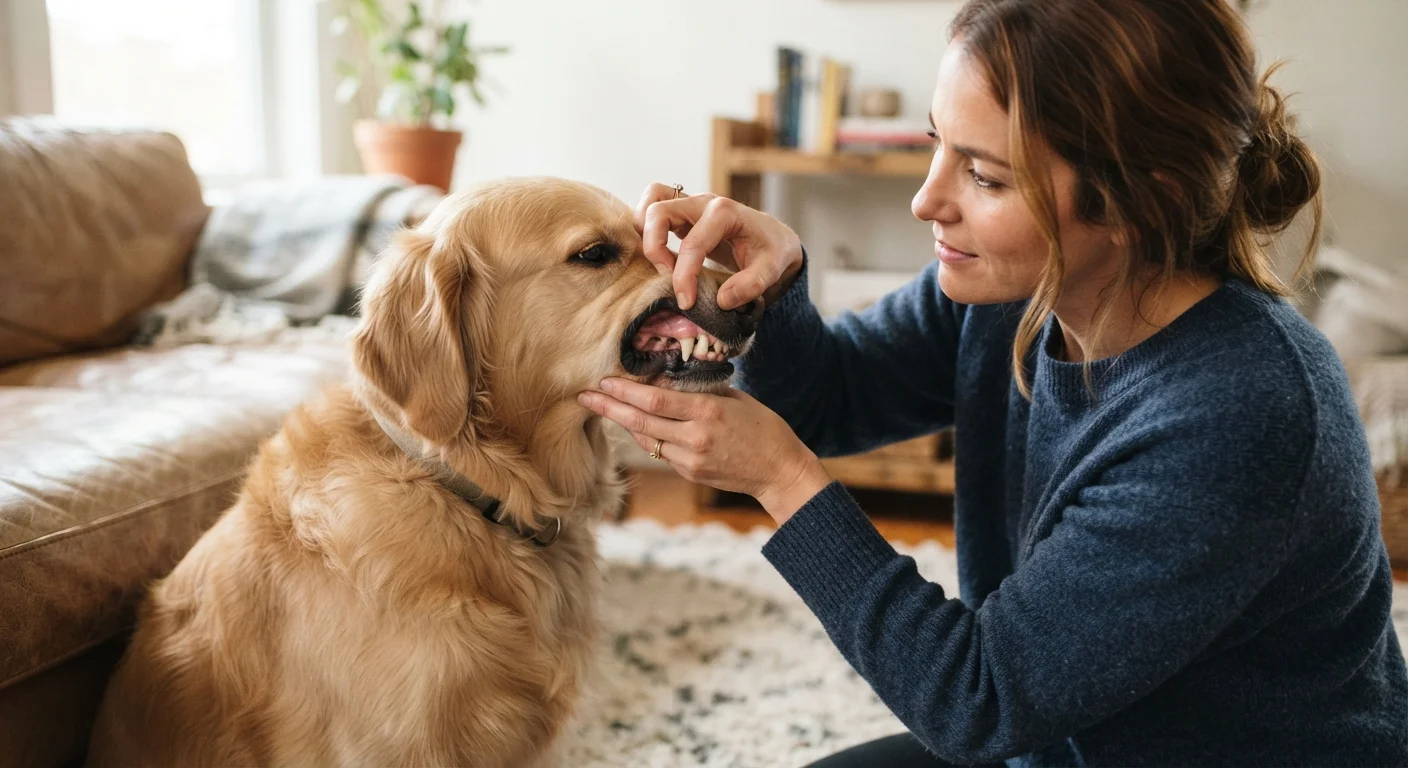
- Inspect the mouth monthly: Gently lift the lips and look for redness along the gumline, brown tartar buildup, or any swelling. This is a quick check that can catch early changes. Our article on at-home pet health checks walks through a full routine including teeth, coat, and ears.
- Schedule professional cleanings: Your vet can advise on the appropriate frequency based on your pet's age, breed, and existing oral health status. Smaller dog breeds and flat-faced breeds often need more frequent attention.
- Integrate dental care into your grooming routine: Pairing tooth checks with regular brushing sessions makes the habit easier to sustain. See our weekly pet grooming framework for a practical structure.
Dental care is one component of broader everyday pet care - and one of the highest-impact habits a family can build for long-term pet wellbeing.
This article is for general informational purposes only and does not constitute veterinary or medical advice. Always consult a licensed veterinarian for guidance specific to your pet's health needs.