

Key Takeaways
- Wet food contains roughly 70-80% moisture, making it useful for pets that don't drink enough water.
- Dry kibble is more calorie-dense per ounce and generally costs less per feeding than wet food.
- Neither format is universally superior - the right choice depends on your pet's health, age, and preferences.
- Many vets support a mixed-feeding approach to balance palatability, hydration, and cost.
- Always consult a veterinarian before making significant dietary changes, especially for pets with health conditions.
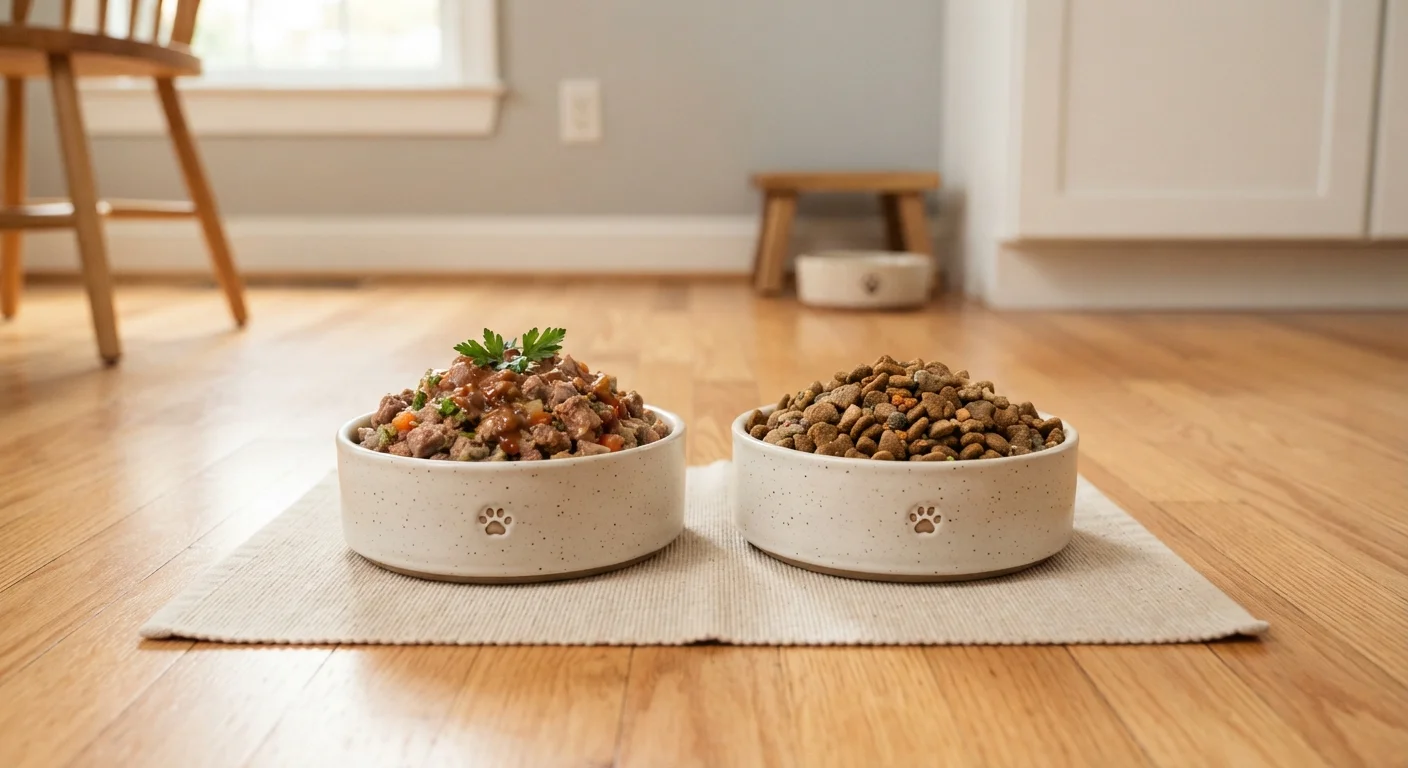
Option A
Wet Food (Canned or Pouched)
The high-moisture, palatable option for hydration and appetite.
Best for: Pets needing extra hydration, picky eaters, seniors, or animals with dental or kidney concerns.
Option B
Dry Kibble
The convenient, shelf-stable staple for everyday feeding.
Best for: Households prioritizing convenience, longer shelf life, and cost-effective daily feeding routines.
If your pet has kidney disease or struggles to stay hydrated
Wet Food
The high moisture content in wet food helps support kidney function and fluid intake, which is especially relevant for cats prone to urinary issues.
If you need a cost-effective, low-fuss daily feeding option
Dry Kibble
Kibble costs less per calorie, stores easily, and can be left in a bowl without spoiling quickly - ideal for busy families managing a budget.
If your pet is a picky eater or has a reduced appetite
Wet Food
Wet food's stronger aroma and softer texture tend to be more appealing to finicky pets and seniors with declining appetite or dental sensitivity.
If dental health maintenance is a priority
Dry Kibble
The mechanical action of chewing dry kibble may help reduce plaque and tartar buildup, though it is not a substitute for regular dental care.
If you want to balance nutrition, palatability, and household budget
Wet Food mixed with Dry Kibble
Combining both formats lets owners leverage the hydration benefits of wet food and the economy of kibble, while keeping mealtimes appealing.
What Actually Separates Wet Food from Dry Kibble?
The most meaningful difference between wet and dry pet food is moisture content. Wet food typically contains 70-80% water, while dry kibble sits at around 8-12% moisture. That single variable cascades into differences in calorie density, storage, cost, texture, and health implications.
On a dry-matter basis - meaning when moisture is stripped out for a fair comparison - the protein, fat, and carbohydrate ratios between formats can actually be quite similar. What changes is how nutrients are delivered and how the body processes them. For a deeper look at those nutritional mechanics, see what the nutritional differences mean for your pet.
Dry kibble undergoes high-heat extrusion processing, which gives it its shelf stability and crunchy texture. Wet food is cooked inside the can or pouch, preserving moisture and producing a softer result. Both methods can yield nutritionally complete diets when formulated to established standards.
| Criterion | Wet Food | Dry Kibble |
|---|---|---|
| Moisture content | 70-80% | 8-12% |
| Calorie density (by weight) | Lower - less calorie-dense | Higher - more calorie-dense |
| Typical cost per feeding | Higher | Lower |
| Shelf life (unopened) | 1-5 years (sealed) | 12-18 months |
| After opening | Refrigerate; use within 24-48 hrs | Reseal; stable for weeks |
| Palatability for picky eaters | Generally higher | Variable |
| Dental cleaning effect | Minimal | Mild mechanical action |
| Suitability for hydration support | Strong | Limited |
Health Factors Worth Weighing
Your pet's individual health profile should anchor the decision more than any general preference. A few key considerations:
- Hydration: Cats in particular are low-thirst animals by nature and often under-drink. Wet food can meaningfully supplement their water intake, which matters for urinary tract and kidney health.
- Weight management: Because wet food is lower in calorie density by volume, it can help pets feel full on fewer calories - potentially helpful for overweight animals. That said, portion control matters with both formats.
- Dental health: Some evidence suggests dry kibble's texture offers mild mechanical cleaning, but veterinary dentists generally note this benefit is modest. Regular tooth brushing and dental check-ups remain the gold standard.
- Digestive sensitivity: Some pets tolerate one format better than the other. Transitions between formats should be gradual to avoid gastrointestinal upset.
If you notice changes in your pet's coat, energy, or digestion after a dietary switch, signs your pet's diet may not be meeting their nutritional needs offers practical guidance on what to watch for.
A Note on Special Dietary Needs
Pets with chronic conditions such as kidney disease, diabetes, or food allergies may have specific dietary requirements that go beyond the wet-versus-dry debate. In these cases, the format of food is often secondary to its ingredient profile and nutrient levels. Always work with your veterinarian or a board-certified veterinary nutritionist to develop a diet plan tailored to your pet's medical needs.
Cost, Convenience, and Practical Trade-offs
For families managing a household budget, the cost gap between wet and dry food is real. Wet food generally costs two to four times more per calorie than dry kibble. A medium-sized dog fed exclusively on wet food can represent a substantially higher monthly spend than one fed kibble.
Dry kibble also wins on practicality: it can be stored for months without refrigeration, measured easily, and used in puzzle feeders or automatic dispensers. Wet food, once opened, must be refrigerated and typically used within 24-48 hours.
A middle path many owners and vets find workable is mixed feeding - using kibble as the daily base while adding a portion of wet food for palatability, hydration, or as a training incentive. This approach can stretch a wet food budget while keeping meals appealing. For more ideas on feeding well without overspending, see feeding a dog on a tight budget without cutting corners on nutrition.
70-80%
Moisture in typical wet pet food
Compared to roughly 8-12% in dry kibble, this difference significantly affects hydration and calorie delivery per serving.
2-4×
Higher cost per calorie for wet food
Wet food generally delivers fewer calories per dollar spent, making daily feeding costs noticeably higher than kibble for most pet sizes.
48 hrs
Safe storage window for opened wet food
Once opened, wet food should be refrigerated and used within approximately 48 hours to prevent spoilage and reduce waste.
Some owners also rotate between different formats or recipes periodically. If you're curious whether that approach is advisable, rotating pet foods: sensible variety or unnecessary disruption? examines what nutritional science and veterinary guidance suggest.
This article provides general nutritional information for educational purposes and is not a substitute for personalized veterinary advice. Always consult a licensed veterinarian before making significant changes to your pet's diet, especially if your pet has an existing health condition.