

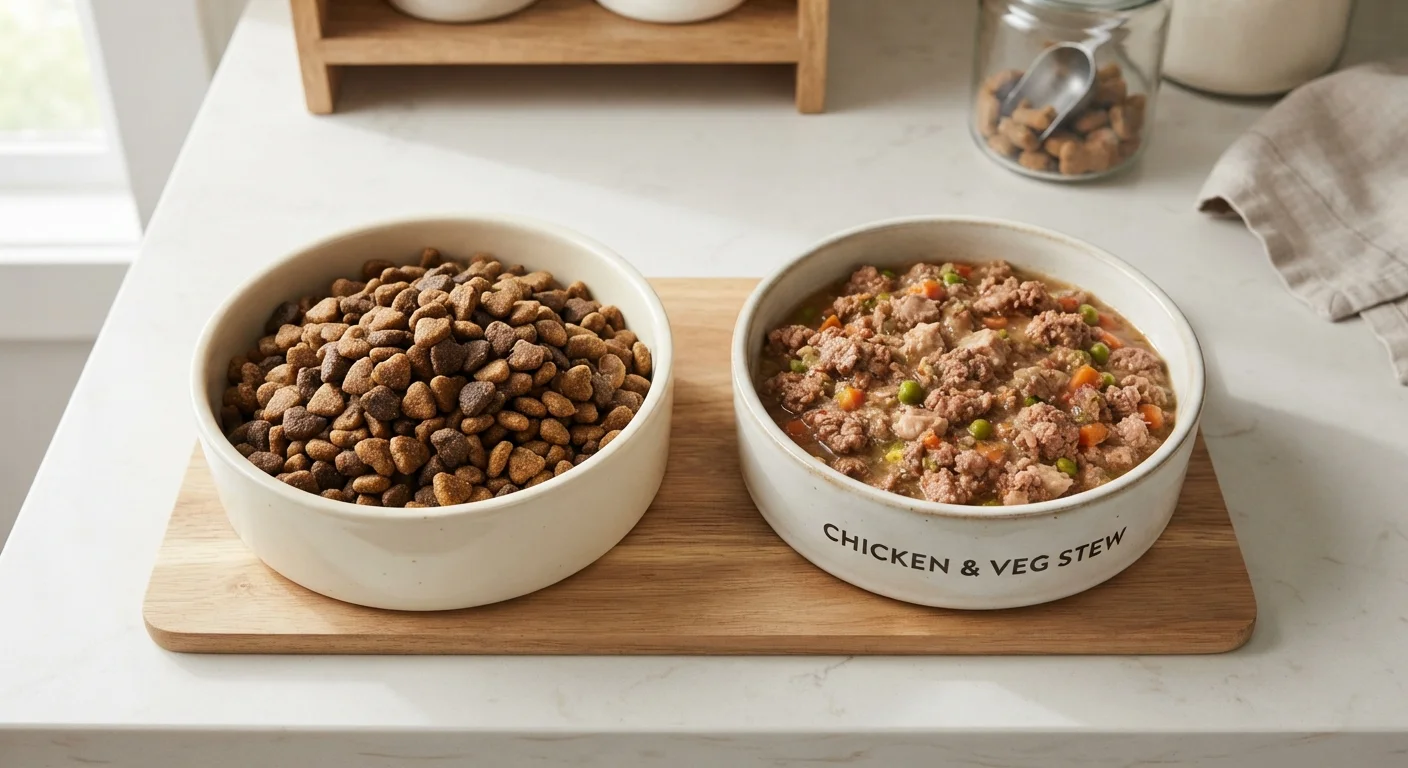
Key Takeaways
- Wet food typically contains 70-85% moisture, while dry kibble contains around 10%, affecting hydration and calorie concentration.
- Dry kibble is generally more cost-effective per serving and easier to store, with a longer shelf life once opened.
- Protein and fat content should be compared on a dry-matter basis to make an accurate nutritional apples-to-apples comparison.
- Some pets - particularly cats and those with kidney or urinary concerns - may benefit from the added hydration wet food provides.
- A mixed feeding approach combining both formats can balance nutritional and practical needs for many households.
- Always consult a veterinarian before making significant dietary changes, especially for pets with health conditions.
Option A
Dry Kibble
The convenient, calorie-dense everyday staple.
Best for: Pet owners seeking an affordable, shelf-stable option with dental benefits and easy portion control.
Option B
Wet Food
The moisture-rich, palatable alternative for picky or at-risk eaters.
Best for: Pets needing extra hydration, seniors with dental issues, or animals with low appetite or specific health needs.
If your priority is everyday affordability and convenience
Dry Kibble
Dry kibble typically costs less per serving, stores easily at room temperature, and requires no refrigeration after opening - making it practical for busy households.
If your pet has urinary tract issues or needs more hydration
Wet Food
The high moisture content in wet food supports urinary tract health and increases overall fluid intake, which is particularly important for cats who often drink too little water.
If your pet is a senior with dental discomfort or reduced appetite
Wet Food
Softer texture makes wet food easier to chew for older pets, and its stronger aroma can stimulate appetite in animals who've become picky with age.
If you want a balanced approach that suits a healthy adult dog or cat
Dry Kibble
For healthy adults without specific medical needs, a complete and balanced dry kibble often meets daily nutritional requirements efficiently and economically.
If you want flexibility, palatability, and nutritional variety
Wet Food
Rotating or topping kibble with wet food can enhance palatability and increase moisture intake without abandoning the cost benefits of dry feeding entirely.
The Core Nutritional Difference: Moisture Changes Everything
The most fundamental difference between dry kibble and wet food is water content. Wet food typically contains 70-85% moisture, while dry kibble sits at roughly 8-12%. That gap has a cascading effect on how you compare everything else - calories, protein, fat, and cost.
Because wet food is so water-dense, it delivers fewer calories per gram of product. A cup of wet food may contain far fewer calories than the same volume of kibble. This matters for weight management: a pet eating wet food may feel full on fewer calories, which can be an advantage for animals prone to overeating.
To make a fair nutritional comparison, veterinary nutritionists use dry-matter basis (DMB) - a method that strips out moisture so nutrient levels are compared as if both foods were completely dry. A wet food that appears protein-rich on the label may actually be comparable to - or even lower than - a kibble when both are evaluated on a dry-matter basis. Understanding this calculation is essential before drawing conclusions from the guaranteed analysis panel alone. For a deeper guide to reading those labels, see our article on reading pet food labels.
| Criterion | Dry Kibble | Wet Food |
|---|---|---|
| Moisture content | ~8-12% | ~70-85% |
| Calories per gram | Higher (calorie-dense) | Lower (water-diluted) |
| Cost per serving | Generally lower | Generally higher |
| Shelf life (opened) | Weeks (sealed bag) | 2-3 days (refrigerated) |
| Dental benefit | Modest mechanical scraping | Minimal mechanical benefit |
| Hydration support | Low | High |
| Palatability for picky eaters | Variable | Generally higher |
| Ease of portioning | Easy (measuring cup) | Moderate (cans/pouches) |
Hydration, Dental Health, and Practical Trade-offs
Cats are obligate carnivores with a naturally low thirst drive - they evolved to get most of their moisture from prey. Domestic cats fed exclusively dry kibble often drink less than their bodies need. This can contribute to concentrated urine, which increases risk for urinary tract and kidney issues over time. Wet food can meaningfully offset that gap. Dogs are generally more flexible drinkers, but pets recovering from illness, living in hot climates, or on certain medications may also benefit from the added hydration wet food provides.
On the dental side, dry kibble is sometimes credited with reducing tartar buildup. The mechanical action of chewing hard pieces can scrape some plaque from tooth surfaces. However, the benefit is modest and not universal - it depends on kibble size, shape, and how thoroughly the pet chews. Wet food, by contrast, does little mechanically for teeth. Neither format replaces regular dental care such as brushing or veterinary dental cleanings.
70-85%
Typical moisture content in wet pet food
Compared to roughly 10% in dry kibble - a difference that significantly affects hydration, calorie density, and how nutrients should be compared.
~3-4×
Approximate cost difference per calorie
Wet food often costs several times more per calorie than dry kibble, according to general veterinary nutrition estimates, making budget a key practical factor.
60%+
Of a cat's daily water needs potentially met by wet food
Veterinary nutritionists note that cats on wet-food diets often consume significantly more total fluid than those eating dry kibble exclusively.
From a practical standpoint, dry kibble wins on shelf life and storage. An open bag can last weeks when stored properly, while opened wet food cans or pouches should be refrigerated and used within two to three days. For large households or multi-pet families managing tight budgets, that difference in spoilage risk is meaningful. Our Pet Health & Wellness hub offers additional guidance on cost-conscious care decisions.
Choosing the Right Format - or Combining Both
Neither format is universally superior. The right choice depends on your specific pet's age, health status, preferences, and your household's budget and routine. Several factors are worth weighing:
- Life stage: Kittens and puppies have high-energy needs and may benefit from the calorie density of kibble. Seniors often do better with softer wet food, particularly if dental pain is a factor.
- Medical conditions: Pets with kidney disease, diabetes, or urinary issues may be specifically directed toward wet or dry food by a veterinarian - don't make changes without professional input.
- Palatability: Some pets flatly refuse kibble. Wet food's stronger scent and softer texture can help entice reluctant eaters, especially during illness or recovery.
- Budget: Wet food typically costs more per calorie than dry food. For owners managing expenses carefully, understanding nutrient density can help stretch every food dollar further.
A mixed feeding approach - using dry kibble as a base and adding a measured amount of wet food as a topper - is a practical middle ground many owners find effective. It balances hydration benefits, palatability, and cost. If you're considering varying your pet's diet more broadly, our article on rotating pet foods explores what the evidence actually supports.
If your pet shows signs of fatigue, coat changes, or digestive irregularity - which may indicate a dietary mismatch - review the signs your pet's diet may not be meeting their nutritional needs before adjusting independently.
When to Involve Your Veterinarian
For healthy pets with no known medical conditions, the choice between wet and dry food is largely a matter of preference and practicality. However, if your pet has kidney disease, diabetes, a history of urinary blockages, or significant dental disease, the format of food can be clinically important. In these cases, a veterinarian or board-certified veterinary nutritionist should guide the decision - general advice may not apply to your pet's specific situation.
This article is for general informational purposes only and does not constitute veterinary or medical advice. Always consult a licensed veterinarian before making significant changes to your pet's diet, particularly if your animal has an existing health condition.