

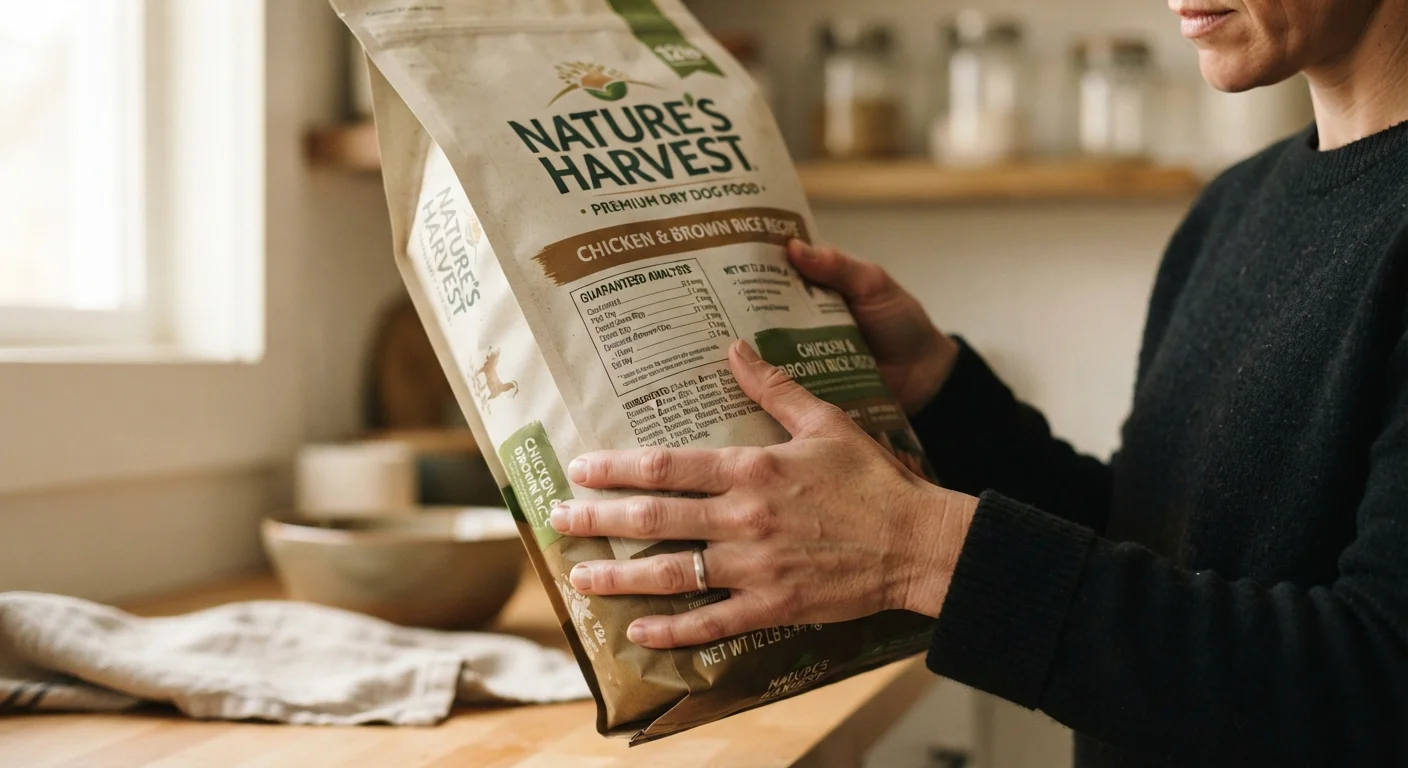
Key Takeaways
- Ingredients are listed by weight before processing, which affects how protein sources rank on the list.
- The guaranteed analysis shows minimum or maximum nutrient levels, not exact amounts.
- An AAFCO nutritional adequacy statement tells you whether a food is complete or supplemental.
- Marketing terms like 'natural' and 'premium' have limited or no regulated meaning on pet food labels.
- No label alone can tell you how well a specific pet will thrive on a given food - observe your animal and consult your vet.
Pet Food Label
A pet food label is the printed panel on pet food packaging that discloses ingredients, nutrient levels, feeding guidelines, and manufacturer information. In the United States, labels are regulated by the Association of American Feed Control Officials (AAFCO) and state feed control offices, which set minimum standards for what must appear and how it must be worded. Understanding these sections helps owners evaluate whether a food meets their pet's basic nutritional needs.
AAFCO does not directly approve or certify individual pet foods; it publishes model regulations and nutrient profiles that state agencies and manufacturers reference when formulating and labeling products.
The Five Sections Every Label Must Include
US pet food labels are required to display five core elements: the product name, the net quantity, the manufacturer's name and address, a list of ingredients, and a guaranteed analysis. Each has a specific purpose - and specific limitations.
Product name rules are stricter than most owners realize. AAFCO guidelines govern how prominently an ingredient can be named. If a food is called 'Salmon Dog Food,' salmon must make up at least 95% of the total weight (excluding water). A label saying 'with Salmon' only requires 3% salmon content. These naming conventions matter when you're trying to gauge how much of a key ingredient your pet is actually getting.
The ingredient list ranks items by pre-processing weight, heaviest first. This sounds straightforward, but moisture content complicates comparisons. Fresh chicken - which can be 75% water - may appear above 'chicken meal,' a dried, concentrated form that delivers more protein per ounce after cooking. See our plain-language ingredient guide for a breakdown of what common entries actually contribute.
Use the Ingredient List Alongside the Adequacy Statement
Neither the ingredient list nor the guaranteed analysis tells the full story on its own. Pairing both with the AAFCO adequacy statement gives you a more complete picture of what a food is actually designed to do. If you're switching foods or managing a health condition, share both sections with your vet before making a change.
The guaranteed analysis lists minimum percentages of crude protein and crude fat, and maximum percentages of crude fiber and moisture. These are not precise measurements - a food stating '26% min crude protein' could contain significantly more. To compare wet and dry foods, you'll need to convert figures to a dry matter basis, a simple calculation that removes moisture from the equation.
Decoding the AAFCO Nutritional Adequacy Statement
This small paragraph - often buried on the back or side panel - is arguably the most important line on the label. It tells you whether the food is designed to be a complete diet or just a supplement.
A statement meeting AAFCO standards typically reads in one of two ways. First, 'formulated to meet the nutritional levels established by AAFCO,' meaning the recipe was developed to hit target nutrient profiles on paper. Second, 'animal feeding tests using AAFCO procedures substantiate,' meaning the food was actually fed to animals and monitored over a set period. Feeding-trial statements are generally considered a higher bar of evidence, though neither guarantees a specific outcome for your individual pet.
The statement will also specify a life stage: adult maintenance, growth (puppies or kittens), reproduction, or all life stages. Feeding an adult-maintenance food to a growing puppy or a pregnant animal may not meet their elevated nutritional demands. If you're uncertain whether a food is appropriate for your pet's stage of life, your veterinarian is the right resource.
Supplemental Foods Are Not Complete Diets
Foods labeled 'for supplemental or intermittent feeding only' are not formulated to be a sole diet. Using them as one over time can create nutrient deficiencies. This category includes many toppers, broths, and some specialty formulas - check the adequacy statement on any food you plan to feed regularly.
Foods labeled 'for supplemental or intermittent feeding only' are not formulated to be a sole diet. Using them as one over time can create deficiencies. This includes many toppers, broths, and some specialty foods.
What Labels Leave Out - and Why It Matters
Labels are a starting point, not a complete picture. Several meaningful factors simply aren't required to appear on packaging.
Ingredient quality and sourcing are not disclosed. Two foods listing 'chicken' may use very different grades of the ingredient. There is no label field for processing methods, ingredient origin, or quality control practices - that information, if available at all, typically requires contacting the manufacturer directly.
Digestibility is another gap. The guaranteed analysis tells you a food contains a certain minimum protein level, but not how much of that protein a dog or cat can actually absorb. Digestibility data, when published by manufacturers, appears in technical sheets rather than on pack.
Front-of-pack marketing claims deserve healthy skepticism. Terms like 'holistic,' 'premium,' and 'human-grade' carry no standardized regulatory definition in the pet food space. Even 'natural' has a narrow, specific meaning under AAFCO guidelines that doesn't necessarily align with how consumers interpret the word. Our article on common pet nutrition myths explores how several popular label-driven beliefs hold up under scrutiny.
For owners navigating this alongside a household budget, the key is prioritizing the adequacy statement and ingredient list over front-of-pack language, and watching your pet's actual condition over time. Physical signs like coat quality, energy, and digestion can offer real-world feedback that no label provides.
95%
Ingredient threshold for single-protein named foods
Under AAFCO model regulations, a product named after a single ingredient (e.g., 'Chicken Cat Food') must contain at least 95% of that ingredient by weight, excluding water.
3%
Minimum content for 'with [ingredient]' claims
AAFCO guidelines allow 'with' naming (e.g., 'with Real Beef') when the named ingredient comprises just 3% or more of the total product weight.
25%
Threshold for 'dinner,' 'entrée,' or 'platter' named foods
Qualifying words like 'dinner' or 'entrée' in a product name lower the required named-ingredient content to between 25% and 94% of total weight under AAFCO rules.
This article provides general educational information about pet food labeling and is not a substitute for personalized veterinary advice. Consult your veterinarian about the specific dietary needs of your pet.