

| Cats classified as | Obligate carnivores (Veterinary nutritional consensus) |
| Ingredient list order | By pre-processing weight (heaviest first) (AAFCO labeling guidelines) |
| Taurine requirement | Essential for cats; must be added to food (AAFCO nutrient profiles) |
| Grain-free & DCM | Under ongoing FDA investigation (FDA Vet-LIRN investigation, initiated 2018) |
| Moisture in whole chicken | Approximately 70-80% water before cooking (USDA food composition data) |
Why Ingredient Knowledge Matters
Pet food labels list ingredients by weight before processing - heaviest first. That ordering sounds straightforward, but moisture content, ingredient splitting, and marketing language can all obscure what a food actually delivers nutritionally. Before diving into specific ingredients, it helps to understand that no single ingredient makes or breaks a diet. Balance across protein, fat, fiber, vitamins, and minerals is what matters most.
For a deeper look at how labels are structured, see how to read a pet food label - it covers AAFCO statements, guaranteed analysis, and what claims like "natural" actually mean legally. And if you want the full nutrient picture for dogs specifically, the nutrients every dog owner should understand guide is a practical companion to this reference.
Meal (e.g., chicken meal)
A rendered, dehydrated concentrate of animal tissue with most moisture removed. On a dry-matter basis, meals typically deliver more protein per pound than whole fresh meats listed above them.
By-products
Animal parts other than skeletal muscle - including organs, blood, and bone - that are excluded from standard meat cuts. Many are nutritionally dense, though quality can vary by sourcing.
Chelated mineral
A mineral bound to an organic molecule (usually an amino acid) to improve absorption in the digestive tract. Common examples include zinc proteinate and ferrous sulfate.
Prebiotic fiber
A type of dietary fiber that feeds beneficial bacteria in the gut rather than being digested by the animal itself. Beet pulp and inulin are common examples in pet food.
Obligate carnivore
An animal that must consume animal-derived nutrients to survive. Cats are obligate carnivores and require specific nutrients - like taurine and arachidonic acid - that cannot be synthesized from plant sources.
AAFCO
The Association of American Feed Control Officials. Sets model nutrient profiles and labeling guidelines that most U.S. states use to regulate pet food. An AAFCO statement on a label indicates the food meets established minimum nutritional standards.
Common Protein Sources
Protein is typically the most prominent ingredient category in both dog and cat food. Here's what the most frequently listed sources actually contribute:
| Cats classified as | Obligate carnivores (Veterinary nutritional consensus) |
| Ingredient list order | By pre-processing weight (heaviest first) (AAFCO labeling guidelines) |
| Taurine requirement | Essential for cats; must be added to food (AAFCO nutrient profiles) |
| Grain-free & DCM | Under ongoing FDA investigation (FDA Vet-LIRN investigation, initiated 2018) |
| Moisture in whole chicken | Approximately 70-80% water before cooking (USDA food composition data) |
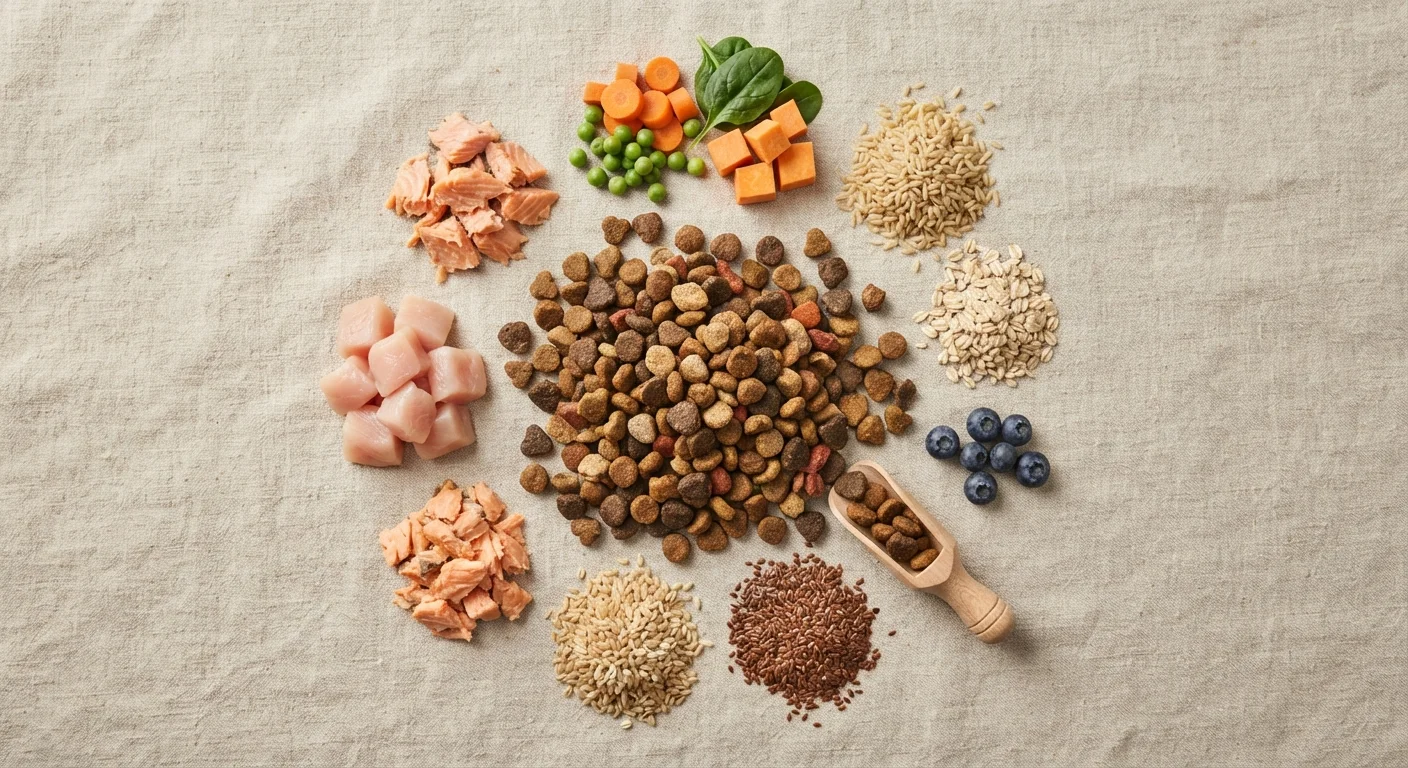
- Chicken / beef / salmon (whole named meat): High moisture content means the weight drops significantly after cooking. Still a quality source of amino acids, fats, and micronutrients.
- Chicken meal / fish meal: Pre-rendered, low-moisture concentrate. Pound-for-pound, meals often deliver more protein than their whole-meat equivalents on a dry-matter basis - this is not a downgrade.
- Meat by-products: Organ meats, blood, and other non-muscle parts excluded from standard cuts. Nutrient-dense in many cases; the term carries a stigma that outpaces the nutritional reality.
- Plant proteins (soy, pea protein, lentils): Used to supplement or partially replace animal protein. Digestibility varies by species - cats, as obligate carnivores, have a limited ability to use plant-derived amino acids effectively.
Common pet nutrition myths - including the belief that by-products are always low quality - are worth reviewing before ruling out any ingredient category.
Carbohydrates, Fibers, and Grains
Carbohydrates provide energy and structural bulk to kibble. They are not nutritionally required by cats, but dogs can digest and use them well. Common sources include:
- Brown rice / white rice: Easily digestible, low-allergen grain. White rice is often used in sensitive-stomach formulas precisely because it is gentle on the gut.
- Corn / corn gluten meal: An energy source and protein supplement respectively. Frequently mischaracterized as a pure filler - corn gluten meal has a reasonably high protein content.
- Oats / barley: Whole grains providing soluble fiber that supports digestive health and stable blood glucose.
- Peas / potatoes / tapioca: Grain-free alternatives used as binders and energy sources. Their association with canine dilated cardiomyopathy (DCM) is under ongoing FDA investigation; consult your veterinarian before choosing grain-free diets based on trend rather than medical need.
- Beet pulp: A prebiotic fiber source that supports colon health. Not a sweetener - the sugar is largely removed during processing.
Grain-Free Doesn't Always Mean Better
Grain-free diets have become popular partly due to myths about grains being harmful allergens. In reality, true grain allergies in pets are uncommon, and grains like rice and oats are well-tolerated by most dogs and cats. The FDA has been investigating a possible link between certain grain-free diets high in legumes and dilated cardiomyopathy (DCM) in dogs. Speak with your veterinarian before switching to a grain-free formula based solely on marketing claims.
Fats, Additives, and Preservatives
Fats supply essential fatty acids, fat-soluble vitamins, and palatability. Preservatives keep fats from going rancid. Neither category is inherently harmful.
- Chicken fat / fish oil / flaxseed oil: Sources of omega-6 and omega-3 fatty acids. Fish oil is particularly valued for its EPA and DHA content, which supports coat, skin, and inflammatory balance.
- Mixed tocopherols (vitamin E): A natural preservative derived from plant oils. Generally considered a stable, low-concern option.
- Ethoxyquin / BHA / BHT: Synthetic preservatives permitted at regulated levels by the FDA. Ongoing debate exists in the pet owner community; current regulatory guidance considers approved uses safe, though many manufacturers have moved toward natural alternatives in response to consumer preference.
- Taurine: An amino acid added explicitly to cat food - cats cannot synthesize it adequately on their own, making dietary taurine essential for heart and eye health.
- Chelated minerals (zinc proteinate, etc.): Minerals bound to amino acids for improved absorption. A sign of formulation attention rather than a red flag.
Understanding these ingredients helps families compare options on nutritional merit rather than marketing language. For the broader financial picture of feeding your pet, everyday pet care costs offers a practical spending overview. You can also explore decoding your pet's food label for additional context on nutritional claims.
This article is for general informational purposes only and does not constitute veterinary or dietary advice. Always consult a licensed veterinarian before making significant changes to your pet's diet, especially for animals with existing health conditions.