

Key Takeaways
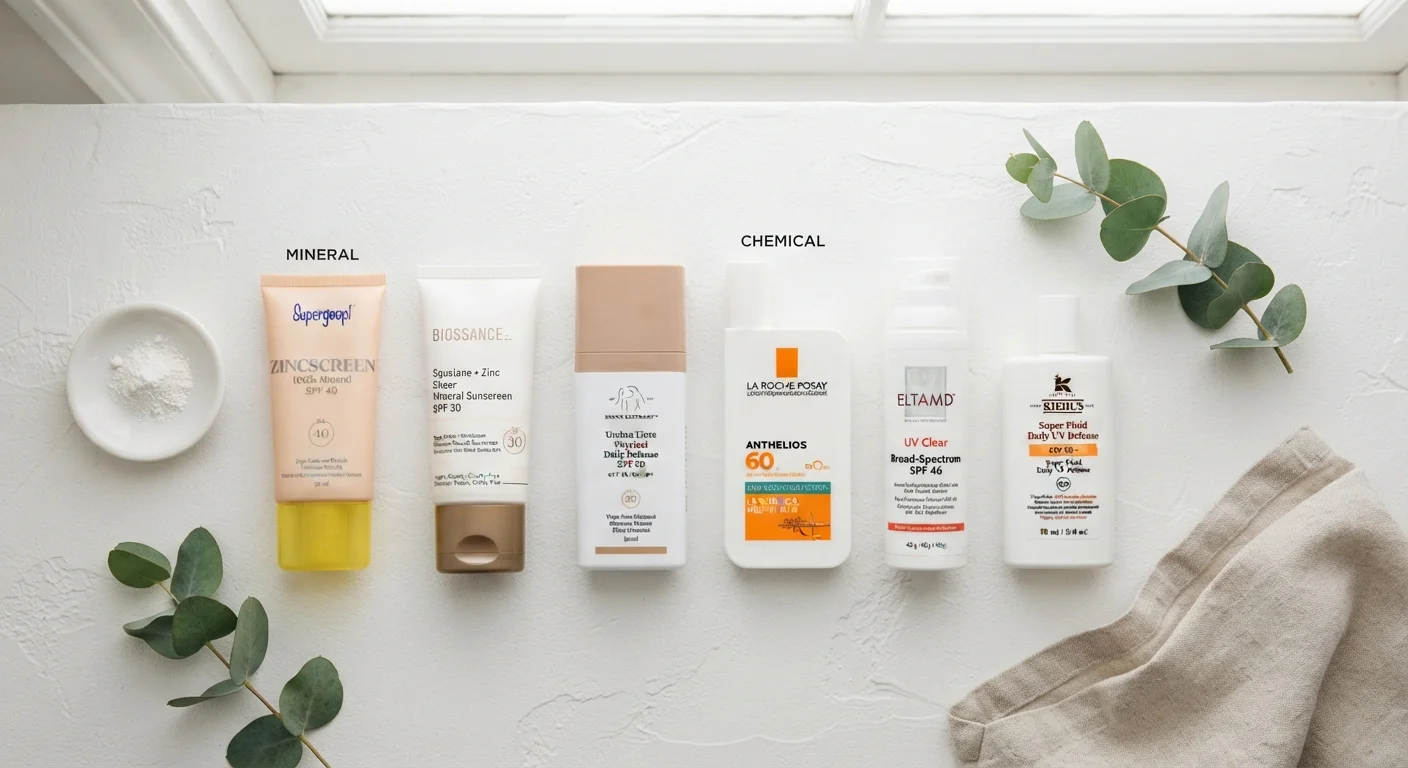
- Physical sunscreens use mineral filters (zinc oxide, titanium dioxide) that sit on the skin's surface.
- Chemical sunscreens absorb UV rays via organic compounds and tend to feel lighter on the skin.
- Sensitive and acne-prone skin types often tolerate mineral filters better.
- Neither type is universally superior - skin type, lifestyle, and texture preference all matter.
- Consistent daily application and adequate quantity matter more than which type you choose.
Our Verdict
Both physical and chemical sunscreens deliver meaningful UV protection when used correctly. Physical formulas are generally better suited to reactive or sensitive skin, while chemical options tend to work well for active lifestyles where a lightweight, sweat-resistant formula is a priority. The right sunscreen is ultimately the one you'll apply every day.
| Best for | Recommended |
|---|---|
| Sensitive, redness-prone, or easily irritated skin | Physical (mineral) sunscreen |
| Active lifestyles, sports, or high-sweat environments | Chemical sunscreen |
| Darker skin tones concerned about white cast | Chemical sunscreen or tinted mineral formula |
| Young children or those seeking minimal ingredient lists | Physical (mineral) sunscreen |
How Each Type Works
The core difference between physical and chemical sunscreens lies in their mechanism of action - and understanding that difference makes every other comparison easier to follow.
Physical sunscreens (also called mineral sunscreens) use active ingredients zinc oxide and/or titanium dioxide. These minerals remain on the skin's surface and work by reflecting and scattering UV radiation. Because they don't need to be absorbed to function, they're effective almost immediately after application.
Chemical sunscreens use organic (carbon-based) compounds such as avobenzone, oxybenzone, octinoxate, or homosalate. These ingredients absorb UV energy and convert it to a small amount of heat, which is then released from the skin. Most dermatologists recommend applying chemical sunscreens about 15-20 minutes before sun exposure to allow absorption.
Both types, when formulated to an SPF 30 or higher with broad-spectrum coverage, protect against both UVA and UVB rays. For a deeper look at what those SPF numbers actually measure, see our SPF breakdown guide.
| Physical (Mineral) | Chemical | |
|---|---|---|
| Active ingredients | Zinc oxide, titanium dioxide | Avobenzone, oxybenzone, octinoxate, others |
| How it works | Reflects and scatters UV rays | Absorbs UV and converts to heat |
| Time to effectiveness | Immediate upon application | ~15-20 minutes after application |
| Texture | Thicker; may leave white cast | Lighter; blends invisibly |
| Sensitive skin tolerance | Generally high | Varies by formula and individual |
| Sweat/water resistance | Variable by formula | Commonly formulated for this |
| Under makeup | Can pill or feel heavy | Usually layers smoothly |
Skin Type Compatibility
Your skin's baseline behavior is one of the most reliable guides for choosing between the two. If you haven't mapped your skin type yet, our skin type guide is a good starting point before making any product switch.
Sensitive and reactive skin tends to respond well to mineral formulas. Zinc oxide in particular has a long track record as a gentle, non-irritating active, which is why it's commonly found in products designed for babies or post-procedure skin.
Oily or acne-prone skin can go either way. Some people find mineral sunscreens - especially older or thicker formulations - feel heavy or pore-clogging. Modern lightweight mineral formulas have addressed this somewhat, but many with oily skin still prefer well-formulated chemical options that absorb cleanly.
Dry skin often tolerates both types, though the texture and additional ingredients in the formula (moisturizing agents, humectants) will matter more than the UV filter type itself.
Darker skin tones may find traditional mineral sunscreens leave a noticeable white or grey cast. Tinted mineral formulas have improved considerably in this area, as have finely milled zinc dioxide formulations - but chemical sunscreens generally remain more cosmetically invisible on deeper skin tones.
Patch Test Before Committing
If you're switching sunscreen formulas, apply a small amount to the inside of your wrist or behind your ear for several days before full facial use. This is especially important for reactive or acne-prone skin. A negative reaction to one filter type doesn't mean all sunscreens are off-limits - formula matters as much as filter category.
Lifestyle and Practical Fit
Beyond skin type, how and where you spend your time influences which formula will actually work for you day-to-day.
Active and outdoor use: Chemical sunscreens are typically formulated for better adhesion under sweat and water, making them a common choice for sport and beach settings. Look for water-resistant labeling and follow reapplication guidelines - generally every 80 minutes during water activity.
Everyday urban use: For an office or commute setting, texture and how well the sunscreen layers under makeup tend to dominate the decision. Many chemical sunscreens have lighter, serum-like textures that sit well under foundation. Some mineral formulas double as a mattifying base, which suits certain skin types well.
Families with young children: Mineral sunscreens are commonly recommended for children, in part because of their simpler active ingredient profiles and their established safety data. That said, the FDA continues to evaluate the safety data on various chemical filter ingredients - parents with questions should discuss this with a pediatric healthcare provider.
If you're thinking about switching your current sunscreen or adding one to an existing routine, our product-switching checklist covers patch testing and what reactions to watch for. Understanding your skin type before making that change can save you from an avoidable reaction.
~70%
Americans using sunscreen inconsistently
The American Academy of Dermatology has reported that the majority of Americans do not apply sunscreen as recommended, highlighting that habit matters more than formula type.
1 oz
Recommended amount per full-body application
Dermatology guidelines consistently note that most people apply far less than the one ounce (roughly a shot glass) recommended for full-body coverage, reducing effective SPF.
Common Trade-Offs to Know
Neither sunscreen type is without drawbacks - knowing the realistic trade-offs helps you set expectations before committing to a formula.
Don't Skip Sunscreen Over Texture Concerns
The risk of using no sunscreen far outweighs the cosmetic inconvenience of an imperfect texture. If you're avoiding sunscreen because of how it feels, try a different formulation or filter type before abandoning SPF altogether. Consistent use - even of an imperfect product - is more protective than occasional use of an ideal one.
- Physical sunscreens can leave a white cast, feel heavier, or pill under makeup. However, they are less likely to cause contact irritation and begin working immediately after application.
- Chemical sunscreens tend to feel lighter and blend invisibly, but some individuals report sensitivity to certain chemical filters (particularly oxybenzone). They also require a few minutes to activate fully and may degrade slightly faster under prolonged UV exposure, depending on the active ingredients used.
In practice, many commercially available sunscreens combine both mineral and chemical filters to balance protection breadth, texture, and stability. If a single-type formula isn't working for your skin, a hybrid option may be worth exploring with input from a dermatologist.
This article is for general informational and educational purposes only. It does not constitute medical or dermatological advice. Consult a qualified healthcare professional for guidance specific to your skin health needs.