
Functional Style for Teenagers: Balancing Self-Expression and Household Budgets

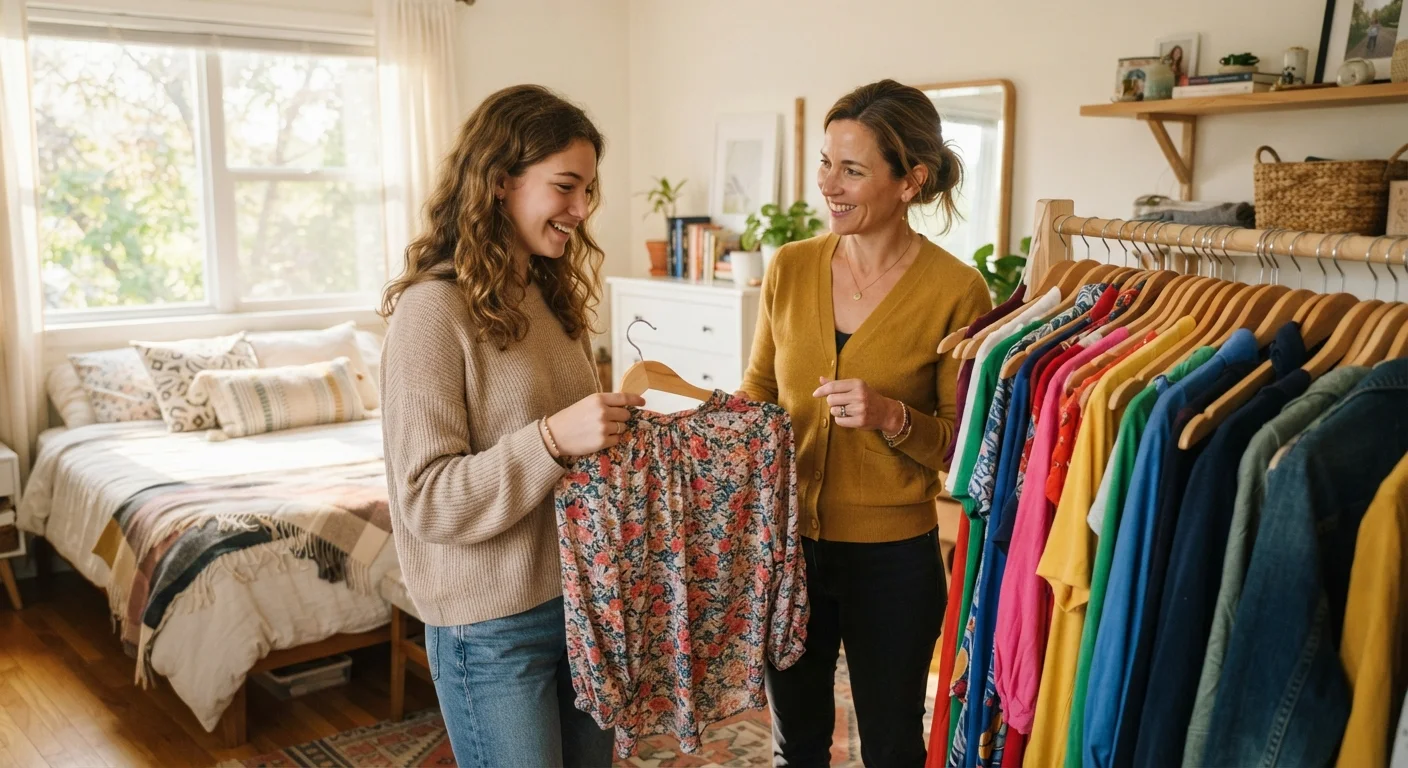
Key Takeaways
- Teen clothing choices are tied to identity development, not just fashion preference.
- A defined clothing budget given directly to teens encourages responsible decision-making.
- Versatile core pieces reduce total spending while preserving room for personal expression.
- Resale and secondhand options can stretch budgets without limiting style choices.
- Family wardrobe conversations go smoother when teens are treated as active participants.
Functional Teen Style
Functional teen style refers to a wardrobe approach that meets a teenager's desire for self-expression while remaining practical, durable, and financially sustainable for the household. It prioritizes versatile pieces that serve multiple occasions - school, social settings, and downtime - without requiring constant replacement. The goal is a closet that reflects individual identity and works within real-world family budget constraints.
In consumer behavior research, adolescent clothing choices are recognized as identity-formation tools, not simply aesthetic preferences - a distinction that shapes how families can negotiate wardrobe decisions more effectively.
Why Teen Wardrobe Conversations Get Complicated
Clothing is rarely just clothing for a teenager. Research in adolescent development consistently shows that personal style functions as a key vehicle for identity exploration - how teens present themselves signals group belonging, individuality, and emerging values. This means that a parent's practical concern about cost and a teen's emotional investment in their look are both legitimate, even when they pull in opposite directions.
Understanding this dynamic is the starting point for productive family conversations. Dismissing a teen's preferences as frivolous, or framing every clothing request as unnecessary spending, tends to generate conflict rather than cooperation. A more effective approach acknowledges what style means to them while introducing budget reality as a shared problem to solve - not a veto.
For families managing broader style decisions across different age groups, the contrast between teen needs and adult wardrobe strategy is worth noting. Building versatile adult wardrobes from fewer pieces follows a different logic than teen dressing - but the core principle of intentional purchasing applies to both.
Style Preferences Are Developmentally Normal
Adolescent attachment to clothing and appearance is a recognized part of identity development, not a superficial concern. Understanding this doesn't mean unlimited clothing spending - but it does suggest that dismissive responses to teen style preferences tend to be less effective than collaborative ones. The goal is teaching decision-making alongside budget awareness.
Building a Functional Wardrobe Framework
The most practical teen wardrobes follow a simple structure: a foundation of versatile basics, topped with a smaller number of personality-driven pieces. Basics - neutral tees, well-fitting denim, plain sweatshirts, simple sneakers - serve multiple contexts without dating quickly. They also survive growth spurts and trend cycles better than statement items.
The key is deciding, as a family, what proportion of the clothing budget goes toward each category. A common approach is to cover essentials from the household budget while giving teens a separate, defined allowance to spend on personal-expression pieces. This structure preserves parental oversight on necessities while giving teens genuine ownership of their style choices.
Let Teens Manage Their Own Clothing Allowance
Handing a teen a set seasonal amount - and stepping back from individual purchase decisions - is one of the most effective ways to build both financial literacy and wardrobe judgment simultaneously. They will make some choices they later regret, and that experience is genuinely educational. Keep the allowance consistent and resist topping it up when it runs out.
For families starting this kind of structure from scratch, a practical introduction to family clothing budgets covers the foundational planning steps. And for younger children still in the household, building school-year wardrobes for growing children addresses a related but distinct challenge.
~60%
Teens who say clothing reflects personal identity
Multiple consumer surveys on adolescent shopping behavior consistently show a majority of teenagers cite self-expression as a primary motivation for clothing choices, not trend-following alone.
2-3x
Cost difference: trend vs. versatile basics
Clothing industry analysts note that trend-driven or branded items typically carry a significant price premium over comparable unbranded or neutral alternatives of similar construction quality.
Making Secondhand and Resale Work
Resale and secondhand clothing have become genuinely mainstream among younger consumers - a cultural shift that works in budget-conscious families' favor. Thrift stores, peer-to-peer resale apps, and clothing swaps can all extend a clothing budget meaningfully without requiring a teen to compromise on having a distinct look.
The framing matters. Teens who discover secondhand shopping as a way to find one-of-a-kind pieces - rather than as a deprivation measure - often become enthusiastic participants. Some teenagers find that the hunt itself becomes part of the appeal.
Families exploring budget-smart buying strategies more broadly will find that clothing is one category where secondhand markets offer real value without meaningful quality trade-offs, particularly for fast-changing teen sizes and tastes.
Connecting Style to the Bigger Picture
Teen wardrobe conversations don't happen in isolation. How a teenager feels about their appearance connects to broader wellbeing - confidence, peer relationships, and self-perception. That doesn't mean every clothing request is emotionally urgent, but it's worth recognizing that the stakes feel real to them.
Families navigating the full landscape of teen development - including how style intersects with self-image and social dynamics - may also find value in thinking about routines more holistically. Introducing grooming routines for teens without conflict covers an adjacent area where similar principles apply: clear guidance, teen autonomy, and low-pressure collaboration.
The families that navigate teen style most smoothly tend to share a common approach - they treat clothing conversations as ongoing negotiations rather than one-time rulings. A defined budget, a shared framework, and respect for what self-expression means at this life stage go further than strict control in either direction.