

Key Takeaways
- Teen grooming conversations go better when framed around health and confidence, not appearance or criticism.
- Starting with two or three core habits is more sustainable than introducing a full multi-step routine at once.
- Giving teens ownership over their products and schedule reduces resistance significantly.
- Consistency matters more than complexity - simple routines practiced daily outperform elaborate ones used sporadically.
- Grooming habits introduced in adolescence tend to carry forward into adulthood.
What you will need
Why Teen Grooming Conversations Often Go Wrong
Introducing grooming routines to teenagers is rarely as simple as handing over a product and expecting it to be used. Adolescence is a period defined by growing autonomy, and anything that feels imposed - particularly around physical appearance - can trigger resistance fast. Parents who lead with criticism («You need to wash your face more») often find the conversation ends there.
The more productive framing is health-focused and collaborative. Grooming habits during the teen years aren't just about appearance; they support skin health, oral health, and the kind of personal confidence that helps in social and academic settings. Connecting the routine to outcomes your teen actually cares about - feeling comfortable in their own skin, avoiding breakouts before an important event - lands better than hygiene lectures.
It's also worth acknowledging that teens are navigating a significant amount of change. The mental wellness dimension of adolescence is real: feeling in control of daily rituals can be grounding, not trivial. Frame grooming as something they're gaining, not something being enforced.
Model the Behavior You Want to See
Teenagers are more influenced by what they observe than what they're told. If regular grooming is a visible, unremarkable part of adult life in your household, it becomes a normal expectation rather than an imposed rule. You don't need to make it a lesson - simply letting your own routine be visible is enough.
How to Introduce New Grooming Habits Step by Step
The steps below are designed to be worked through gradually - not rolled out in a single conversation. Patience and consistency from parents are just as important as the habits themselves.
What you will need
Start the conversation on neutral ground
Choose a relaxed, private moment - not immediately after a complaint about body odor or skin. Approach the subject from a place of support: explain that you want to help them figure out a routine that works for them as their body changes. Ask what, if anything, is already bothering them about their skin, hair, or hygiene - letting them set the agenda makes a significant difference.
Identify two or three core habits to begin with
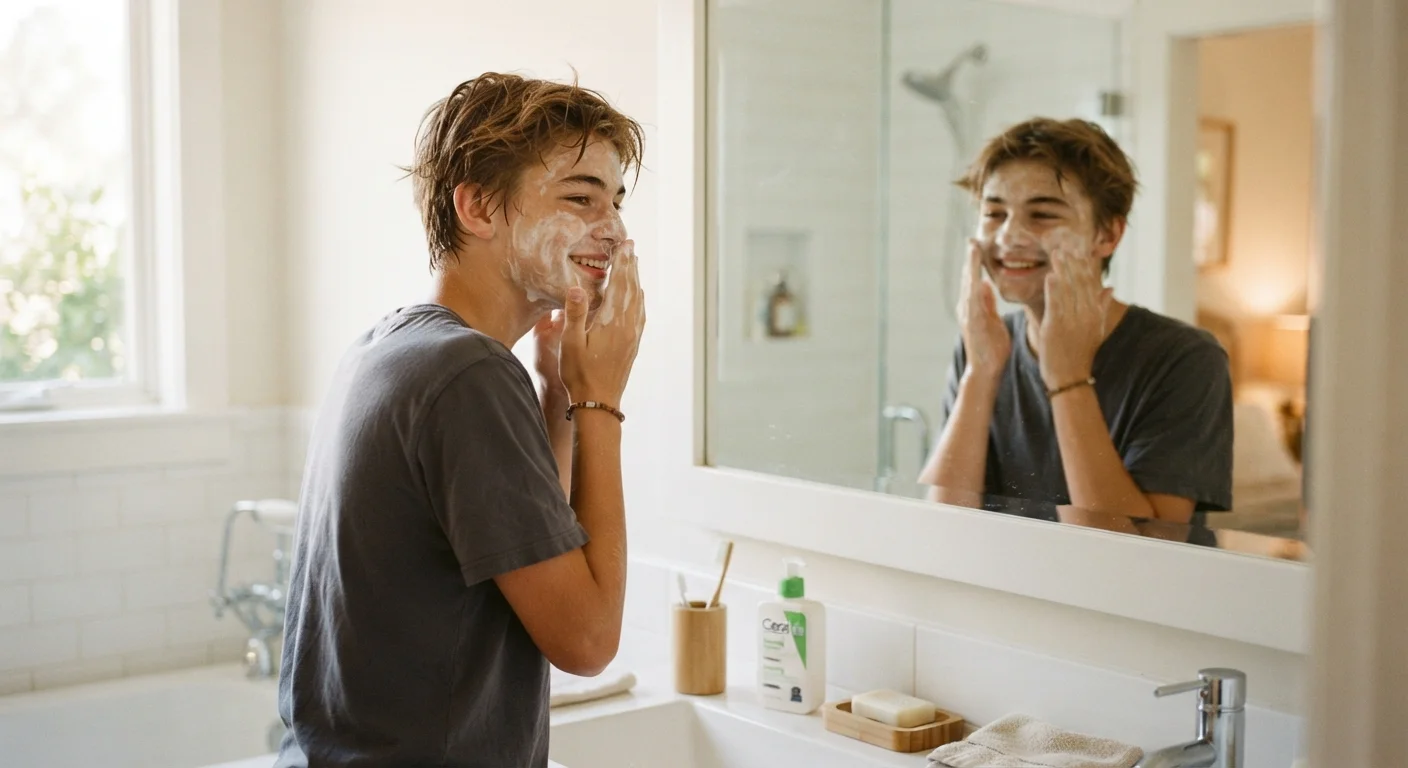
Rather than handing over a full grooming kit, agree on just two or three foundational habits to focus on first. For most teenagers, this will be twice-daily face cleansing, daily deodorant use, and consistent tooth brushing plus flossing. Nail these before adding anything else. Refer to the family grooming habits guide for a fuller framework on habit-building across age groups.
Let your teen choose their own products
Within sensible parameters - age-appropriate formulas, no harsh actives for beginners - allow your teen to select their own products. This small act of autonomy dramatically increases follow-through. Go together to choose items when possible; it normalizes the conversation and gives you a chance to read labels together without making it feel like a lesson.
Set a routine schedule and write it down together
Work with your teen to decide when each habit will happen - morning, evening, or both. Write it down, whether in a notebook, on a whiteboard, or in a phone app. The act of documenting creates a small psychological commitment. Keep the schedule realistic for school days and don't expect weekend habits to mirror weekday ones immediately.
Step back and let them self-manage
Once the routine is established, resist the urge to supervise or remind daily. Teenagers need to experience both the accountability of managing their own habits and the natural feedback loop - clearer skin, fresher breath - that makes grooming feel worthwhile. Check in periodically with curiosity rather than inspection: «How's the new routine going?» rather than «Did you wash your face today?»
Expand the routine gradually as habits solidify
Once two or three habits are running consistently - typically after four to six weeks - it becomes natural to ask whether there's anything else your teen wants to add or improve. This might mean introducing a weekly exfoliant, discussing hair care in more depth, or exploring the trade-offs of more complex routines. Keep following their lead.
Keeping Routines Simple and Affordable
One of the fastest ways to derail a new grooming habit is to overcomplicate it. A five-step skincare routine sounds impressive, but for a teenager who's just learning to wash their face consistently, it's more likely to cause confusion than results. Start with the minimum effective dose: cleanse, moisturize, protect. Build from there only when the basics are locked in.
Cost is also a real factor for families. Grooming doesn't have to be expensive to be effective - our guide to stretching your grooming budget covers practical ways to keep spending in check without compromising hygiene. Involving your teen in understanding what products are worth buying versus what's driven by marketing can itself become a useful financial lesson.
For teens with sensitive or reactive skin, fewer products is often better. See grooming routines for sensitive skin for a breakdown of what to scale back. And once solid habits are established, the family grooming checklist can help everyone stay on track without constant reminders.
Gentle facial cleanser
Removes oil and environmental residue without stripping the skin barrier - a core starting point for teen skin care.
Fragrance-free moisturizer
Maintains skin hydration and reduces irritation, especially important for teens with combination or sensitive skin.
Deodorant or antiperspirant
Manages body odor as hormone changes intensify sweating during puberty.
Soft-bristle toothbrush and fluoride toothpaste
Supports twice-daily brushing, the foundation of any oral hygiene routine.
Dental floss or floss picks
Clears plaque between teeth that brushing alone cannot reach - see our <a href="/style-beauty/grooming-and-care/oral-care-beyond-toothbrushing-what-most-people-skip">guide to oral care beyond brushing</a> for more.
Small notebook or habit-tracking app
Helps teens monitor their own routine completion without parental reminders.
Avoid Overloading Teen Skin Early On
Teen skin is often more reactive than adult skin, particularly during hormonal changes. Introducing too many active ingredients - exfoliating acids, retinoids, or heavily fragranced products - before basics are established can cause irritation or breakouts and discourage the routine entirely. Always start with gentle, minimal formulas and introduce anything stronger only after consulting a dermatologist if there are specific skin concerns.