

Key Takeaways
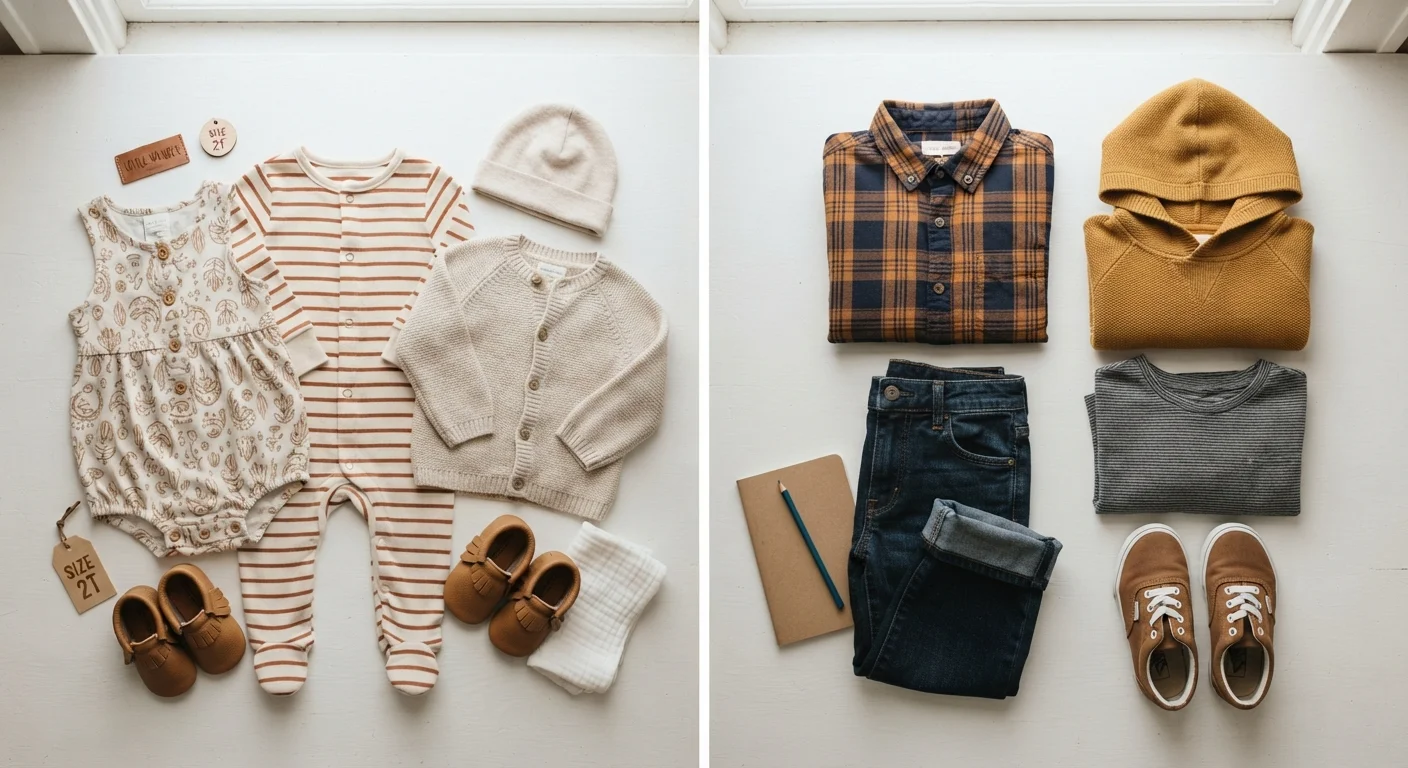
- Toddler wardrobes prioritize durability, easy dressing features, and rapid size turnover.
- School-age children need more structured pieces, including dress codes and activity-specific clothing.
- Buying up a size works differently at each stage - growth rates slow and become more predictable after age five.
- Toddler clothing can often be passed down or bought secondhand more freely than school uniforms.
- Involving school-age children in wardrobe choices reduces resistance and improves garment longevity.
Our Verdict
Toddler and school-age wardrobes call for fundamentally different planning strategies. Toddlers demand frequent replacement cycles, forgiving fits, and functional closures, while school-age children benefit from intentional core pieces that balance school requirements with after-hours versatility. Understanding these distinctions helps families allocate clothing budgets more effectively at each stage.
| Best for | Recommended |
|---|---|
| Families with children ages 1-4 | Toddler-focused approach: prioritize washability, flexible sizing, and low per-item cost |
| Families with children ages 5-12 | School-age approach: invest in fewer, more durable pieces that meet school dress codes |
| Families managing both age groups simultaneously | Stage-aware budgeting: apply different spend-per-item logic to each child's wardrobe |
Why the Two Stages Require Different Thinking
Parents who've dressed both a toddler and a school-age child often describe the experience as surprisingly different - and not just because of size. The underlying logic of what to buy, how much to spend, and how long it will last shifts considerably between these two developmental windows.
Toddlers, roughly ages one through four, grow at an accelerating pace that can see them move through two or three clothing sizes in a single year. Their clothes face intense physical demands: crawling, outdoor play, messy eating, and toilet training all take a heavy toll on fabric. At this stage, a garment's functional features - elasticated waistbands, snap closures, tagless construction - matter far more than style.
School-age children, generally five through twelve, grow more slowly and predictably. They also acquire structured social environments that introduce dress codes, uniforms, or peer-influenced preferences. The wardrobe challenge shifts from sheer replacement speed to building a flexible set of pieces that covers school requirements, extracurricular activities, and everyday wear without duplication or waste.
For a broader seasonal view of how to manage clothing across both age groups through the year, see The Family Fashion Calendar.
Toddler Wardrobe Priorities: Function First
When planning a toddler's wardrobe, durability and washability should lead every purchasing decision. Toddlers are notoriously hard on clothing, and pieces that cannot survive repeated hot-water cycles or that show staining quickly will feel like wasted spend regardless of their original price.
Check Closures Before You Buy
For children actively learning to dress themselves - typically between ages two and four - clothing with simple, self-manageable closures supports independence and reduces morning friction. Zippers with large pulls, wide elasticated waistbands, and velcro shoes are practical choices during this window. Avoid small buttons on items the child will need to manage alone.
Key considerations for toddler wardrobes include:
- Size headroom: Buying one size up is a common strategy, but it works best for tops and outerwear rather than pants, where excess length creates a tripping hazard.
- Closure type: Zippers and snaps support independence as toddlers begin dressing themselves; avoid complex buttons for everyday pieces.
- Fabric weight: Mid-weight cotton or cotton-blend fabrics tend to hold up better than lightweight alternatives across repeated washing.
- Quantity over quality investment: Given how quickly toddlers outgrow clothing, keeping per-item cost modest and maintaining a modest quantity of pieces is generally more practical than purchasing fewer premium items.
Secondhand and hand-me-down clothing is particularly well-suited to this stage. Because toddler items are often outgrown before they wear out, previously owned clothing can represent genuine value - provided it still meets current safety standards, particularly for sleepwear. See Dressing Kids for Every Season Without Buying New Each Time for layering strategies that extend each piece's usefulness.
School-Age Wardrobe Priorities: Structure and Versatility
Once children start school, the wardrobe equation changes in two significant ways: external requirements enter the picture, and children themselves begin forming opinions about what they'll actually wear.
| Toddlers (Ages 1-4) | School-Age Children (Ages 5-12) | |
|---|---|---|
| Growth rate | Rapid; up to 3 sizes per year | Slower and more predictable |
| Key wardrobe feature | Easy closures, elastic waists | Versatility across school and casual |
| Ideal spend per item | Lower; high turnover expected | Higher justifiable for durable pieces |
| Secondhand suitability | High - items often outgrown, not worn out | Moderate - depends on dress code requirements |
| Child input in choices | Minimal - parent-led decisions | Meaningful - builds buy-in and care habits |
| External clothing requirements | Rare | Common - uniforms or dress codes |
School dress codes or uniforms can simplify the core wardrobe in some respects - the daily question of what to wear is partially answered - but they also create a separate category of clothing that must be maintained. Parents often find it helpful to treat school clothes and casual clothes as two distinct budgets rather than one pool.
For casual wear, the goal at this stage is versatility. A smaller set of well-chosen pieces that mix and match tends to serve better than a larger collection of standalone items. Neutral base layers - solid tees, plain chinos or jeans, simple zip fleeces - combine with more expressive pieces (a printed hoodie, a brightly colored sneaker) without creating chaos at the start of the school day.
Involving children in selections, within defined parameters, also matters practically: a child who participates in choosing a jacket is more likely to wear it and treat it with care. This collaborative approach reduces the common pattern of purchased-but-unworn items. For a structured approach to school-specific wardrobe building, Building a School-Year Wardrobe for Growing Children offers a useful framework.
Budget Allocation: How Spending Logic Differs
Given how differently these two stages work, applying the same per-item spending logic to both is usually a mistake. A toddler wardrobe benefits from a high-turnover, low-per-item model: many affordable pieces replaced frequently. A school-age wardrobe benefits from a lower-quantity, higher-durability model where selected pieces - a good pair of shoes, a well-made backpack, a durable winter coat - justify more considered spending because they'll stay in rotation for longer.
2-3 sizes
Average size changes per year for toddlers
Children's clothing industry guidance commonly notes toddlers can move through two to three sizes annually between ages one and three.
1 size
Typical annual size change for school-age children
After age five, most children's growth patterns slow to roughly one clothing size per year, making longer-horizon purchasing more viable.
Families managing both age groups simultaneously face the added challenge of running two different budget frameworks at once. One practical approach is to calculate a seasonal clothing allowance per child and apply it differently based on age: more items at lower unit cost for the toddler, fewer items at higher unit cost for the school-age child. This kind of stage-aware budgeting is explored further in Family Fashion on a Fixed Budget and within the broader context of Budget-Smart Buying strategies.
Whatever the specific approach, the underlying principle holds: clothing spend works hardest when it reflects the actual needs and growth dynamics of each child at their current stage - not a one-size-fits-all formula applied across the family.