

Key Takeaways
- A small core of versatile, layerable basics can dress kids through multiple seasons without constant new purchases.
- Buying one size up strategically adds months of wear, though fit trade-offs are real and worth understanding.
- Transitional pieces like lightweight zip fleeces and cotton cardigans do the heavy lifting between seasons.
- Proper clothing care significantly extends garment lifespan, making items wearable by future siblings or recipients.
- Seasonal wardrobe audits help families identify gaps before they become expensive last-minute shopping trips.
What you will need
Why Kids' Wardrobes Feel Like a Constant Expense
Children grow in unpredictable bursts, seasons shift faster than budgets can keep up, and clothing designed for kids rarely prioritizes longevity over novelty. The result: families often find themselves buying far more than necessary, season after season, without a clear system to rely on.
The good news is that most of this spending is avoidable - not by sacrificing quality or comfort, but by approaching kids' clothing with the same planning mindset used for other household resources. A modest, well-chosen set of pieces, layered and stored correctly, can cover far more of the year than most families realize.
This guide is part of a broader look at managing family clothing across every age and season, and applies directly to the budget-smart buying principles families use to stretch household spending further.
What you will need
The Core Strategy: Layering, Sizing, and Storage
Three principles do most of the work when it comes to dressing kids across seasons without a constant stream of new purchases. Layering extends individual garments into adjacent seasons. Strategic sizing adds months of wear to each item. Proper storage preserves value for the next round of use - whether that's a younger sibling or a hand-me-down recipient.
These aren't complicated ideas, but they require consistent habits rather than one-off decisions. The steps below walk through how to apply each principle practically, starting with the audit that makes everything else more effective.
Labeled storage bins or vacuum bags
Keep off-season clothing organized, protected from moisture, and easy to retrieve at the next seasonal transition.
Fabric marker or iron-on labels
Mark stored items with size and season so they're immediately identifiable without unpacking entire bins.
Measuring tape
Take accurate height and inseam measurements to inform sizing-up decisions before purchasing.
Conduct a seasonal wardrobe audit
At the start of each seasonal shift, pull out every item your child currently wears and assess it honestly. Sort into three piles: still fits and wearable, outgrown or damaged, and borderline. The borderline pile deserves the closest attention - these are the pieces that may carry over into the next season with smart layering.
Check the family fashion calendar to anticipate when each transition typically makes sense in your region.
Identify your layering core pieces
Layering is the single most effective tool for extending kids' clothing across seasons. Build around a core of neutral, mid-weight basics that work in multiple combinations: fitted long-sleeve tees, plain leggings, chino-style pants, and lightweight cotton cardigans. These items don't compete with outerwear and can be mixed across seasons.
Avoid building your core around novelty prints or seasonal graphics - these date quickly and limit mix-and-match flexibility.
Choose transitional outerwear strategically
A lightweight zip-up fleece, a water-resistant shell jacket, and a warm mid-layer (like a quilted vest) give you the components to dress a child appropriately from early fall through late spring. Rather than one bulky coat for winter only, this system means each piece earns wear across more months.
When selecting these items, check that they layer comfortably over your core pieces without restricting arm movement - this is easy to miss when buying without the child present.
Size up thoughtfully - and understand the trade-offs
Buying one size up is a widely used strategy, but it works better for some garment types than others. Tops, sweatshirts, and outerwear tend to accommodate a larger size gracefully. Pants, on the other hand, often present fit problems - waistbands gap, inseams drag, and children may find movement uncomfortable.
The pros and cons of sizing up are worth weighing carefully before making this a blanket approach.
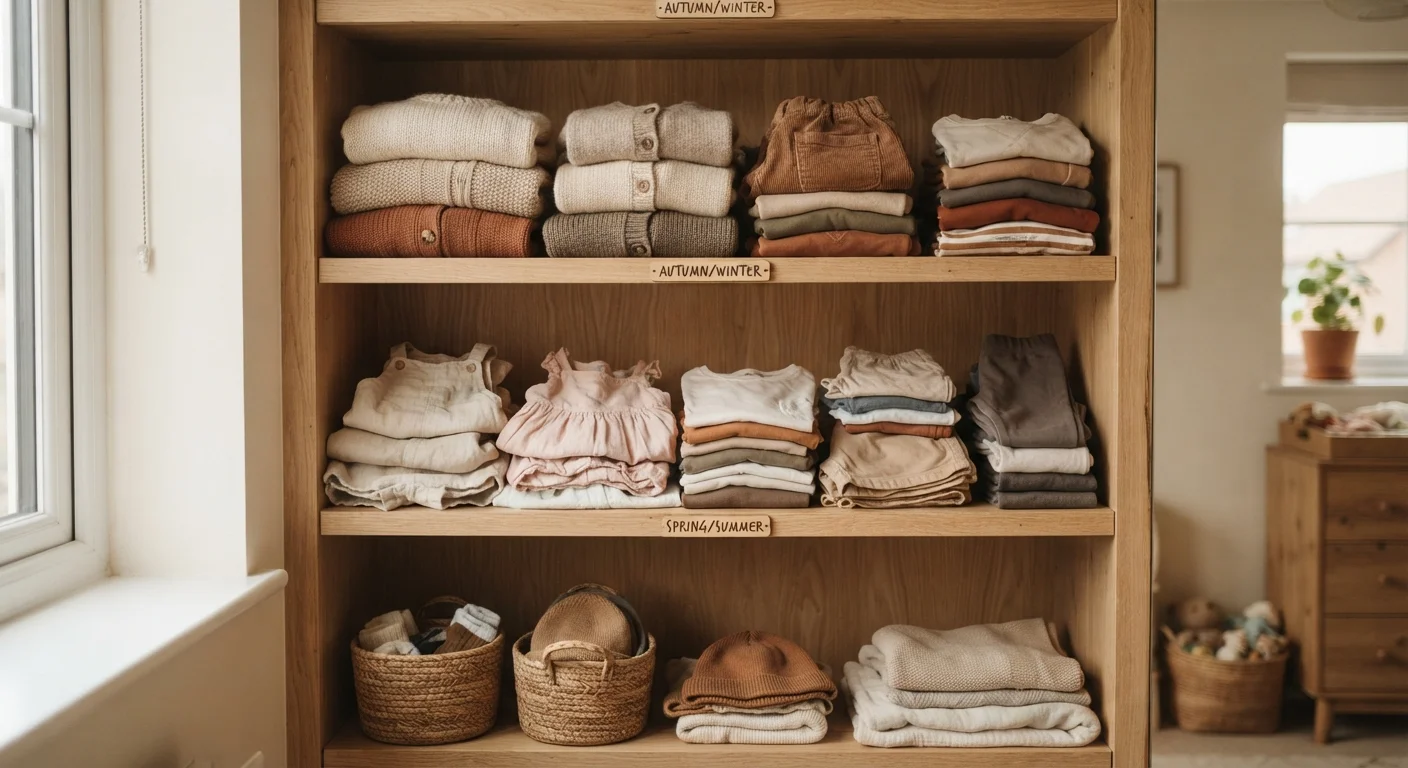
Store off-season clothes properly for next-round use
Clothes stored carelessly return damaged, musty, or moth-eaten. Wash every item before storing - body oils and food residue attract pests and break down fibers over time. Use labeled, airtight bins organized by size and season. Vacuum storage bags work well for bulkier items like winter coats and fleeces.
Good storage habits pay dividends when younger siblings are ready to step into the same items, or when you pass pieces along. See our guidance on clothing care habits for washing and storage specifics.
Plan hand-me-downs and secondhand intake deliberately
If you're receiving hand-me-downs from friends or family, assess them during your seasonal audit rather than accepting everything at once. Taking in more than you can store or use creates clutter that obscures what you actually have. The hand-me-down guide covers how to evaluate incoming items for wear, fit, and safety before integrating them into your child's wardrobe.
Photograph Items Before Storing
Before packing away off-season clothing, take a quick photo of each item. This makes it easy to remember what you have when the weather shifts, preventing duplicate purchases. Store photos in a dedicated phone album labeled by size and season.
Safety First When Sizing Up
Clothes that are significantly too large can create real hazards for younger children - particularly around hoods, drawstrings, and overly long hems near stairs or playground equipment. Always check that a larger size doesn't compromise movement or safety before prioritizing longevity of fit.
Avoid Over-Buying for Future Seasons
It's tempting to stock up heavily on the next size during end-of-season clearances, but children's growth is unpredictable. Buying too far ahead risks accumulating clothes that are skipped entirely. Aim to stay one size ahead at most, and reassess at each seasonal transition.
Building Habits That Reduce Future Shopping Pressure
The families who spend least on kids' clothing aren't necessarily buying cheaper items - they're buying fewer items and caring for them better. A consistent seasonal audit habit, combined with deliberate storage and a preference for versatile basics, creates a clothing system that largely runs itself.
If your children's clothing needs vary significantly by age group, the approach for toddlers versus school-age children differs in ways that are worth understanding before you build out your system. And for the school year specifically, a structured approach to building a school wardrobe can prevent the annual scramble that catches many families off-guard.
Applying these habits consistently over two or three seasons tends to produce a noticeably lighter clothing spend - not through sacrifice, but through better use of what you already have.