

Key Takeaways
- Most grooming clutter stems from predictable psychological patterns, not just careless spending.
- Duplicate products and impulse purchases quietly drain household budgets over time.
- A leaner grooming kit built around genuine needs outperforms a crowded shelf in daily use.
- Understanding why accumulation happens is the first step to breaking the cycle.
The Shelf as a Mirror: What Clutter Actually Tells You
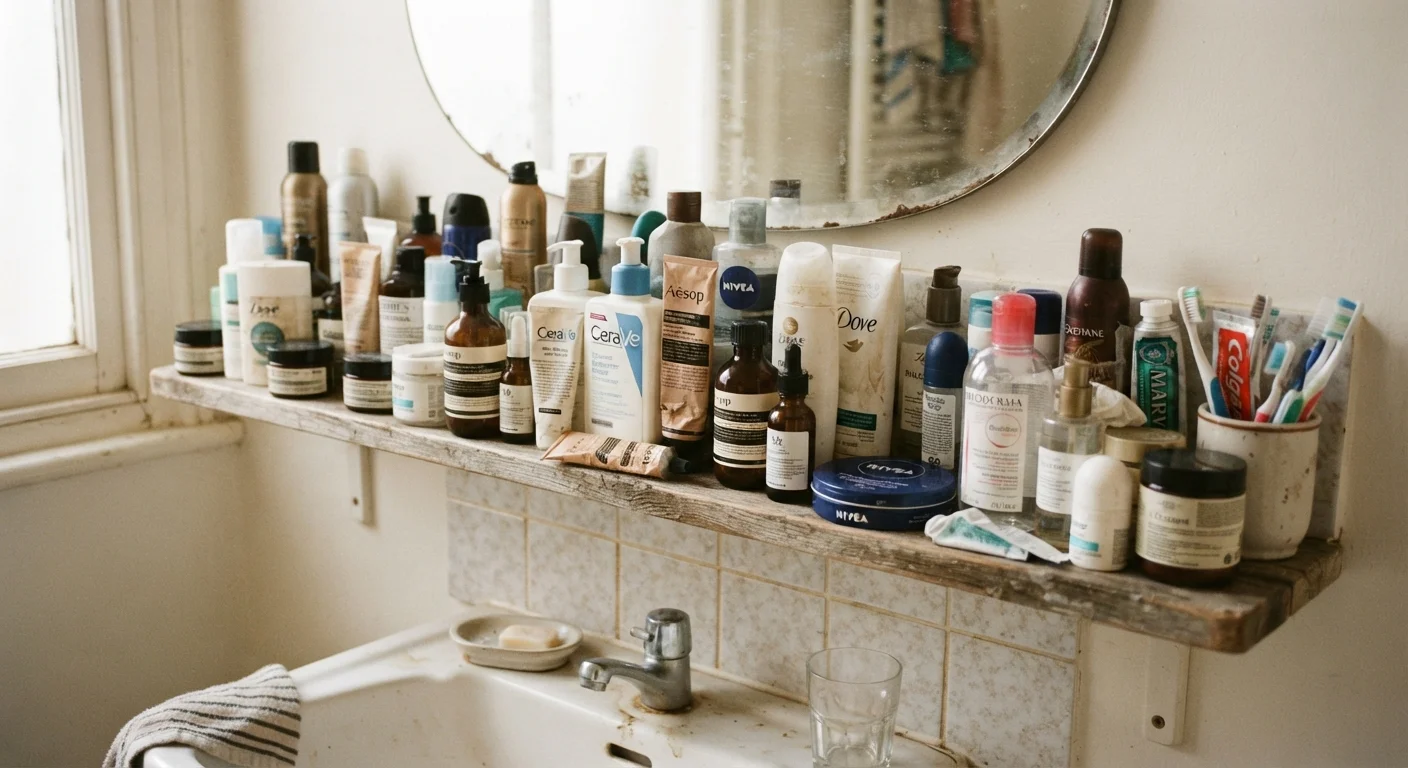
Open the average family bathroom cabinet and you'll likely find a landscape of half-empty bottles, duplicate shampoos, and products purchased with good intentions but rarely touched. This isn't a hygiene failure - it's a pattern. Grooming shelf clutter is one of the most consistent and overlooked forms of household waste, quietly consuming both money and mental space.
Research in consumer behavior consistently shows that personal care is one of the categories where households most frequently over-purchase. Unlike food waste, which is visible and timely, grooming product waste accumulates slowly - making it easy to ignore until the shelf physically can't hold another tube. Understanding the specific mistakes that drive accumulation is the most practical way to reverse it. See also the real costs of a complicated grooming routine for a broader look at how product complexity compounds spending.
Buying products based on marketing claims rather than actual skin or hair needs.
Why it happens: Packaging language - words like 'transforming,' 'restorative,' or 'clinically proven' - triggers optimism bias. Shoppers assume a new product will solve a problem the current one hasn't.
Keeping products 'just in case' long after they've stopped being used regularly.
Why it happens: Loss aversion - a well-documented cognitive tendency - makes discarding something feel wasteful even when it's taking up space and collecting dust. The sunk cost of what was paid reinforces reluctance to let go.
Duplicating products across family members rather than identifying what can be shared.
Why it happens: Separate shopping trips, individual preferences, and lack of a household inventory mean family members often buy the same category of product - body wash, for example - multiple times without realizing the overlap.
Subscribing to or bulk-buying grooming products before confirming they work for you.
Why it happens: Subscription models and bulk deals present strong short-term savings signals. The per-unit cost looks appealing before you've established whether you'll actually use the product consistently.
Treating variety as a substitute for an actual grooming routine.
Why it happens: Having many options can feel like preparedness. But without a consistent routine, products rotate in and out of use unpredictably, most get only partial use, and the shelf grows while habits don't form.
Building a Leaner Kit: Where to Go From Here
Audit before you shop. A simple inventory - listing what you actually own and when each item was last used - consistently surprises people. Products bought months ago that have never been opened are common findings. If you're unsure whether a product is still safe to use, knowing when to throw things out offers practical guidance on reading expiry signals.
~$300
Average annual personal care overspend per household
Consumer spending analyses suggest many US households spend significantly more on personal care products than they actively use, with unused items accounting for a meaningful share of the total.
40%
Of purchased grooming products go largely unused
Industry surveys on bathroom cabinet audits routinely find that a substantial proportion of products purchased are used fewer than five times before being abandoned or discarded.
The goal isn't a minimalist aesthetic for its own sake. It's a kit calibrated to your household's actual daily habits. When every product on the shelf has a clear, consistent use, the routine becomes faster, less expensive, and easier to maintain - especially for families managing grooming across multiple age groups. Our guide to building a family grooming routine that sticks addresses exactly this challenge. And if reducing grooming spend is a broader goal, stretching your grooming budget without cutting corners provides practical strategies that don't require sacrificing results.
Don't Let Decluttering Become a Spending Trigger
Clearing out a grooming shelf can create a false sense of scarcity - prompting immediate replacement purchases that restart the accumulation cycle. Before buying anything new after a declutter, give yourself a defined waiting period and shop only against a written list of genuine gaps. The goal is a functional kit, not a freshly stocked one.