

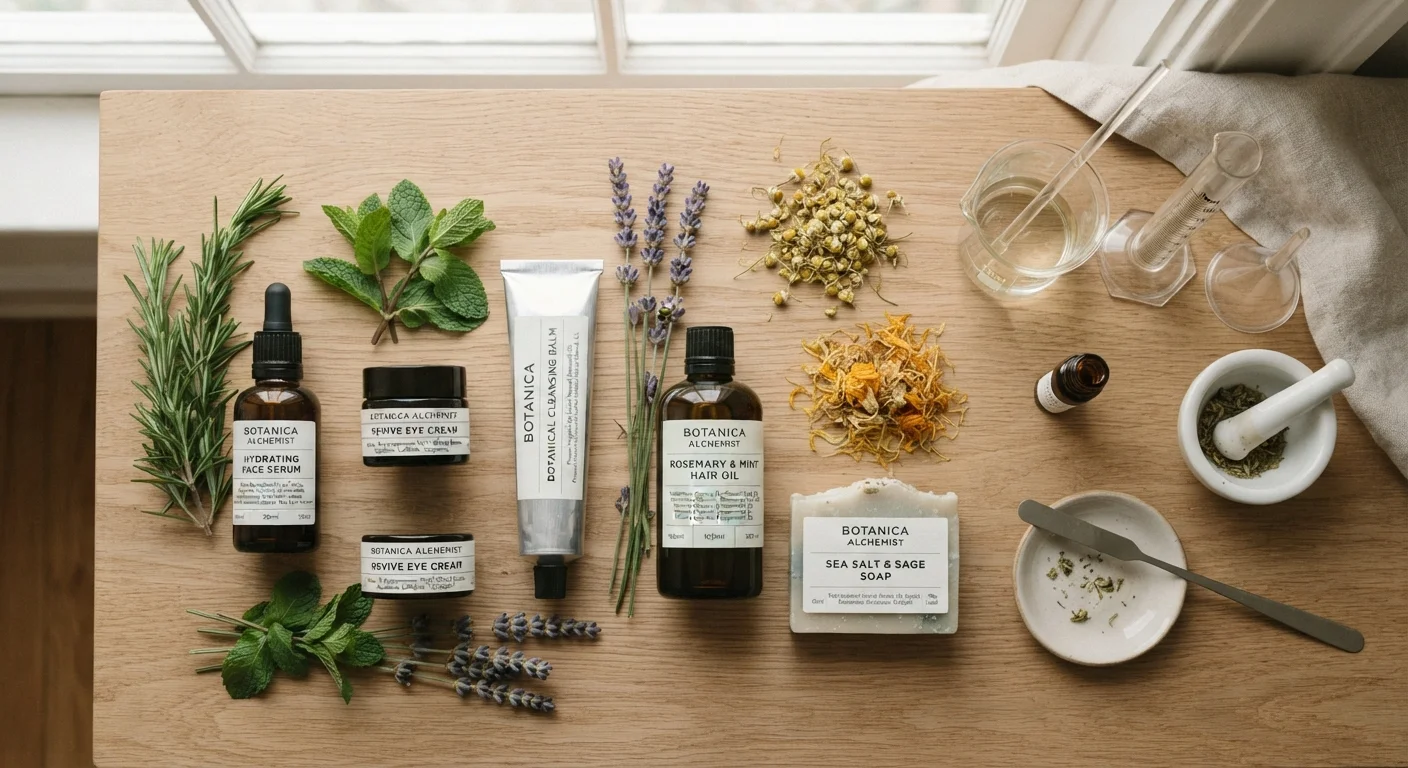
Key Takeaways
- "Natural" has no federally regulated definition in US cosmetics and grooming labeling.
- Synthetic ingredients are not automatically harmful; many are identical at a molecular level to their natural counterparts.
- Natural ingredients can cause allergic reactions, irritation, or instability in formulas.
- Reading the full INCI ingredient list matters far more than front-label marketing claims.
- Price premiums for "natural" products don't reliably predict better safety or efficacy.
- Understanding origin versus safety helps families make genuinely informed grooming purchases.
Option A
Natural Grooming Ingredients
The plant-derived, earth-sourced option - with nuance attached.
Best for: Consumers who prioritize minimal processing and are comfortable navigating inconsistent labeling standards.
Option B
Synthetic Grooming Ingredients
The lab-engineered alternative - often misunderstood.
Best for: Shoppers seeking consistent performance, longer shelf life, and sometimes lower cost without sacrificing safety.
If you have sensitive or reactive skin
Neither by default - evaluate specific ingredients
Both natural and synthetic ingredients can trigger reactions. Fragrance, whether botanical or lab-made, is among the most common irritants in grooming products regardless of its source.
If you want consistent, predictable performance
Synthetic Grooming Ingredients
Lab-synthesized ingredients deliver uniform concentration and stability across batches, which natural extracts - subject to crop variability and seasonal change - often cannot guarantee.
If minimizing environmental impact is your priority
Research before you assume
Neither category is automatically greener. Some synthetic ingredients have a lower resource footprint than over-harvested botanicals; others do not. Look for credible third-party certifications rather than front-label claims.
If you're trying to stretch your grooming budget
Synthetic Grooming Ingredients
Synthetic actives are frequently less expensive to produce at scale, meaning products formulated with them can offer comparable efficacy at a lower price point.
Why the Natural vs. Synthetic Debate Matters on the Shelf
Walk through any pharmacy or grooming aisle and you'll see "natural," "clean," and "plant-based" splashed across dozens of products. These terms feel meaningful - but without a federal regulatory definition in the US cosmetics space, they function primarily as marketing language. The FDA does not define "natural" for personal care products, which means brands apply the word freely and inconsistently.
This matters for value-conscious shoppers because products marketed as natural routinely carry significant price premiums. Understanding what these labels actually signal - and what they don't - is the foundation of smarter grooming purchases. For a broader look at how ingredient lists work across personal care categories, our guide to cosmetic ingredient labels explains INCI naming conventions and percentage claims in detail.
| Criterion | Natural Ingredients | Synthetic Ingredients |
|---|---|---|
| Regulatory definition (US) | No federal standard | No federal standard |
| Source | Plants, minerals, animals | Laboratory synthesis |
| Consistency across batches | Variable | Highly consistent |
| Allergen potential | Present (e.g., essential oils) | Present (e.g., synthetic fragrance) |
| Shelf stability | Often lower | Generally higher |
| Typical cost to produce | Varies; often higher | Varies; often lower at scale |
| Environmental impact | Depends on sourcing practices | Depends on manufacturing process |
What "Natural" and "Synthetic" Actually Describe
In grooming chemistry, natural ingredients are derived from plants, minerals, or animal byproducts with minimal processing. Examples include shea butter, tea tree oil, and beeswax. Synthetic ingredients are manufactured in a laboratory, either built from scratch or modified from natural starting materials.
The line between them is often blurry. Many synthetic ingredients are nature-identical - chemically indistinguishable from their natural source counterparts. Synthetic vitamin C (ascorbic acid), for instance, has the same molecular structure as vitamin C extracted from citrus. The body and skin cannot tell the difference. Meanwhile, some ingredients labeled "natural" undergo significant industrial processing before reaching a formula.
Nature-Identical: The Middle Ground
A significant category of grooming ingredients is described as "nature-identical" - synthesized in a lab to match the exact molecular structure of a naturally occurring compound. Hyaluronic acid and many vitamins used in skin and hair care fall into this group. Because they are chemically equivalent to their natural counterparts, the distinction between "natural" and "synthetic" becomes largely semantic in these cases. Formulation quality and concentration matter far more than the ingredient's origin story.
Safety, ultimately, is determined by a specific ingredient's toxicological profile - not by whether it originated in a field or a lab. Poison ivy is natural. So is arsenic. This doesn't mean natural ingredients are dangerous, but it does mean origin alone tells you very little about risk.
Performance, Stability, and the Real Trade-Offs
Synthetic ingredients often outperform natural equivalents in measurable ways. They can be engineered for precise molecular weight, pH compatibility, and targeted skin penetration. Preservative systems - typically synthetic - are what keep grooming products safe from bacterial and fungal growth over their shelf life. Without them, "natural" formulas can degrade quickly or harbor microbial contamination.
Natural ingredients carry their own advantages. Some botanicals contain complex mixtures of beneficial compounds that work synergistically in ways that are difficult to replicate synthetically. However, natural extracts vary in potency depending on the plant source, growing conditions, and extraction method - batch-to-batch consistency is harder to guarantee.
~25%
Consumers who report skin reactions to fragrance
Dermatology researchers have consistently identified fragrance as one of the leading causes of contact dermatitis, affecting an estimated one in four sensitive-skin individuals regardless of whether fragrance is natural or synthetic.
No standard
Federal definition of "natural" in US cosmetics
As of the FDA's publicly available guidance, no binding regulatory definition of "natural" exists for cosmetic or personal care products sold in the United States.
Fragrance is a particularly important case. Both natural essential oils and synthetic fragrance compounds are common allergens. The fragrance debate deserves its own deep dive - our analysis of natural vs. synthetic fragrance examines the evidence more closely.
How to Read Labels Without Being Misled
The most useful tool on any grooming product is the full ingredient list - not the front-panel claims. Ingredients are listed in descending order by concentration under INCI (International Nomenclature of Cosmetic Ingredients) naming. An ingredient appearing near the bottom of a long list is present in trace amounts, regardless of how prominently it's featured in the product name or marketing copy.
Look for specificity over vague claims. "Contains argan oil" tells you something. "100% natural" tells you very little without supporting detail. When budget is a real factor in your household, redirecting spending away from label premiums and toward proven active ingredients is a practical strategy - one we explore in depth in our guide on stretching your grooming budget.
For shoppers navigating these decisions across multiple product categories, the habit of reading ingredient lists carefully transfers well - the same critical thinking applies to reading any consumer product label.