

| Label rule authority (US) | FDA under the Fair Packaging and Labeling Act (US FDA) |
| Ingredient listing order | Descending by concentration (21 CFR Part 701) |
| 1% threshold rule | Ingredients at or below 1% may list in any order (US FDA cosmetic labeling guidance) |
| Fragrance disclosure | Single 'fragrance' entry can represent many compounds (US FDA) |
| Active ingredient placement | Listed separately with concentration percentage (US FDA OTC drug labeling rules) |
| Nomenclature standard | INCI - used across US, EU, and most global markets (Personal Care Products Council) |
How Ingredient Lists Are Structured
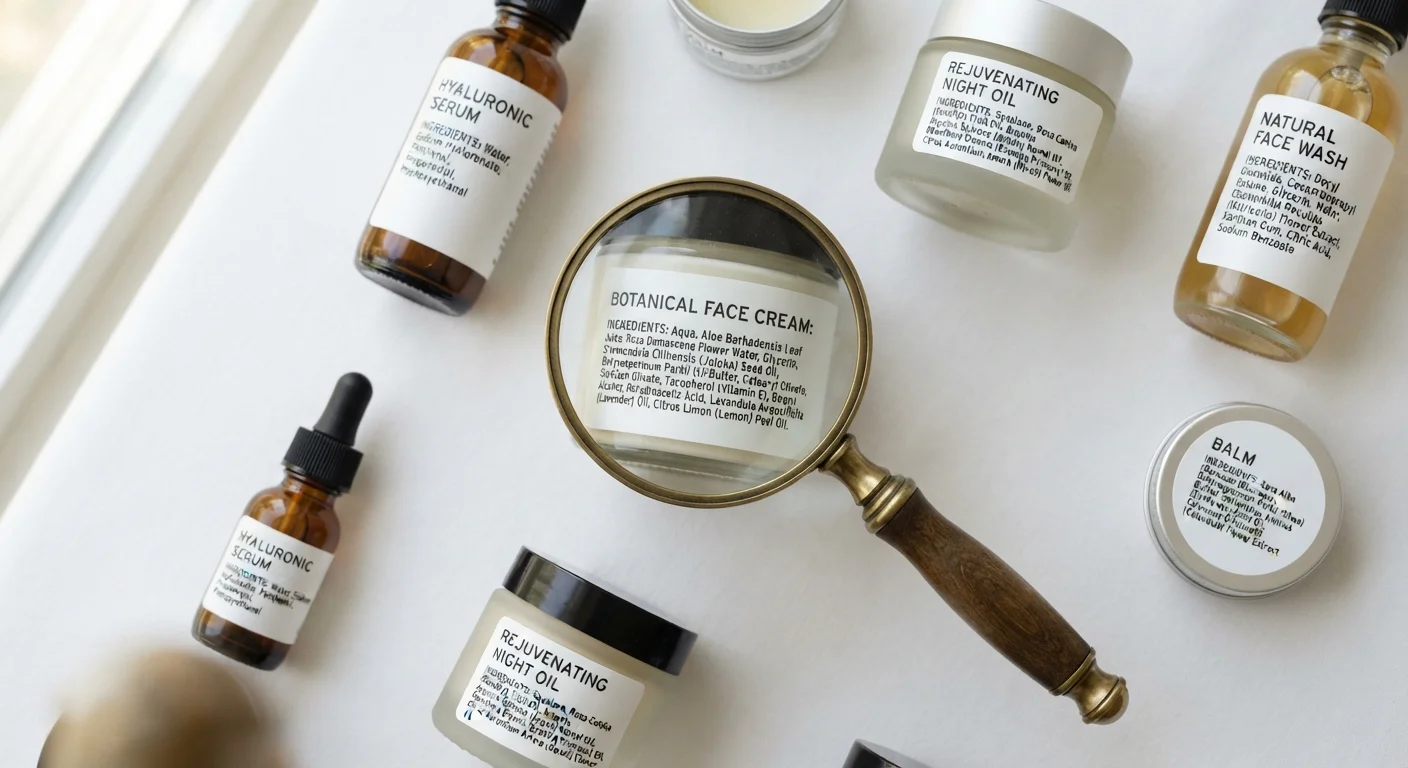
Every cosmetic product sold in the US must list its ingredients on the label, and that list follows a strict, federally regulated format. Understanding the structure turns a wall of unfamiliar words into a readable document.
| Label rule authority (US) | FDA under the Fair Packaging and Labeling Act (US FDA) |
| Ingredient listing order | Descending by concentration (21 CFR Part 701) |
| 1% threshold rule | Ingredients at or below 1% may list in any order (US FDA cosmetic labeling guidance) |
| Fragrance disclosure | Single 'fragrance' entry can represent many compounds (US FDA) |
| Active ingredient placement | Listed separately with concentration percentage (US FDA OTC drug labeling rules) |
| Nomenclature standard | INCI - used across US, EU, and most global markets (Personal Care Products Council) |
Descending concentration order is the foundational rule. The ingredient present in the greatest amount appears first; the least-concentrated ingredient appears last. This means the first five or six ingredients typically make up the bulk of the formula - usually water (aqua), an emollient, and primary thickeners or emulsifiers.
The 1% threshold creates a practical split in every list. Above 1%, order is strictly regulated. At or below 1%, manufacturers may arrange ingredients in any sequence they choose. Preservatives, colorants, and fragrance are almost always in this lower tier - which is why you'll often see them clustered together near the end regardless of their individual concentrations.
Products classified as OTC drugs - including sunscreens, acne washes, and anti-dandruff shampoos - carry a separate "Drug Facts" panel. Active ingredients with their exact percentages appear at the top of that panel, clearly distinguished from the inactive cosmetic ingredients listed below. See our guide to SPF numbers for a practical example of how active ingredient percentages translate to real-world protection.
Decoding INCI Names, Fragrance, and Common Confusions
The naming system on cosmetic labels is called INCI (International Nomenclature of Cosmetic Ingredients). Its purpose is consistency: the same ingredient carries the same name on products sold in New York, London, or Tokyo. Botanical ingredients appear in Latin - Butyrospermum parkii is shea butter; Simmondsia chinensis is jojoba oil. Synthetic compounds generally use their chemical or common scientific name.
Cosmetic Labels Are Not Medical Guidance
This article explains how to read and interpret cosmetic ingredient labels for general educational purposes. It is not medical advice, and ingredient information on a product label should not be used to diagnose or treat any skin condition. If you have a specific skin concern, allergy, or sensitivity, consult a qualified dermatologist or healthcare provider before making changes to your personal care routine.
Once you recognize a few patterns, INCI becomes far less intimidating. "-ol" endings often indicate alcohols (some moisturizing, some drying). "-ate" endings frequently signal esters. "Sodium" prefixes appear on many surfactants and preservatives. These aren't hard rules, but they help orient you as you scan a new label.
Fragrance (or parfum) is the most opaque entry on any label. A single fragrance listing can legally represent a proprietary blend of dozens of aromatic compounds, protected as a trade secret under US law. Some consumers, particularly those with sensitivities, find this frustrating. Our editorial team explores the nuances in depth in the natural vs. synthetic fragrance debate.
A few other label terms worth knowing:
- "Unscented" means no perceptible scent - but a masking fragrance may still be present.
- "Fragrance-free" generally means no fragrance compound of any kind was added, though formulation standards are not federally defined for this term.
- "Natural" and "clean" have no standardized legal definitions in US cosmetics. For a fuller breakdown of what these terms do and don't guarantee, see what natural and synthetic mean on grooming labels.
- Colorants appear as "CI" followed by a five-digit number (e.g., CI 77891 is titanium dioxide). These are standardized Color Index numbers used internationally.
Expiration and stability information doesn't live in the ingredient list - look for the open-jar PAO symbol elsewhere on the packaging. Our guide to product shelf life covers how to interpret those symbols alongside batch codes and texture changes.
INCI
International Nomenclature of Cosmetic Ingredients - a standardized naming system used globally so the same ingredient carries the same name regardless of country or brand. It draws on Latin botanical names, chemical names, and common names depending on the substance.
Descending order listing
The FDA-required rule that cosmetic ingredients appear on labels from highest concentration to lowest. Ingredients present at 1% or less may be listed in any order after all higher-concentration ingredients.
Fragrance / Parfum
A single label entry that can legally represent a blend of dozens of aromatic compounds. Fragrance formulas are protected as trade secrets, so individual components are not required to be disclosed on US labels.
PAO Symbol
Period After Opening - the open-jar symbol found on product packaging showing how many months a product is considered stable after its first use. For example, '12M' means 12 months.
Active Ingredient
An ingredient that the FDA recognizes as having a drug-like function - such as sunscreen filters, acne treatments, or dandruff agents. Actives are listed separately at the top of the label with their percentage concentration.
Comedogenicity Rating
A scale (typically 0-5) used in cosmetic science to indicate how likely an ingredient is to clog pores. These ratings come from lab and consumer studies and are considered general guidance rather than absolute predictors for every individual.