

Key Takeaways
- Debit cards spend money you already have; credit cards spend money you borrow.
- Charge cards require full payment every billing cycle - carrying a balance is not an option.
- Credit card interest can significantly increase the cost of purchases you don't pay off quickly.
- Your choice of card type affects your credit score, spending flexibility, and financial risk.
- Understanding each card's structure helps you match the right tool to the right situation.
Credit, Debit & Charge Cards
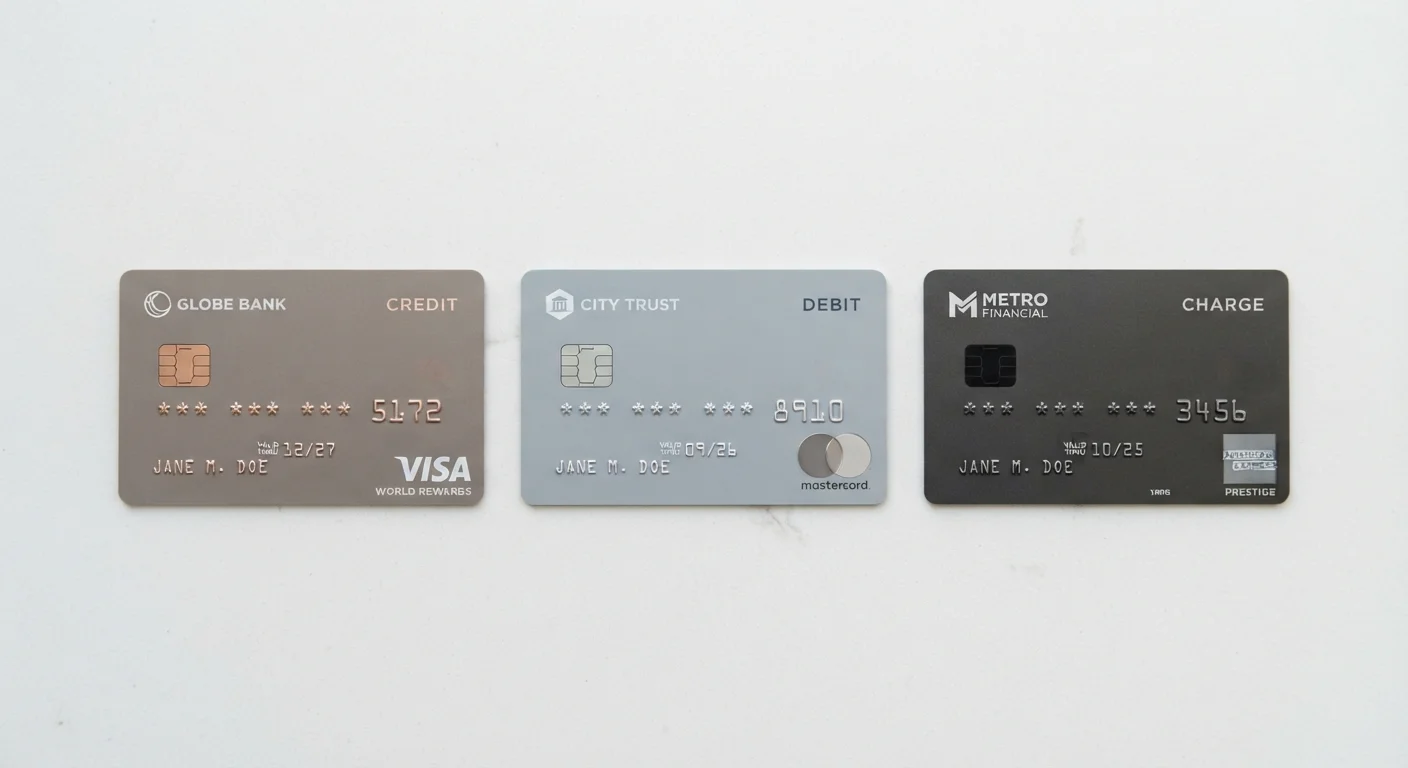
Credit cards let you borrow money up to a set limit and repay it later, often with interest. Debit cards draw directly from your bank account balance when you spend. Charge cards work like credit cards but require you to pay the full balance each month - no carrying a balance allowed.
All three card types typically run on payment networks (such as Visa or Mastercard), which is why they look identical at checkout - but their underlying financial structures are fundamentally different.
How Each Card Type Actually Works
The three main card types share a common physical form - a rectangular piece of plastic or metal with a chip and a network logo - but the financial mechanics underneath are meaningfully different.
Debit cards are the most straightforward. When you swipe or tap, the amount is deducted directly from your checking or savings account. You can only spend what you have. There is no credit extended, no interest charged, and no bill to pay at month's end. Overdraft protection, if enabled by your bank, is a separate feature - not an inherent property of the card.
Credit cards work differently. The issuer extends you a revolving line of credit up to a set limit. You make purchases on that credit, receive a monthly statement, and can choose to pay any amount from the minimum payment up to the full balance. Any unpaid portion carries over to the next month and accrues interest. This is where cost can compound quickly - for a deeper look, see our article on the real cost of minimum payments.
Charge cards occupy a middle ground. Like credit cards, they let you spend without drawing from your bank account in real time. Unlike credit cards, they require you to pay the entire balance in full each billing cycle. There is no revolving balance and, traditionally, no preset spending limit - though issuers do evaluate transactions for approval based on usage patterns and creditworthiness.
Prepaid Cards: A Fourth Category
Prepaid debit cards are a related but distinct option. You load a specific dollar amount onto the card before spending - it's not linked to a bank account and does not offer overdraft capability. Prepaid cards do not typically build credit history, and they may carry fees for loading, withdrawals, or inactivity. They serve a different purpose than the three primary card types covered here.
The Interest Equation: Where the Real Difference Shows Up
For everyday users, the interest structure is the most consequential distinction between these card types.
Debit cards carry zero interest risk by design - you cannot borrow, so you cannot be charged interest. Charge cards also carry no ongoing interest risk, because the balance must be cleared monthly. Credit cards, however, can accrue interest at rates that vary widely depending on the issuer and your creditworthiness. These rates are expressed as an Annual Percentage Rate (APR), and they apply to any balance you do not pay off within the grace period - typically around 21 to 25 days after your billing cycle closes.
~20%
Average credit card APR in the US
The Federal Reserve tracks average credit card interest rates; rates on accounts assessed interest have historically hovered around 20% APR for general-purpose cards.
175M+
Americans who carry at least one credit card
According to the Consumer Financial Protection Bureau, the majority of US adults have access to at least one credit card account.
This matters because the structure of credit card interest - compounding on an ongoing balance - means a purchase you don't pay off immediately can end up costing significantly more than its sticker price. Credit cards are not inherently harmful financial tools, but they do require discipline to use without incurring unnecessary costs. This connects to the broader concept of secured vs. unsecured debt, since credit card debt is unsecured - meaning no collateral backs it, but the lender has recourse through collections and credit reporting.
Impact on Your Credit Profile
One of the most practically significant differences between these card types is how - or whether - they interact with your credit history.
Debit card use is invisible to credit bureaus. Because you're spending your own funds, there's nothing to report. This means responsible debit card use, no matter how long or consistent, does not build a credit profile.
Credit cards, on the other hand, are actively reported to the major credit bureaus. Your payment history, how much of your available credit you're using (your credit utilization ratio), and the age of your accounts all factor into your credit score. This is why credit cards are often recommended as a tool for building or rebuilding credit - used carefully, they demonstrate borrowing reliability over time.
Charge cards are also reported to credit bureaus, though their impact on credit utilization is calculated differently by some scoring models because there is no fixed credit limit. If you're managing existing debt or working through repayment challenges, understanding how these tools interact with your overall debt picture is useful - our overview of debt consolidation vs. debt management plans provides relevant context.
Check Your Statement Date, Not Just Your Due Date
Credit card interest typically begins accruing on purchases only after the grace period ends - which starts at your statement closing date, not your due date. Paying your full statement balance by the due date each month generally means you pay zero interest, even on large purchases made the day after your last statement closed. Knowing this distinction can help you use a credit card's flexibility without triggering unnecessary interest costs.
Choosing the Right Card for the Right Situation
None of these card types is universally superior - each serves a different financial role, and many households use more than one.
Debit cards are well-suited to everyday spending where you want to stay strictly within your existing budget, with no risk of accumulating debt. They're also useful for people who prefer not to think about monthly billing cycles or who are working on spending discipline. For a broader view of how different financial accounts serve different purposes, our guide on current accounts vs. savings accounts is a helpful companion read.
Credit cards make sense when you want purchase protections, the ability to spread a large necessary expense over time, or a tool for building credit history - provided you have a plan for repayment. They also offer consumer protections that debit cards may not match in all scenarios. For context on how retail-specific credit products differ, see our article on store cards and retail credit.
Charge cards suit users who want flexibility without a hard spending ceiling but have the cash flow to pay in full each month. They are less common and tend to carry higher annual fees, so the math should make sense for your actual spending patterns.
This article is for general informational and educational purposes only and does not constitute personalized financial advice. For guidance specific to your situation, consider consulting a licensed financial adviser or credit counselor.