
Secured vs Unsecured Debt: A Fundamental Distinction Every Borrower Should Know

Key Takeaways
- Secured debt is backed by collateral; unsecured debt is not - this is the core difference.
- Defaulting on secured debt can result in repossession or foreclosure of the pledged asset.
- Unsecured debt typically carries higher interest rates because lenders take on more risk.
- Both debt types can damage your credit score if payments are missed.
- Understanding this distinction helps you prioritize repayment and evaluate borrowing decisions more clearly.
Secured vs. Unsecured Debt
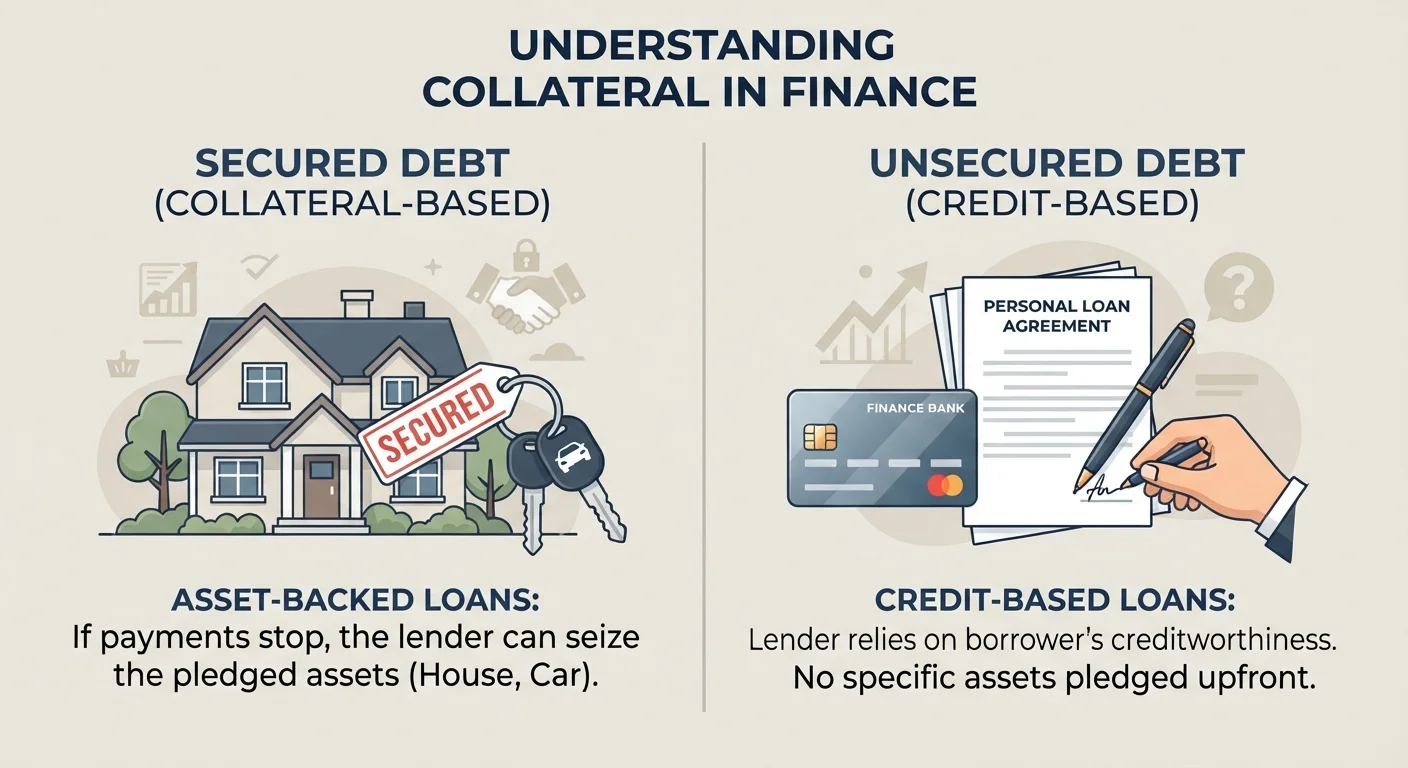
Secured debt is borrowing backed by a specific asset - called collateral - that the lender can claim if you stop making payments. Unsecured debt has no such asset attached; the lender relies solely on your promise to repay. This single distinction shapes the interest rates you're offered, what you risk losing if you default, and how lenders can collect what they're owed.
In bankruptcy proceedings, secured creditors generally have priority claims over the collateral asset, while unsecured creditors are treated as general claimants whose recovery depends on remaining assets after secured claims are satisfied.
The Core Distinction: Collateral
Every loan or credit arrangement you enter falls into one of two broad categories based on a single question: Is there an asset the lender can claim if you don't repay? If yes, the debt is secured. If no, it's unsecured.
Collateral is the asset you pledge to guarantee a secured debt. Common examples include your home for a mortgage, your vehicle for an auto loan, or savings funds for certain personal loans. The lender holds a legal interest - called a lien - in that asset until the debt is fully repaid. That lien gives the lender concrete recourse if payments stop.
Unsecured debt relies on no such pledge. Credit cards, most personal loans, student loans, and medical bills are typically unsecured. The lender evaluates your creditworthiness - your income, credit history, and debt-to-income ratio - and extends credit based on the expectation that you'll repay, not on any claim to property.
For a broader look at debt vocabulary, key debt terms every family should know can serve as a useful companion reference.
Secured Credit Cards: A Special Case
A secured credit card requires the cardholder to deposit cash upfront - typically equal to the credit limit. That deposit acts as collateral, making it technically a form of secured debt. Secured cards are commonly used by people building or rebuilding a credit history. Despite the collateral, they function like regular credit cards for everyday purchases and may transition to unsecured status after a period of responsible use, depending on the issuer's policies.
How Risk Shapes Interest Rates
The presence or absence of collateral directly influences what lenders charge. When a lender can repossess an asset, their financial exposure is limited - which is why mortgage rates and auto loan rates are generally lower than credit card rates or unsecured personal loan rates.
Unsecured lenders price in the added risk of having no fallback asset. If a borrower defaults, the lender's primary remedies are collection efforts, credit bureau reporting, and potential litigation - all of which are costly and uncertain. Higher interest rates partially offset that risk exposure across their entire lending portfolio.
~$1.6T
Total U.S. revolving consumer credit outstanding
Federal Reserve consumer credit data reflects the scale of unsecured revolving debt - primarily credit cards - held by American households.
~$12.5T
Total U.S. mortgage debt outstanding
Federal Reserve data illustrates that secured mortgage debt represents the single largest category of household debt in the United States.
15-30%
Typical credit card APR range
The Consumer Financial Protection Bureau has noted that credit card interest rates - unsecured debt - are substantially higher than rates on most secured loan products.
This doesn't mean secured debt is inherently safer for the borrower. The lower rate comes with a significant trade-off: you stand to lose the collateral asset - potentially your home - if you can't make payments. Unsecured debt, while more expensive, generally doesn't put specific property at immediate risk of seizure.
What Happens When Payments Stop
The consequences of default differ meaningfully depending on the debt type.
Secured debt default typically triggers a formal process: a lender may repossess a vehicle with relatively little notice, while mortgage foreclosure follows a longer legal timeline that varies by state. Either way, you lose the asset pledged as collateral. Depending on your state's laws and the lender's actions, you may also owe a deficiency balance - the gap between the sale price of the repossessed asset and the remaining loan balance.
Unsecured debt default does not result in immediate asset seizure, but it's far from consequence-free. Lenders report delinquencies to credit bureaus, which can substantially lower your credit score. Accounts may be sold to debt collection agencies. And if a lender sues and obtains a court judgment against you, wage garnishment or bank account levies may become possible, subject to state law.
Both types of default can have lasting effects on your credit profile and your ability to borrow in the future. If you're managing repayment across multiple accounts, understanding how debt repayment strategies like the snowball and avalanche work can help you prioritize effectively.
Review Loan Agreements Before Signing
Before taking on any debt, identify whether it is secured or unsecured and what collateral - if any - you are pledging. Read the default provisions carefully so you understand exactly what the lender can do if payments are missed. If the agreement is complex, consider consulting a licensed financial adviser or attorney before committing.
Applying This Knowledge to Your Financial Decisions
Recognizing whether a debt is secured or unsecured is a practical skill, not just an academic one. It informs how you evaluate new borrowing, how you prioritize repayment when money is tight, and how you assess risk when signing any financial agreement.
When considering a loan, ask: What am I pledging, if anything? What are the lender's rights if I miss payments? How does the interest rate reflect that arrangement? These questions are especially relevant for families navigating mortgages, auto financing, and revolving credit simultaneously.
For context on how debt responsibilities evolve over time, managing debt across different life stages offers a broader perspective on how borrowing patterns and repayment priorities typically shift. And for those examining specific credit products, understanding how credit cards differ from debit and charge cards adds useful context.
This article provides general financial information and education - it is not personalized financial or legal advice. For guidance specific to your situation, consult a qualified financial adviser or attorney.
This article is for informational purposes only and does not constitute personalized financial, legal, or tax advice. Consult a licensed professional before making decisions about borrowing or debt repayment.