

Key Takeaways
- Store cards are typically restricted to a single retailer or retail family, while standard credit cards are accepted broadly.
- Store cards frequently carry higher APRs than general-purpose credit cards.
- Rewards from store cards are usually locked to one brand, limiting their flexibility.
- Both card types affect your credit score through utilization and payment history.
- A standard credit card often provides stronger consumer protections and more usable rewards for most households.
Our Verdict
Store cards and standard credit cards serve different financial roles. Store cards can provide meaningful value for loyal, disciplined shoppers at a specific retailer, but their high interest rates and limited acceptance make them a poor fit for general use. Standard credit cards offer greater flexibility, broader acceptance, and often more competitive terms. For most households, understanding these structural differences - before opening either type of account - is essential to making an informed decision.
| Best for | Recommended |
|---|---|
| Frequent, focused shoppers at one retailer who pay balances in full monthly | Store Card |
| Households seeking flexible rewards and broad acceptance across all spending | Standard Credit Card |
| Those building credit with limited history who shop regularly at one brand | Store Card (with caution) |
| Consumers who sometimes carry a balance month to month | Standard Credit Card |
What Defines Each Type of Card
At first glance, store cards and standard credit cards look nearly identical - both are plastic (or digital), both extend a line of credit, and both report to credit bureaus. The structural differences, however, are significant and affect how each card fits into a household's financial picture.
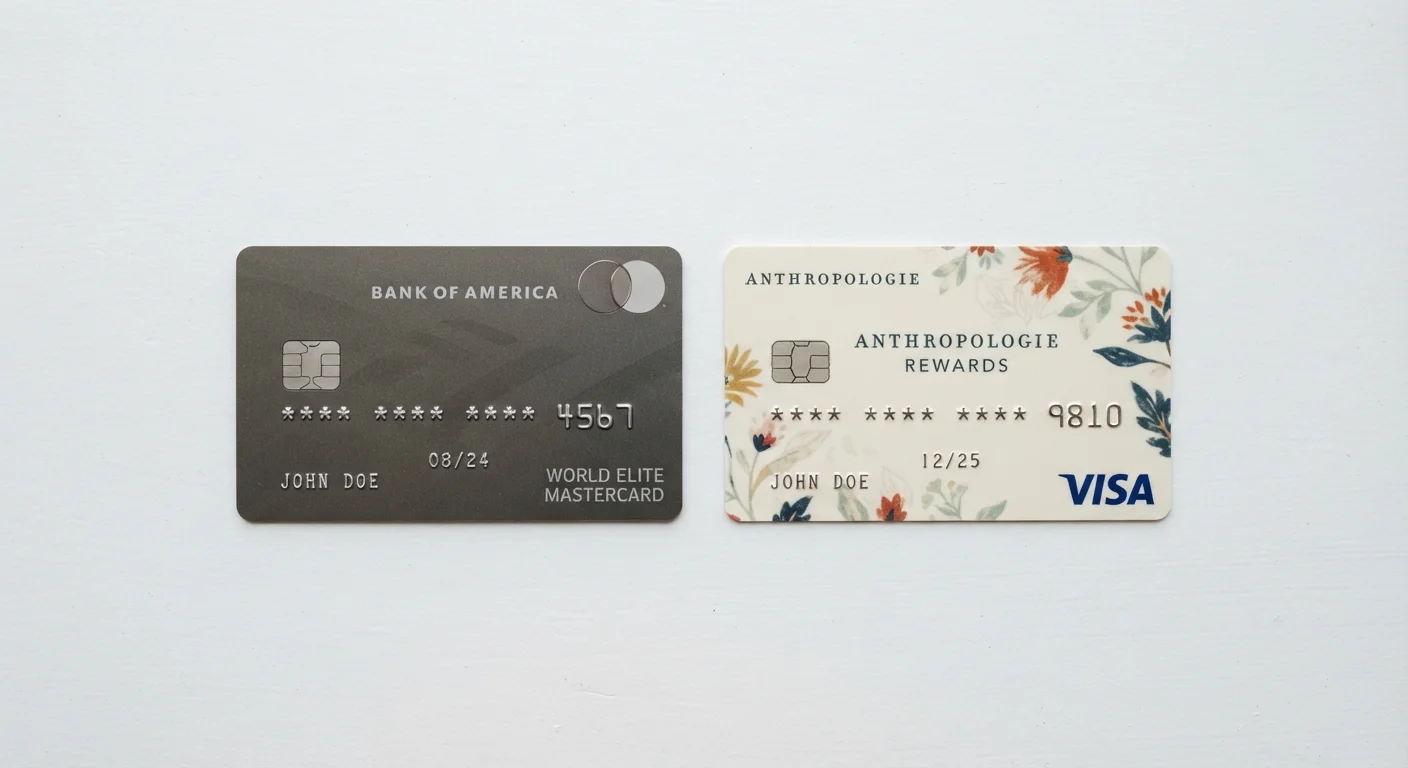
A store card (also called a retail credit card) is issued by or in partnership with a specific retailer. These cards generally fall into two categories: closed-loop cards, which can only be used at that retailer or its affiliated brands, and open-loop retail cards, which carry a major network logo (Visa, Mastercard) and can be used anywhere but still tie their rewards primarily to one brand.
A standard credit card - sometimes called a general-purpose card - is issued by a bank or credit union and accepted wherever the network (Visa, Mastercard, Amex, Discover) is supported. Rewards, if any, typically apply across all categories of spending. For a broader look at how credit cards compare with debit and charge card structures, see our breakdown of card types.
Key Differences: Interest Rates, Limits, and Rewards
| Store Card | Standard Credit Card | |
|---|---|---|
| Acceptance | One retailer or brand family (closed-loop) or broad with brand-tied rewards (open-loop) | Accepted wherever the card network is supported |
| Typical APR | Often higher than market average | Generally lower; varies by issuer and creditworthiness |
| Credit limit | Usually starts lower | Often higher, varies by issuer |
| Rewards flexibility | Redeemable primarily at issuing retailer | Redeemable across categories or transferable |
| Approval accessibility | Sometimes easier to qualify for | Varies; premium cards require stronger credit |
| Consumer protections | Federal protections apply; fewer voluntary extras | Federal protections plus common voluntary extras |
One of the most consequential differences between store cards and standard cards is the annual percentage rate (APR). Store cards have historically carried APRs that run several percentage points higher than the average general-purpose card. Carrying a balance on a store card - even a small one - can accumulate interest costs quickly.
Credit limits on store cards tend to start lower than those on standard cards, which can affect your credit utilization ratio (the percentage of available credit you're using). A high utilization ratio can negatively influence your credit score, so a low limit on a store card requires more careful balance management.
Rewards structures differ in flexibility. Store card rewards - discounts, points, or cashback - are typically redeemable only at the issuing retailer. Standard card rewards can often be redeemed for travel, statement credits, or cash with no merchant restriction. To understand how cashback and discount incentives compare more broadly, see our guide to cashback vs. upfront discounts.
Always Check the APR Before Applying
Before opening any credit card - store or standard - review the stated APR in the Schumer Box, a standardized disclosure required on all credit card agreements. If there's any chance you'll carry a balance, prioritize the interest rate over the rewards structure. A high APR can cost significantly more in interest than any discount or points program returns. Consider consulting a financial adviser if you're uncertain which card structure fits your situation.
Credit Impact and Consumer Protections
Both store cards and standard cards report to the major credit bureaus, meaning they affect your credit score in similar ways: on-time payments build positive history, missed payments cause damage, and high utilization hurts your score regardless of which type of card carries the balance.
Applying for either card triggers a hard inquiry on your credit report, which can cause a small, temporary dip in your score. Opening multiple store cards in a short period - a common pattern during retail promotion periods - can compound this effect.
Consumer protections merit attention. Open-loop store cards that run on a major network share most federal protections with standard cards, including the right to dispute unauthorized charges under the Fair Credit Billing Act. Closed-loop store cards carry the same protections under federal law, but the dispute resolution process may involve the retailer rather than a major network's infrastructure. Standard credit cards issued by established banks often come with additional voluntary benefits - such as extended warranty or purchase protection - that store cards may not offer.
Store loyalty programs often accompany store cards but are a separate mechanism. For a nuanced look at how loyalty schemes collect data and nudge spending behavior, see our analysis of loyalty programmes.
~29%
Average store card APR (approximate industry range)
Consumer Financial Protection Bureau data has historically shown retail card APRs running several points above the general credit card average.
2 in 3
US adults hold at least one credit card
Federal Reserve surveys on consumer finances consistently find credit card ownership is widespread among US households across income levels.
When Each Card Type Makes Sense
Neither card type is universally better - the right fit depends on individual spending habits, financial discipline, and goals. A store card can deliver genuine value if you shop frequently at one retailer, pay your balance in full each month, and take consistent advantage of the brand-specific discounts. For households that carry balances, however, high store-card APRs can quickly erode any rewards earned.
Standard credit cards are generally more versatile, particularly for families whose spending is distributed across groceries, fuel, healthcare, and other categories rather than concentrated at a single retailer. They also tend to offer more competitive interest rates and more portable rewards.
It's worth noting that store cards are sometimes easier to qualify for than premium standard cards, making them a starting point for consumers building or rebuilding credit - though this should be approached carefully given the higher rates involved.
This article is for general informational and educational purposes only and does not constitute personalized financial or credit advice. Individual circumstances vary. Consult a qualified financial professional before making decisions about credit products.