
Decoding Your Pet's Food Label: Ingredients, Nutrients, and What They Actually Mean

| U.S. Regulatory Bodies | FDA + AAFCO + state feed-control officials |
| Required Label Sections | Product name, net weight, guaranteed analysis, ingredient list, adequacy statement, feeding directions, manufacturer info (AAFCO model regulations) |
| Ingredient Listing Order | By pre-processing weight, heaviest first |
| Life Stages Recognized by AAFCO | Growth, adult maintenance, reproduction, all life stages, senior (not an AAFCO-defined stage) (AAFCO Official Publication) |
| "Holistic" on Labels | No regulatory definition; marketing term only |
| "Natural" Definition | Derived from plant, animal, or mined sources without chemically synthetic processes (AAFCO-defined) (AAFCO model regulations) |
How Pet Food Labels Are Structured
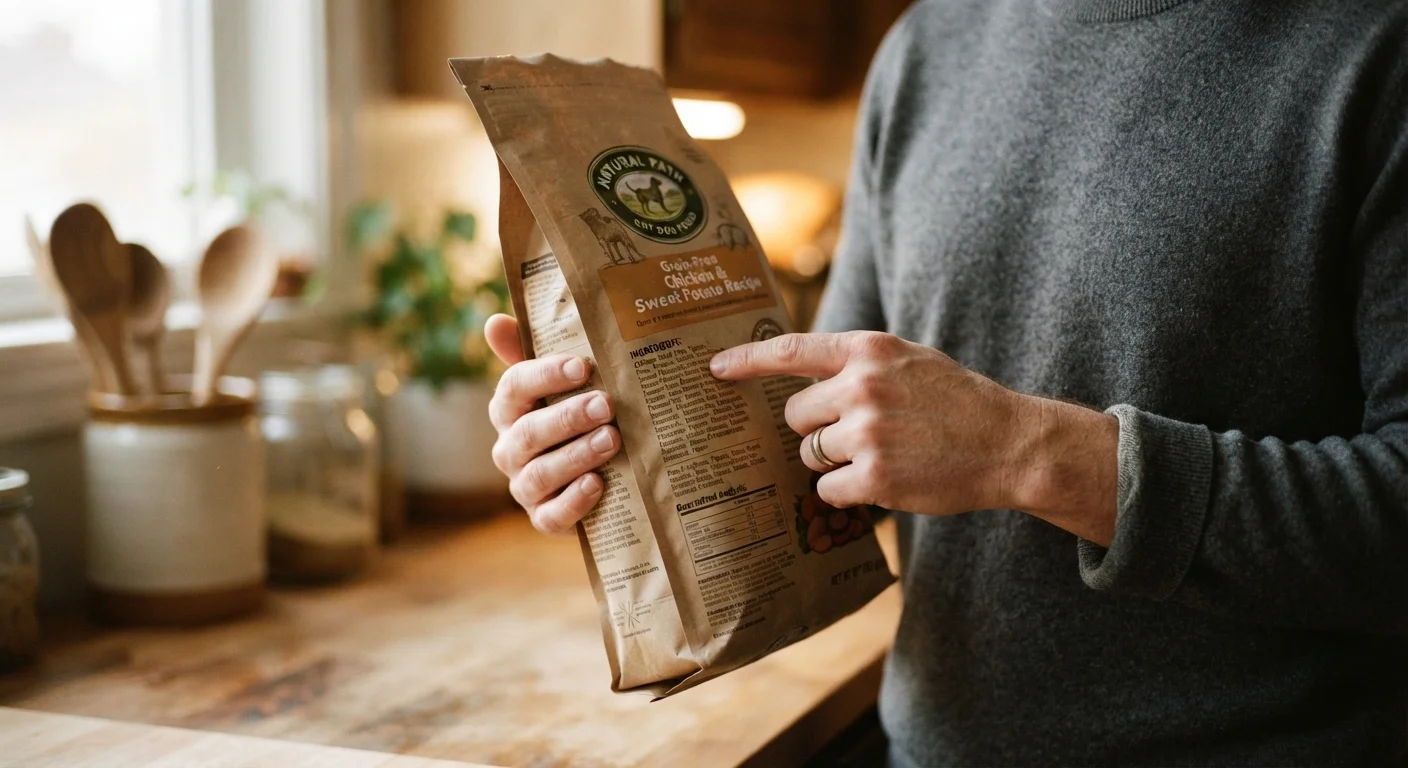
Pet food labels in the United States are regulated by two overlapping bodies: the AAFCO, which sets nutritional standards and model regulations, and individual state feed-control officials who enforce them. The FDA also has jurisdiction over ingredient safety and labeling accuracy. This layered oversight means labels follow a fairly consistent format - once you know the layout, you can compare any two products on the shelf.
Every label must include the product name, net weight, guaranteed analysis, ingredient list, nutritional adequacy statement, feeding directions, and manufacturer contact information. Each section tells you something different. Our full label walkthrough covers the fine print in more detail, but the sections below give you a practical reference for the most critical pieces.
| U.S. Regulatory Bodies | FDA + AAFCO + state feed-control officials |
| Required Label Sections | Product name, net weight, guaranteed analysis, ingredient list, adequacy statement, feeding directions, manufacturer info (AAFCO model regulations) |
| Ingredient Listing Order | By pre-processing weight, heaviest first |
| Life Stages Recognized by AAFCO | Growth, adult maintenance, reproduction, all life stages, senior (not an AAFCO-defined stage) (AAFCO Official Publication) |
| "Holistic" on Labels | No regulatory definition; marketing term only |
| "Natural" Definition | Derived from plant, animal, or mined sources without chemically synthetic processes (AAFCO-defined) (AAFCO model regulations) |
Ingredient Lists: What the Order Tells You
Ingredients are listed by weight before processing - heaviest first. A whole protein like chicken appearing first sounds promising, but raw chicken is roughly 75% water. Once cooked, its relative weight drops considerably, which means a grain or meal listed second or third may actually contribute more dry mass to the finished food.
"Meals" (e.g., chicken meal, salmon meal) are already cooked and concentrated, so they represent a denser protein source per unit of weight than their whole counterparts. Neither format is inherently better or worse; the label position simply reflects pre-processing weight.
Watch for ingredient splitting - a practice where similar ingredients (e.g., ground corn, corn gluten meal, corn flour) are listed separately to push each item lower on the list, even though their combined volume may be substantial. For a plain-language guide to specific ingredients and their functions, see our ingredient reference guide.
Guaranteed Analysis
A panel on pet food labels listing minimum crude protein and fat percentages, and maximum crude fiber and moisture percentages. It reflects chemical measurements rather than digestibility or ingredient quality.
AAFCO Nutritional Adequacy Statement
A label declaration indicating whether a food meets Association of American Feed Control Officials nutrient profiles for a stated life stage, either by formulation or by feeding trial. It's one of the most meaningful indicators of a food's baseline completeness.
Dry Matter Basis
A calculation method that removes moisture content from nutrient percentages so that wet and dry pet foods can be compared on equal terms.
Ingredient Splitting
A labeling practice where a single ingredient source is divided into multiple sub-forms (e.g., corn listed as ground corn, corn meal, and corn gluten) so each appears lower on the ingredient list individually.
Crude Protein
A chemical estimate of total protein content in a food, measured by nitrogen content. It does not indicate the protein's source, quality, or how easily a pet can digest and use it.
Meal (e.g., Chicken Meal)
A rendered, dried protein concentrate made from an animal-based ingredient with most moisture removed. Because it's already processed, meal listings reflect a denser protein contribution than whole, raw ingredients listed by the same weight.
Guaranteed Analysis and Nutritional Adequacy
The guaranteed analysis panel lists minimum percentages of crude protein and crude fat, and maximum percentages of crude fiber and moisture. "Crude" means the nutrient was measured by a chemical extraction method - it does not indicate quality or digestibility. Two foods with identical crude protein percentages may differ substantially in how well a pet can actually absorb and use that protein.
To compare wet and dry foods fairly, you need to convert both to a dry matter basis by removing moisture from the equation. Divide each nutrient percentage by (100 minus the moisture percentage), then multiply by 100.
~75%
Water content in raw whole chicken
This is why whole meat listed first may contribute less protein by dry weight than a meal-form ingredient listed further down.
2 types
Ways AAFCO adequacy can be established
A food can qualify via formulation to meet nutrient profiles, or via an actual animal feeding trial - the latter being the more rigorous test.
The nutritional adequacy statement - sometimes called the AAFCO statement - is one of the most meaningful lines on the label. It tells you whether the food was formulated to meet AAFCO nutrient profiles for a specific life stage, or whether it was tested via feeding trials. Foods tested through feeding trials have undergone a more rigorous real-world evaluation than those that meet profiles by calculation alone. Look for the life stage declared (e.g., "adult maintenance," "growth," or "all life stages") to confirm the food suits your pet's current needs.
If you notice physical signs suggesting your pet's diet isn't working well, our article on signs of dietary imbalance outlines what to watch for and when to involve a veterinarian.
Life Stage Matters More Than You Think
A food labeled "for all life stages" meets the nutrient requirements for growth and reproduction - the most demanding life stage - which may mean higher calorie and mineral levels than an average adult pet needs. If your pet is a healthy, neutered adult, a food specifically formulated for "adult maintenance" may be a more appropriate match. Ask your veterinarian which life-stage designation fits your pet's current profile.
Marketing Claims: What They Mean (and Don't)
Terms like natural, holistic, and premium are not uniformly regulated. AAFCO defines "natural" as derived from plant, animal, or mined sources without chemically synthetic processes - but the term does not imply superior nutrition. "Holistic" has no regulatory definition at all in pet food. A higher price tag or appealing label language does not guarantee a nutritionally superior product.
"Grain-free" is a formulation choice, not a health claim. The relationship between grain-free diets and certain cardiac conditions in dogs remains an active area of research. Our grain-free diet overview provides a balanced look at what's currently known. For a deeper dive into the nutrients themselves, our nutrient guide for dog owners is a useful companion reference.
When evaluating any pet food, cross-reference the nutritional adequacy statement and guaranteed analysis rather than relying on front-of-pack claims. Consulting your veterinarian or a board-certified veterinary nutritionist remains the most reliable step for animals with specific health needs.
This article provides general educational information about pet food labeling and is not a substitute for personalized veterinary advice. Always consult a qualified veterinarian regarding your individual pet's dietary needs.