

Key Takeaways
- Bulk buying reduces unit cost but only saves money when the product is fully used before it expires or degrades.
- High upfront costs can strain household cash flow, even when the per-unit price is lower.
- Non-perishables and frequently used household staples are generally the strongest candidates for bulk purchasing.
- Unit price comparison - not package price - is the only reliable way to verify whether a bulk deal is genuine.
Lower unit cost on high-consumption staples
Buying larger quantities of items your household reliably uses - laundry detergent, paper goods, canned foods - typically reduces the per-unit cost meaningfully compared to standard sizes.
Fewer shopping trips and less decision fatigue
Maintaining a well-stocked supply of everyday essentials reduces the frequency of restocking runs, saving time and reducing the impulse-purchase exposure that comes with more frequent store visits.
Protection against short-term price increases
Stocking up on non-perishables when prices are stable or lower provides a modest buffer against future price rises, particularly useful for commodity goods with volatile pricing.
Simplifies household inventory management
A standing supply of commonly used items reduces the risk of running out at inconvenient times and lowers the mental overhead of tracking what needs restocking each week.
Waste erases savings when products expire unused
Perishable goods bought in excess of actual consumption frequently expire before use, turning a projected saving into a straightforward financial loss - and food waste has an environmental cost too.
Large upfront costs strain monthly cash flow
Even when the per-unit economics favor bulk buying, the total outlay at the register may displace spending on other necessities or require drawing on credit, negating the theoretical saving.
Storage space requirements are often underestimated
Bulk quantities of cleaning products, paper goods, and dry foods require adequate, appropriate storage - conditions that many households, particularly renters or those in smaller homes, cannot easily provide.
Bulk pricing isn't always actually cheaper per unit
Retailers don't always price larger formats at a lower unit rate; in some categories, standard sizes or store-brand alternatives in smaller packaging actually offer a better per-unit cost than the bulk option.
Encourages overconsumption of stocked items
Research on household consumption behavior suggests that larger quantities in the home can accelerate usage rates - meaning bulk buyers sometimes consume more than they would have otherwise, offsetting the cost advantage.
Our Verdict
Bulk buying delivers real savings on non-perishables, frequently consumed staples, and household essentials - provided you have the storage space and steady cash flow to absorb the upfront cost. For perishables, specialty items, or products your household uses irregularly, the economics rarely work in your favor. The key is applying unit-price discipline before every bulk purchase, not assuming size automatically means savings.
Families with predictable consumption habits, adequate storage, and enough budget flexibility to pay more upfront for staples they reliably use.
What Bulk Buying Actually Means for Your Budget
Buying in bulk promises a straightforward proposition: pay more now, spend less per unit, come out ahead over time. In practice, the outcome depends heavily on whether your household actually uses what you buy - and how quickly. The maths only works when the product is fully consumed before it spoils, expires, or becomes redundant.
Unit price - not total package cost - is the only meaningful comparison point. Retailers aren't obligated to make this obvious, and package design can obscure whether you're actually getting more value. Before assuming a large format is a better deal, check the shelf label's per-unit or per-ounce price and compare it directly to standard sizes. Retail pricing structures can be more complex than they appear; our guide on retail pricing tactics explains what to watch for.
Lower unit cost on high-consumption staples
Buying larger quantities of items your household reliably uses - laundry detergent, paper goods, canned foods - typically reduces the per-unit cost meaningfully compared to standard sizes.
Fewer shopping trips and less decision fatigue
Maintaining a well-stocked supply of everyday essentials reduces the frequency of restocking runs, saving time and reducing the impulse-purchase exposure that comes with more frequent store visits.
Protection against short-term price increases
Stocking up on non-perishables when prices are stable or lower provides a modest buffer against future price rises, particularly useful for commodity goods with volatile pricing.
Simplifies household inventory management
A standing supply of commonly used items reduces the risk of running out at inconvenient times and lowers the mental overhead of tracking what needs restocking each week.
Where Bulk Buying Tends to Fall Short
The hidden costs of bulk purchasing are easy to underestimate. Waste is the most obvious: perishable foods bought in large quantities often expire before a household can use them, converting the apparent saving into a straightforward loss. But even non-food items carry risk - preferences change, product versions are discontinued, or items degrade in storage (think paper products exposed to moisture or cleaning supplies that separate over time).
There's also a cash flow dimension that matters for families working within tight monthly budgets. A large upfront outlay - even at a favorable unit price - may displace spending on other necessities or push a household toward high-interest credit. The Budgeting Basics hub offers practical frameworks for weighing these trade-offs against your actual monthly numbers.
Waste erases savings when products expire unused
Perishable goods bought in excess of actual consumption frequently expire before use, turning a projected saving into a straightforward financial loss - and food waste has an environmental cost too.
Large upfront costs strain monthly cash flow
Even when the per-unit economics favor bulk buying, the total outlay at the register may displace spending on other necessities or require drawing on credit, negating the theoretical saving.
Storage space requirements are often underestimated
Bulk quantities of cleaning products, paper goods, and dry foods require adequate, appropriate storage - conditions that many households, particularly renters or those in smaller homes, cannot easily provide.
Bulk pricing isn't always actually cheaper per unit
Retailers don't always price larger formats at a lower unit rate; in some categories, standard sizes or store-brand alternatives in smaller packaging actually offer a better per-unit cost than the bulk option.
Encourages overconsumption of stocked items
Research on household consumption behavior suggests that larger quantities in the home can accelerate usage rates - meaning bulk buyers sometimes consume more than they would have otherwise, offsetting the cost advantage.
Which Categories Consistently Make Sense
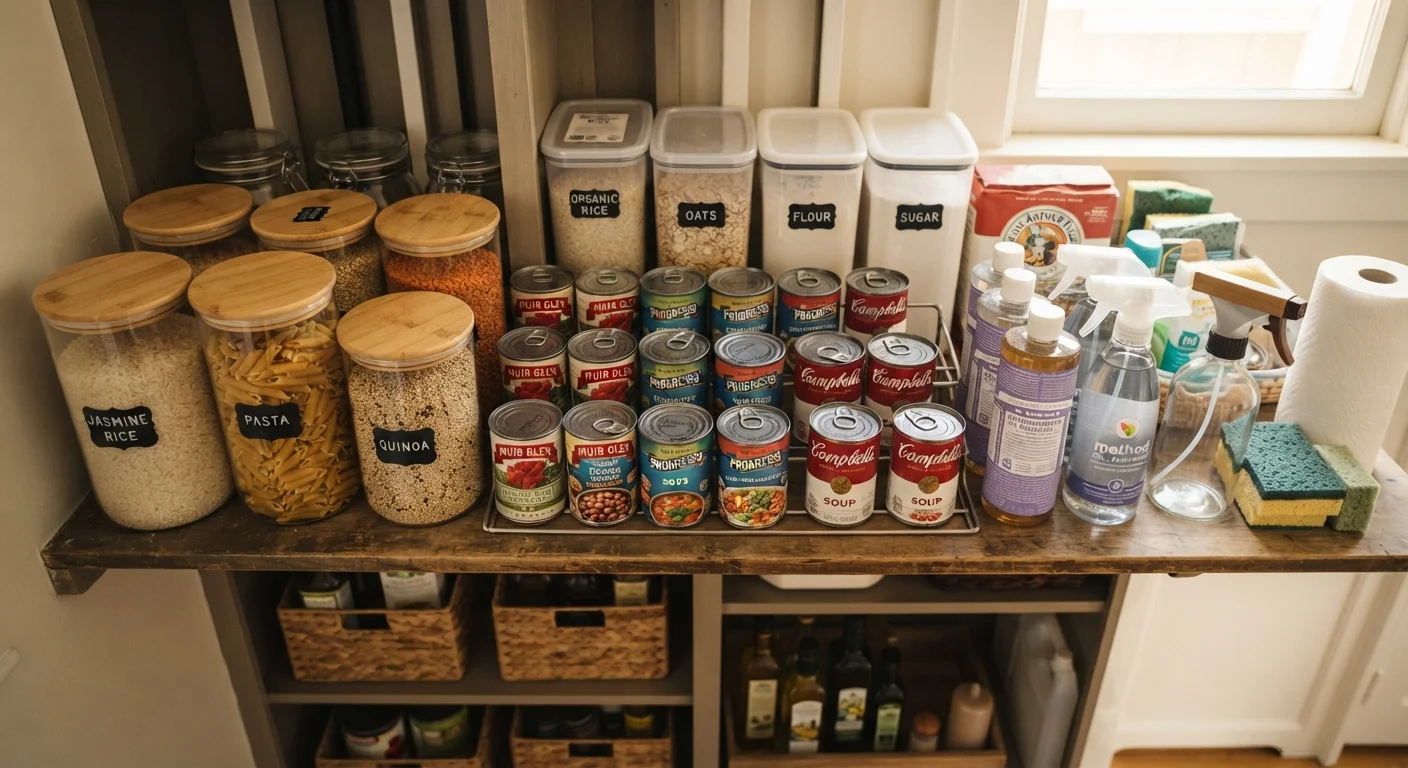
Non-perishables with stable demand are the reliable core of any bulk-buying strategy: laundry detergent, toilet paper, canned goods, dried pasta, rice, and over-the-counter medications your household uses routinely. These have long shelf lives, predictable usage rates, and no meaningful quality degradation in standard home storage conditions.
Fresh produce, dairy, and specialty or niche products are poor fits. So are items tied to children's current preferences - a child's favorite snack brand today may be actively rejected in three months, leaving you with a 64-pack of something no one wants. Timing your bulk purchases around natural pricing cycles can also amplify savings; see our piece on timing purchases around price cycles for how seasonal and promotional patterns apply to everyday goods.
Warehouse Club Memberships: Factor in the Fee
Membership-based warehouse retailers charge an annual fee that effectively needs to be offset by savings before any net benefit is realized. If your household's bulk purchasing is limited to occasional visits, the membership cost can eliminate the per-unit savings entirely. Calculate your expected annual savings against the membership cost before committing - and reassess each renewal cycle.
It's also worth distinguishing bulk buying from simply buying more during a genuine sale. As our analysis of what makes a discount genuine shows, not every large-format or multi-pack offer represents a real reduction from the item's regular unit price.
~30%
Typical unit cost reduction in bulk household staples
Consumer behavior research broadly estimates that high-turnover non-perishables purchased in bulk formats can cost 20-30% less per unit than equivalent standard sizes, though variation by category and retailer is significant.
~$1,500
Annual US household food waste cost estimate
The USDA and EPA have estimated that US households waste a substantial share of purchased food, with some analyses placing the annual cost to an average family in the range of $1,200-$1,800 - a key risk factor for bulk food purchases.
Practical Rules Before You Fill the Cart
A short checklist applied before any bulk purchase prevents most of the common mistakes. First, verify the unit price advantage is real - compare against the standard-size unit price, not the sticker total. Second, confirm your household has a realistic track record of using the product at the rate implied by the pack size. Third, check you have appropriate storage: cool, dry, accessible space that won't compromise the product.
Fourth, factor the outlay into your actual monthly cash flow, not just the abstract annual saving. A dollar-per-unit saving that requires a $120 upfront spend matters differently depending on your financial position. For families working on building savings alongside managing current spending, the Saving and Debt hub provides relevant context. Finally, be honest about whether the bulk quantity reflects genuine planned consumption or optimistic thinking - the latter is how bulk buying quietly inflates household costs rather than reducing them.