

Key Takeaways
- A discount is only genuine if the reference price honestly reflects what the item sold for previously.
- Artificially inflated 'original' prices are a documented retail practice used to exaggerate perceived savings.
- Price history tools and comparison sites can help verify whether a sale price is actually lower than normal.
- Percentage-off figures can mislead if the base price was manipulated before the sale began.
- Genuine savings are verifiable, not just asserted through prominent sale signage.
Genuine Discount
A genuine discount occurs when a product is sold for meaningfully less than the price it has consistently been offered at over a reasonable period. It represents real savings - not a temporary markup followed by a 'sale' that returns the item to its normal price. The key test is whether the reference price used to calculate the discount is honest and verifiable.
Regulators in several jurisdictions require that a 'was' or 'compare at' price reflect an actual prior selling price for a defined minimum period - not an inflated anchor price set solely to make discounts appear larger.
Why 'On Sale' Doesn't Automatically Mean 'Good Value'
Walk through any retailer - online or in-store - and you'll encounter sale tags, percentage badges, and crossed-out prices at nearly every turn. The problem is that the word 'sale' describes a pricing event, not a guarantee of value. A product can be legitimately discounted and still be overpriced. Conversely, an everyday item with no promotional signage can represent genuinely strong value for money.
The distinction matters most for families making repeated purchasing decisions across categories: groceries, electronics, clothing, and household goods. Collectively, those decisions add up. Understanding what makes a discount real - rather than just loudly advertised - is one of the most transferable shopping skills a household can develop.
For a deeper look at how pricing tactics work against shoppers, see retail pricing tricks that inflate perceived savings. This article focuses specifically on the anatomy of a discount: what its components are, and how to read each one honestly.
Regulations Vary - Don't Rely on Them Alone
US consumer protection rules around reference pricing differ by state, and federal enforcement through the FTC tends to focus on egregious or systemic cases. Individual shoppers cannot rely on regulatory oversight to catch every misleading promotion. Independent price verification remains the most reliable protection available to households.
The Three Components of Any Discount
Every discount has three parts, and each can be manipulated independently. Understanding all three lets you evaluate a deal on its actual merits.
1. The Reference Price
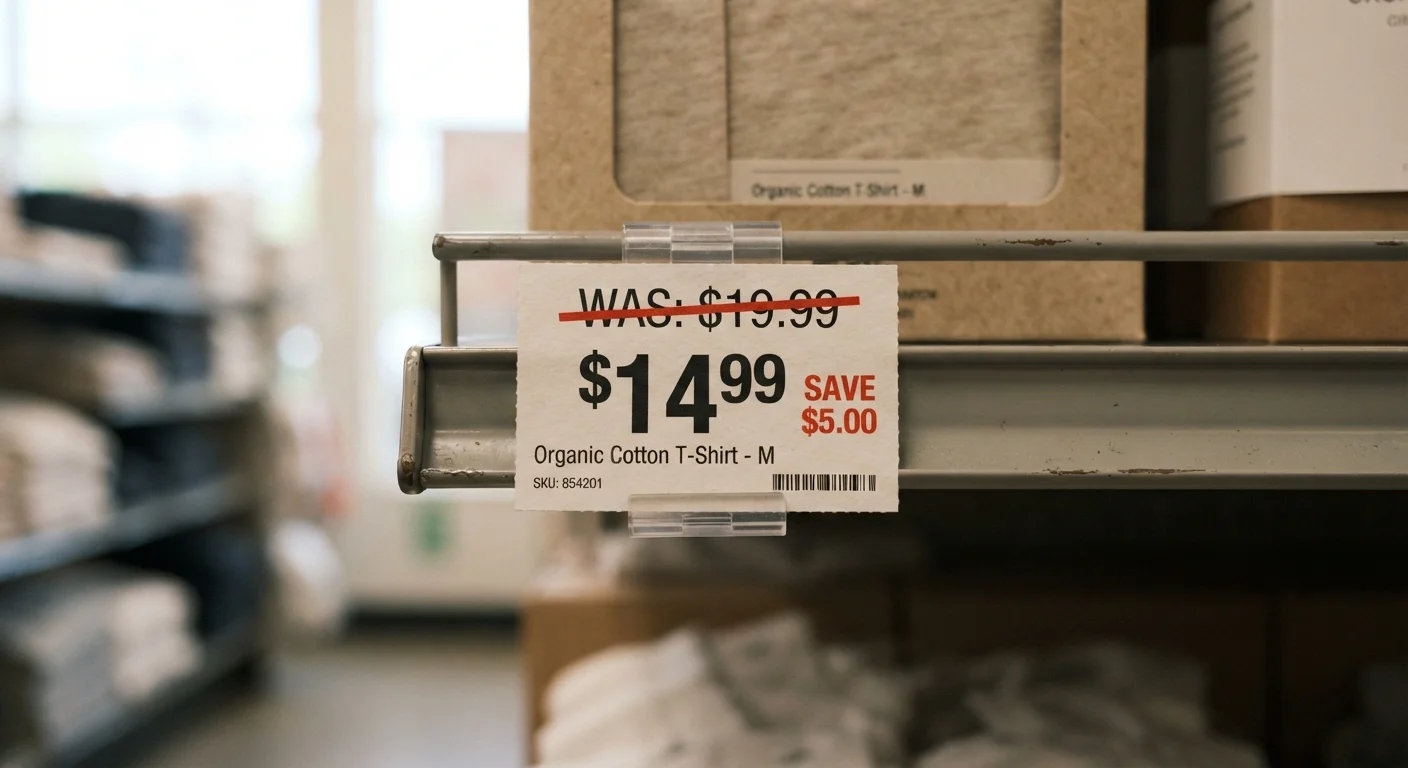
This is the 'was' or 'original' figure - the anchor against which savings are calculated. A reference price is only meaningful if the item genuinely sold at that price for a substantial period. When retailers briefly raise a price before a sale, the reference price becomes a fiction. As documented by the FTC and various state attorneys general, this practice - sometimes called 'anchor pricing' or 'phantom markdown' - is widespread and is a primary reason sale figures mislead shoppers.
2. The Discount Percentage
The percentage off is a ratio, not a fixed dollar figure, and it inherits any distortion in the reference price. A '40% off' claim on a $100 item that was $80 a month ago is functionally a 25% discount - not 40%. Always translate percentages back into actual dollar amounts and compare against recent pricing rather than the stated original.
3. The Sale Duration
Perpetual or frequently recurring 'sales' erode the credibility of the discount entirely. If an item is 'on sale' 300 days of the year, the sale price is the price. Comparing a current price to the item's typical selling period at major retailers is more informative than the discount label itself.
87%
Shoppers who check prices before purchasing
A 2023 consumer survey by the National Retail Federation found that 87% of US shoppers research prices before making a purchase decision, yet many still rely primarily on in-store reference prices.
~1 in 3
Promotional 'original' prices that may be misleading
Research published by consumer advocacy organizations has estimated that a significant proportion of reference prices in retail promotions do not reflect prices at which substantial sales actually occurred.
How to Verify a Discount Before You Spend
Verification doesn't require significant effort - a few targeted habits can filter genuine deals from promotional noise reliably.
- Check price history tools: Browser extensions that display 30-90-day price tracking are available for major online retailers. A genuine discount will show the current price clearly below the item's recent trading range.
- Compare across channels: The same product listed at multiple retailers gives you a market baseline. If the 'discounted' price at one store matches the standard price at competitors, the reference price is likely inflated. Comparing online and in-store channels can sharpen this further.
- Calculate the unit price: Especially useful for groceries and household consumables, unit pricing strips away packaging differences and promotional framing to reveal actual cost per use or per ounce.
- Be skeptical of urgency cues: Time-limited language is a persuasion device, not a signal of deal quality. Genuine value persists even when a countdown clock doesn't.
For families evaluating deal aggregator platforms specifically, what to verify before trusting a deal aggregator site covers additional checkpoints worth applying.
Use Price History Before Any Major Purchase
Before buying any item over $50, take two minutes to check its price history using a tracking tool or by searching completed listings on major marketplaces. This single habit catches the majority of inflated reference prices before they cost you money. A genuine deal will show clearly as an outlier below the item's recent price trend.
Putting It Together: Reading a Discount Clearly
A genuine discount has three honest attributes: the reference price was real and stable, the percentage correctly represents the reduction from that price, and the sale period is defined rather than perpetual. When one or more of those attributes is missing or distorted, the discount is at least partially constructed - a perception of savings rather than an actual one.
This framework applies across contexts. Whether you're evaluating a holiday electronics promotion, a supermarket 'manager's special,' or a flash sale from an online retailer, the same questions apply: What was the actual prior price? Is that price independently verifiable? Does the discounted figure represent a genuine reduction from recent market rates?
Families focused on budget-smart buying will find that applying these questions consistently - rather than relying on retailer framing - produces more reliable savings over time. The goal isn't suspicion of every promotion; it's calibrated skepticism that reserves your attention for deals that genuinely hold up.
Related reading: why sale prices aren't always lower than usual and how cashback compares to upfront discounts.