

Key Takeaways
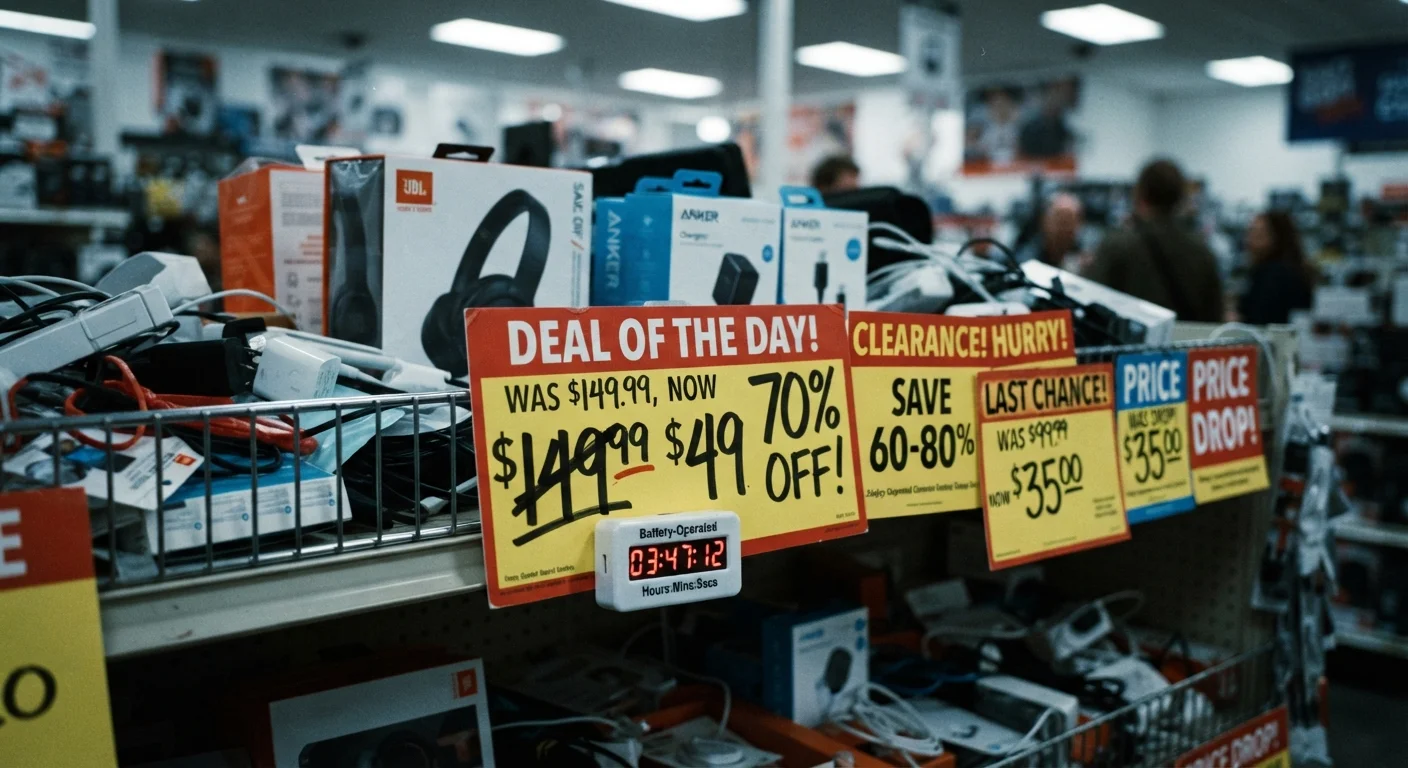
- Phantom reference prices inflate the 'original' figure to make discounts appear larger than they are.
- Artificial urgency tactics like countdown timers are designed to bypass careful comparison shopping.
- Price tracking tools and historical data are the most reliable ways to verify whether a deal is real.
- A lower per-unit price isn't always a savings if the total quantity exceeds what your household needs.
- Loyalty programme discounts often come with data-sharing trade-offs worth understanding before enrolling.
How Pricing Tactics Exploit Common Assumptions
Most retail pricing strategies are legal, but that doesn't mean they're designed with your financial interests in mind. Retailers invest heavily in pricing psychology - the science of how consumers perceive and respond to price signals. Understanding a handful of the most widely used tactics is the first step toward evaluating any deal on its actual merits rather than its presentation.
The core issue is that shoppers tend to evaluate prices relatively, not absolutely. We assess whether something is a good deal based on what it's compared against, not on its intrinsic value. Retailers exploit this by controlling the comparison - setting reference prices, framing savings as percentages, and creating time pressure that discourages the kind of methodical checking that would reveal the tactic at work.
Reference Prices Can Be Legally Misleading
In the US, the FTC has guidelines on deceptive pricing, but enforcement is inconsistent. A 'was' price is only meaningful if the item was genuinely sold at that price for a reasonable period. If you see a steep markdown on a product that launched at that 'sale' price, the reference figure may have no basis in real transaction history. Always verify independently before assuming the saving is real.
For a structured look at what separates a genuine discount from a manufactured one, our guide to the anatomy of a genuine discount provides a practical framework.
Common Myths - and What the Evidence Actually Shows
The myths below represent some of the most pervasive consumer beliefs about retail pricing. Each one reflects a legitimate intuition that retailers have learned to exploit. Correcting these assumptions won't make you a cynical shopper - it will make you a more confident one.
Myth
If a price tag shows a crossed-out 'original' price, the discount is based on what the item actually sold for.
Fact
Retailers sometimes set artificially high reference prices that were never the genuine selling price, making the discount appear larger than it is.
This tactic - sometimes called a phantom reference price - involves listing an inflated 'was' or 'compare at' figure that the product rarely or never sold at in normal retail conditions. The percentage saved looks impressive, but it's calculated against a fictional baseline. Consumer research has consistently found this practice in apparel, home goods, and electronics categories. The most reliable check is to look up the product's price history using a tracking tool rather than accepting the in-store or on-page reference at face value. See how trackers work in our guide to price tracking tools.
Myth
Sale events like Black Friday always offer the lowest prices of the year.
Fact
Many products reach the same or lower prices at other points in the year, and some items are discounted less during high-profile sale events than at quieter times.
Major sale events generate enormous marketing spend precisely because retailers know consumer expectations are high - but that doesn't mean every product is at its floor price. Studies of large retail datasets have shown that a notable portion of 'Black Friday deals' were available at equivalent or lower prices in the weeks before or after the event. Understanding seasonal pricing cycles for common categories helps you recognize when a sale event genuinely aligns with a category's natural low-price window - and when it doesn't.
Myth
Buying in bulk always saves money because the per-unit price is lower.
Fact
Lower per-unit pricing only translates to actual savings if your household uses the full quantity before expiry or without storing costs outweighing the difference.
Bulk pricing leverages a real psychological tendency: we equate a lower unit price with a better deal regardless of total outlay. In practice, perishable goods may spoil, storage space has a real cost, and tying up cash in a large purchase can limit financial flexibility. Our analysis of bulk buying trade-offs outlines the questions worth asking before committing to a large quantity purchase.
Myth
Online prices are almost always lower than in-store prices for the same product.
Fact
Dynamic pricing, platform fees, and shipping costs mean online pricing is frequently higher than it appears, and sometimes exceeds in-store pricing for identical items.
Online retailers use algorithmic pricing that adjusts in real time based on demand, browsing history, competitor pricing, and other signals. This means the price you see may differ from what another shopper sees at the same moment - and it may shift significantly within hours. Add platform service fees, delivery charges, and return shipping costs and the online 'deal' can quietly erode. Our piece on why assuming online is cheaper costs families more unpacks where this assumption most commonly breaks down.
Myth
Loyalty programmes are straightforward rewards - you spend, you earn, you save.
Fact
Loyalty schemes collect detailed purchasing data and use it to personalize pricing and promotions, which may not always work in the shopper's favour.
Retailers with sophisticated loyalty programmes can identify your price sensitivity and send targeted promotions accordingly - which sounds helpful but also means you may receive smaller discounts than less-frequent shoppers. Some programmes also tie 'member pricing' to data-sharing agreements that many consumers haven't fully considered. Our breakdown of loyalty programme trade-offs explains how to evaluate whether membership genuinely benefits your household.
Across all of these examples, the underlying principle is the same: the framing of a price matters as much as the price itself. Retailers control the framing; consumers can take back some of that control by checking independently. Tools like price history trackers, cross-channel comparison, and awareness of seasonal pricing patterns are practical counterweights to in-store and on-page presentation.
Countdown Timers Don't Always Mean Scarcity
Many online retailers reset countdown clocks automatically after they expire, or run the same 'limited time' price indefinitely. If a timer appears on a product page, check whether the same price appears the next day before letting urgency influence your decision. Comparison tools and price history trackers can confirm whether the deadline is genuine.
Practical Steps to Shop With More Confidence
Awareness of pricing tactics is useful, but it needs to translate into habits that work in real-world shopping situations - including the time pressure of a sale event or the frictionless ease of online checkout.
- Check price history before purchasing. For online purchases, browser extensions and dedicated price tracking sites can show you what a product has sold for over the past 90 days or longer. A 'sale' price that matches the item's long-running normal price is not a discount.
- Compare across channels before deciding. Our guide to comparing deals across channels explains how multichannel pricing works and where the genuine variation tends to sit.
- Understand price-match policies before assuming they cover your situation. Many retailers offer price-match guarantees with significant exclusions - marketplace sellers, app-only prices, and clearance items are frequently carved out. See what price-matching policies actually cover for detail.
- Time purchases around natural price cycles, not marketing cycles. Categories like electronics, appliances, and seasonal clothing tend to follow predictable pricing rhythms that exist independent of sale events. Our overview of natural price cycles maps out where those patterns tend to be most reliable.
None of these steps require significant effort once they become habit, and collectively they shift the information advantage back toward the shopper rather than the retailer. The Budget-Smart Buying hub brings together additional strategies for stretching household budgets without sacrificing quality or convenience.