

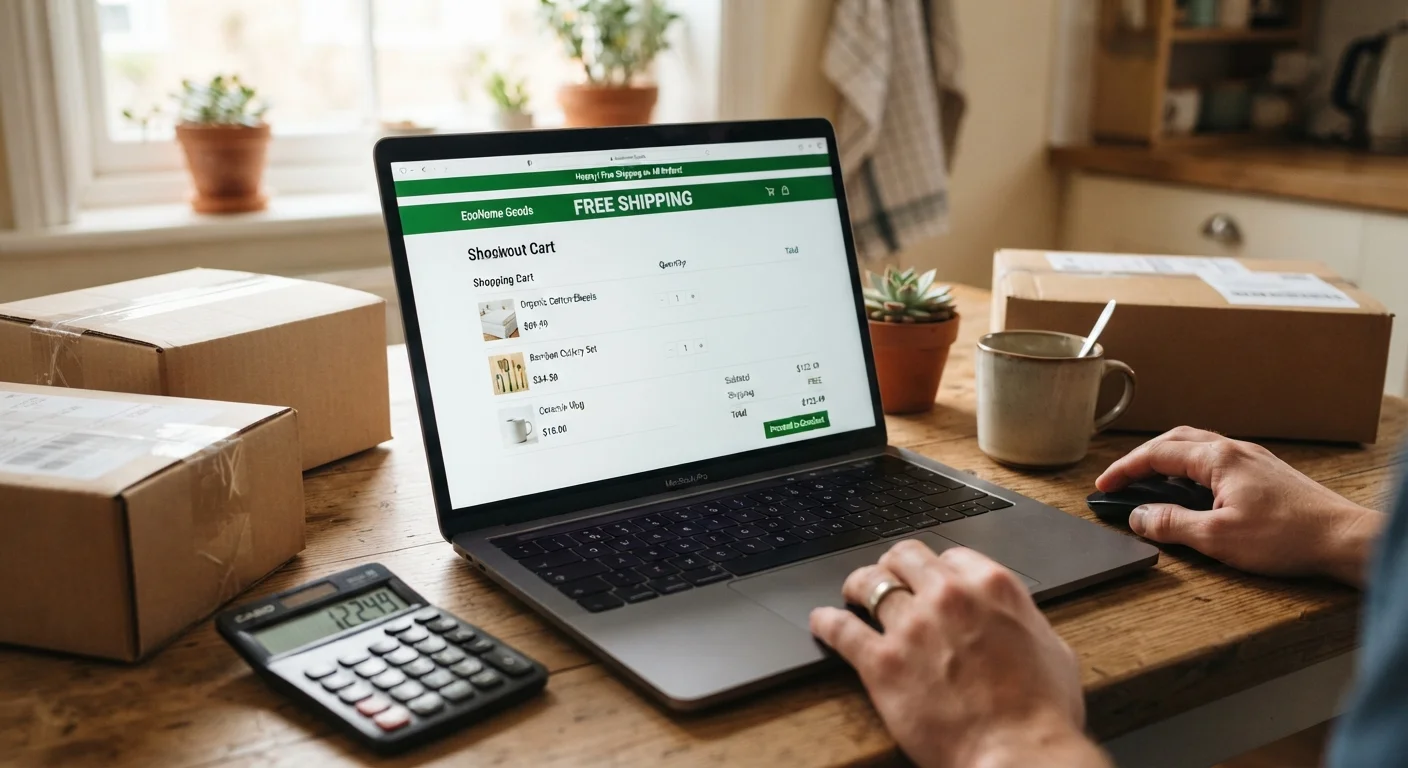
Key Takeaways
- Free shipping thresholds can push you to spend more than you intended or need.
- Handling fees and inflated item prices sometimes offset any shipping savings.
- Slow delivery windows and return shipping costs are often buried in the fine print.
- Comparing total order cost - not just the shipping line - gives a truer picture of value.
The Real Cost Hidden Inside 'Free'
Few phrases in online retail carry as much persuasive weight as "free shipping." Retailers know it works: consumer research consistently shows that shoppers rank free shipping as one of the most influential factors in completing a purchase. But the word free is doing a lot of heavy lifting, and it's worth pulling it apart.
In practice, shipping costs don't disappear - they get redistributed. A retailer offering free delivery has to absorb that cost somewhere, and the most common places are slightly higher item prices, mandatory minimum order thresholds, or reduced service speeds. None of those trade-offs are inherently unfair, but they do mean the savings calculation is more complicated than the banner suggests.
Understanding where the cost goes is the first step to shopping with a clearer head. The myths below break down the most common misconceptions families encounter when navigating shipping offers online. For a broader look at how pricing language can mislead, see how retailers use pricing tricks to frame offers favorably.
Myth
If shipping is free, I'm automatically saving money compared to paying for delivery.
Fact
Free shipping is often baked into item prices or requires spending more than you need, so actual savings depend on the total order cost.
Retailers frequently adjust base prices or require a minimum cart value to offset delivery costs. If you spend $25 extra to hit a $50 free-shipping threshold on a $30 item you wanted, you've spent $55 instead of $35 plus a $7 shipping fee. The math doesn't favor the "free" option in that scenario.
Myth
A retailer offering free shipping is always more competitive than one that charges for it.
Fact
The total order price - including item cost, fees, and taxes - is the only reliable comparison point between retailers.
A retailer charging a flat $6 shipping fee on genuinely lower-priced items may cost you less overall than a competitor whose "free" shipping is funded by prices that run $8-$12 higher per item. Always run the full numbers before deciding where to place an order.
Myth
Free shipping means the whole fulfillment process costs me nothing extra.
Fact
Handling fees, return shipping charges, and slower delivery windows are all costs that can accompany a free-shipping offer.
Many retailers add a separate "handling" line that survives the free-shipping threshold. Return shipping - often not covered - can be $8-$15 for a single parcel. And choosing the slowest free tier sometimes means waiting 7-10 business days, which may force a paid upgrade for time-sensitive needs. These are real costs that don't appear on the "shipping" line.
Myth
Hitting the free shipping minimum is always a smart way to get more value from an order.
Fact
Buying items you wouldn't otherwise purchase just to cross a threshold adds cost, not value.
Threshold-padding - adding low-priority items to reach the minimum - is one of the most reliable ways retailers increase average order size. If the extra item sits unused, the "savings" on shipping are offset entirely by unnecessary spending. It's worth asking whether you'd buy the filler item at full price in a store before adding it to your cart. This dynamic is closely related to how genuine discounts are structured versus offers designed to drive spend.
Myth
Subscription shipping programs always pay for themselves.
Fact
Annual shipping memberships only deliver net savings if your ordering frequency and item prices actually justify the fee.
Paid shipping memberships can offer real value for households that order frequently from a single retailer. But if most of your purchases would have qualified for free shipping anyway, or if you rarely use the service, the annual fee becomes a sunk cost. It's worth tracking how many paid-shipping orders you would actually have placed before renewing.
How to Evaluate a Shipping Offer Before You Commit
Once you recognize the mechanics behind free shipping, a few practical habits can help you make more accurate comparisons.
Threshold Padding Can Silently Inflate Your Cart
Retailers design free-shipping minimums to encourage larger orders - not necessarily better ones. Before adding items to hit a threshold, confirm you would buy each item regardless of the shipping offer. Unused or unwanted purchases eliminate any shipping savings entirely. If you frequently find yourself padding carts, it may be worth comparing the full transaction cost against simply paying for shipping on a smaller, intentional order.
- Calculate total order cost first. Add item prices, any fees, and taxes before comparing across retailers. A $5 shipping charge at one store may still leave you paying less overall than a threshold-pushing cart at another.
- Check the return shipping policy. If an item arrives wrong or doesn't fit, who pays to send it back? Free outbound shipping paired with paid return shipping can quickly reverse any savings, especially on clothing or footwear.
- Read the delivery window. Standard free shipping can mean five to ten business days. If your timeline is tighter, the "free" option may force you to upgrade to a paid tier anyway.
- Watch for handling fees. Some retailers separate a "handling" line item from shipping. This charge is functionally a shipping cost under a different label, but it doesn't always vanish when you hit the free shipping threshold.
These habits apply across categories - whether you're ordering household goods, electronics, or clothing. The goal isn't to avoid free shipping offers, but to verify that the full transaction actually saves money compared to alternatives. This kind of total-cost thinking connects directly to a broader principle: the lowest price isn't always the best value when hidden fees and trade-offs are factored in.
58%
Shoppers who added items to reach free-shipping threshold
A National Retail Federation survey found that over half of online shoppers have added items to a cart specifically to qualify for free shipping, often spending more than intended.
$8-$15
Typical return shipping cost per parcel
Industry estimates from logistics and consumer research groups place average consumer-paid return shipping between $8 and $15 per package, a cost rarely highlighted in free-shipping promotions.
Developing a consistent habit of reading the fine print - especially on threshold-based promotions - helps families avoid spending more than planned just to qualify for an offer. For more strategies on stretching your household budget without unnecessary friction, the Budget-Smart Buying hub is a useful ongoing resource.