

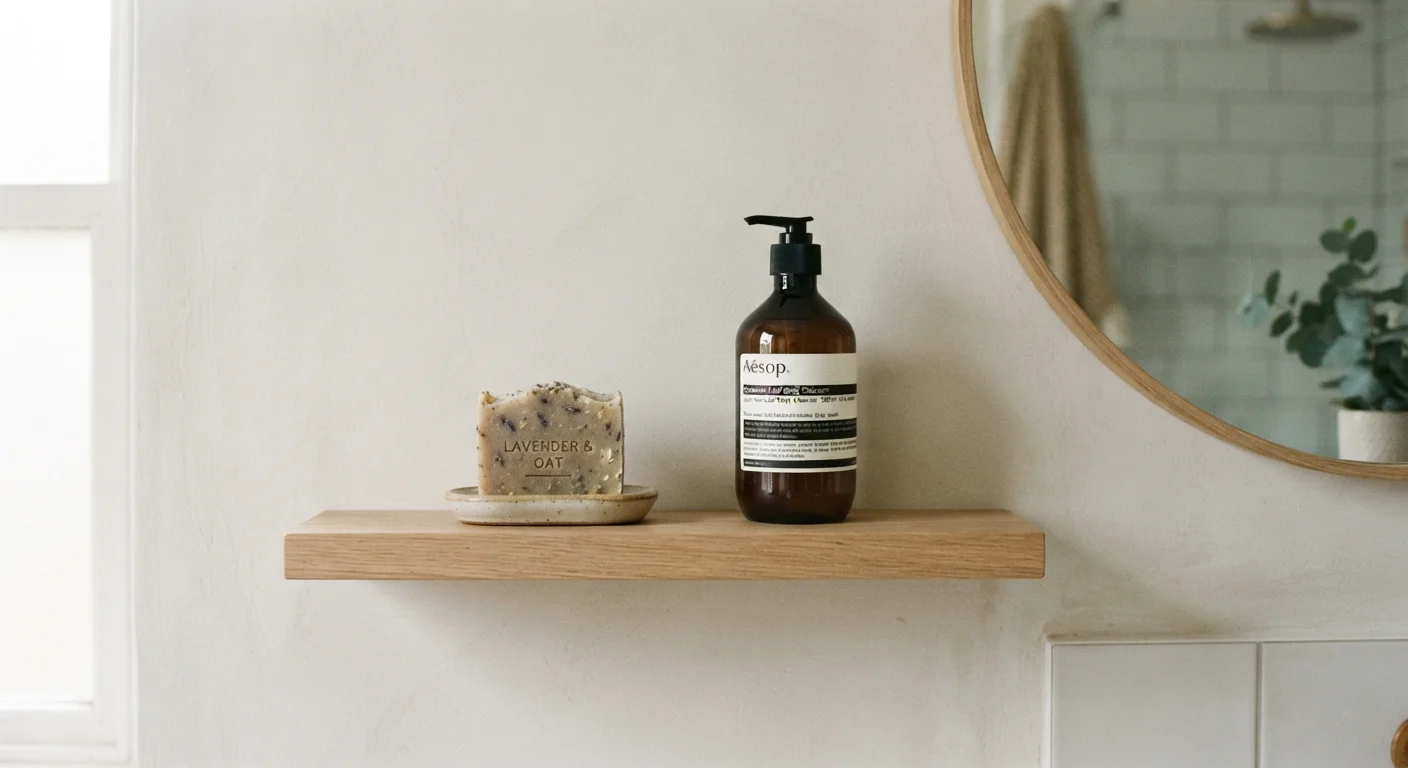
Key Takeaways
- Bar soap typically costs less per use than body wash, making it the more budget-friendly option for families.
- Body wash formulas often contain moisturizing ingredients that may suit dry or sensitive skin better.
- Bar soap generally produces less plastic waste, giving it an environmental edge over bottled body wash.
- Both formats clean skin effectively when used correctly - the difference lies in feel, cost, and sustainability.
- Skin type and household priorities should guide your choice, not marketing claims alone.
Option A
Bar Soap
The time-tested, wallet-friendly classic.
Best for: Cost-conscious households and anyone who prefers a minimal, low-waste cleansing routine.
Option B
Body Wash
The moisturizing, sensory-rich modern choice.
Best for: Those who prioritize skin hydration, fragrance variety, and a lathery shower experience.
If you're managing a tight household budget
Bar Soap
Bar soap consistently delivers a lower cost-per-use and lasts longer when stored dry between showers, stretching your dollar further.
If you have dry or sensitive skin
Body Wash
Many body wash formulas include humectants and emollients that help retain skin moisture - a meaningful benefit for those prone to dryness or irritation.
If reducing plastic waste is a priority
Bar Soap
Bar soap typically comes in minimal or recyclable paper packaging, generating significantly less plastic waste than body wash bottles.
If you want a sensory or spa-like shower experience
Body Wash
Body washes tend to offer richer lather, a wider range of fragrances, and optional skin-nourishing additives for a more indulgent routine.
If you're simplifying a family grooming routine
Bar Soap
A single bar can serve multiple household members with no pumps, no spills, and no cluttered shower shelves - simple and practical.
What's Actually in Each Cleanser?
At their core, both bar soap and body wash are surfactant-based cleansers - they use surface-active agents to lift dirt, oil, and bacteria from the skin so water can rinse them away. But their formulations diverge considerably from there.
Traditional bar soap is made through saponification: oils or fats are combined with an alkali (typically sodium hydroxide) to create a solid cleansing bar. Most commercial bars also include binding agents, fragrances, and preservatives. Some bars are formulated with added moisturizers or glycerin, though the base process remains similar.
Body wash is a liquid formula - water-based and typically containing synthetic surfactants, thickening agents, fragrance, and often conditioning ingredients like glycerin, aloe vera, or various oils. Because it's liquid, it requires preservatives to prevent microbial growth, and its surfactants tend to be milder than those in traditional bar soap.
Understanding these differences matters because they influence how each product behaves on your skin - particularly its effect on your skin's pH and moisture barrier.
| Criterion | Bar Soap | Body Wash |
|---|---|---|
| Typical cost-per-use | Lower | Moderate to higher |
| Skin pH compatibility | Often more alkaline | Closer to skin's natural pH |
| Moisturizing potential | Limited (varies by formula) | Generally higher |
| Packaging waste | Minimal (paper/cardboard) | Higher (plastic bottles) |
| Shelf life in use | Can soften if stored poorly | Stable; pump controls dispensing |
| Hygiene (shared use) | Concerns about bar sharing | Pump format more hygienic |
| Lather and sensory feel | Functional, straightforward | Richer, more customizable |
Cost and Value: Running the Numbers
For families watching their spending, cost-per-use is a more useful measure than sticker price. A standard bar of soap weighing around 4 oz typically yields 30-40 showers depending on usage habits and how well it's stored between uses. A 16 oz body wash bottle, used with a loofah or washcloth, may last a similar number of showers - but its shelf price is generally higher.
~$0.03-$0.08
Estimated cost per bar soap shower
Based on typical bar weights and average retail prices; actual cost varies by brand and usage habits.
~$0.10-$0.20
Estimated cost per body wash shower
Reflects standard 16 oz bottle pricing and average usage per session; using a loofah can increase consumption.
552 million
Plastic bottles discarded in US annually (personal care)
Estimated figure cited in sustainability research on personal care product packaging waste in the United States.
Body wash also has a tendency to be used more generously than necessary - pumping out more product per shower than the skin actually needs. Bar soap, by contrast, tends to be used more deliberately. Storage matters too: a soggy bar left sitting in pooled water breaks down faster and wastes product, so a draining soap dish is worth the small investment.
Over the course of a year for a household of four, the cost difference between bar soap and body wash can be meaningful - though exact figures vary widely by product chosen. See how grooming product choices add up over time for a broader look at routine spending.
Skin Feel, pH, and Hydration
One of the most common complaints about traditional bar soap is that it can leave skin feeling tight or dry after washing. This is largely a pH issue. Healthy skin sits at a mildly acidic pH of around 4.5-5.5. Classic bar soap, due to the saponification process, tends to have a more alkaline pH - sometimes between 9 and 10 - which can temporarily disrupt the skin's acid mantle (its natural protective barrier).
Body washes are typically formulated to be closer to skin's natural pH, which may make them gentler for people with dry, sensitive, or eczema-prone skin. That said, the bar soap market has evolved: many modern bars are now pH-balanced and include conditioning agents that reduce post-wash tightness.
For most people with normal skin, either format cleans effectively without causing lasting irritation. Those with specific skin concerns - dryness, sensitivity, or diagnosed conditions - should consult a dermatologist rather than relying solely on product labeling. This article provides general information and is not a substitute for professional skincare or medical advice.
For comparison, facial cleansing products follow similar logic - our guide to micellar water vs cleansing oil explores how formula pH and emulsification affect sensitive facial skin.
Environmental Footprint: Packaging and Waste
Sustainability is an increasingly relevant factor in everyday purchasing decisions, and cleansers are no exception. Bar soap has a clear structural advantage here: most bars are packaged in paper or cardboard, both of which are widely recyclable and biodegradable. Some bars are sold with no packaging at all.
Body wash almost universally comes in plastic bottles. While some brands offer refill systems or use post-consumer recycled plastic, these options remain less common and less accessible than standard bar soap packaging. The water content in body wash also adds to transport weight, contributing to a larger carbon footprint per unit shipped.
Concentrated and Solid Alternatives to Consider
A growing category of solid body wash bars attempts to combine the skin-feel benefits of liquid body wash with the low-waste packaging of bar soap. These products use synthetic surfactants (similar to liquid body wash) in a compressed solid form. They're worth considering for households that want moisturizing performance without plastic packaging - though availability and price points vary.
If reducing plastic consumption is a household goal, bar soap is the more straightforward choice - no system changes or specialty retailers required. For those committed to body wash, seeking refillable formats or concentrated formulas can help offset some of the environmental cost.