

Key Takeaways
- Micellar water uses micelle technology to lift dirt without rinsing; cleansing oil dissolves makeup through oil-to-oil chemistry.
- Cleansing oils are generally more effective at removing waterproof or long-wear makeup in one pass.
- Micellar water suits sensitive and oily skin; cleansing oil typically suits dry and combination skin better.
- Neither method is universally superior - the right choice depends on your skin type and routine.
- Both options work best when followed by a secondary face wash as part of a double-cleanse routine.
Option A
Micellar Water
The lightweight, no-rinse everyday staple.
Best for: Sensitive or oily skin types looking for a quick, gentle cleanse with minimal effort.
Option B
Cleansing Oil
The thorough, emulsifying deep cleanser.
Best for: Dry skin types or heavy makeup wearers who want a thorough, nourishing cleanse.
If you have sensitive or reactive skin
Micellar Water
Micellar water's gentle surfactant formula is less likely to trigger sensitivity, and the no-rinse option reduces repeated skin contact with water.
If you wear heavy or waterproof makeup regularly
Cleansing Oil
Oil-based cleansers dissolve long-wear and waterproof formulas more completely, reducing the need to scrub or repeat cleanse.
If you have dry or dehydrated skin
Cleansing Oil
Cleansing oils help preserve the skin's natural moisture barrier while cleaning, making them more suitable for dry skin types.
If you need a fast, minimal-step routine
Micellar Water
Micellar water requires no emulsifying or rinsing step, making it the quicker option for busy mornings or light makeup days.
How Each Formula Actually Works
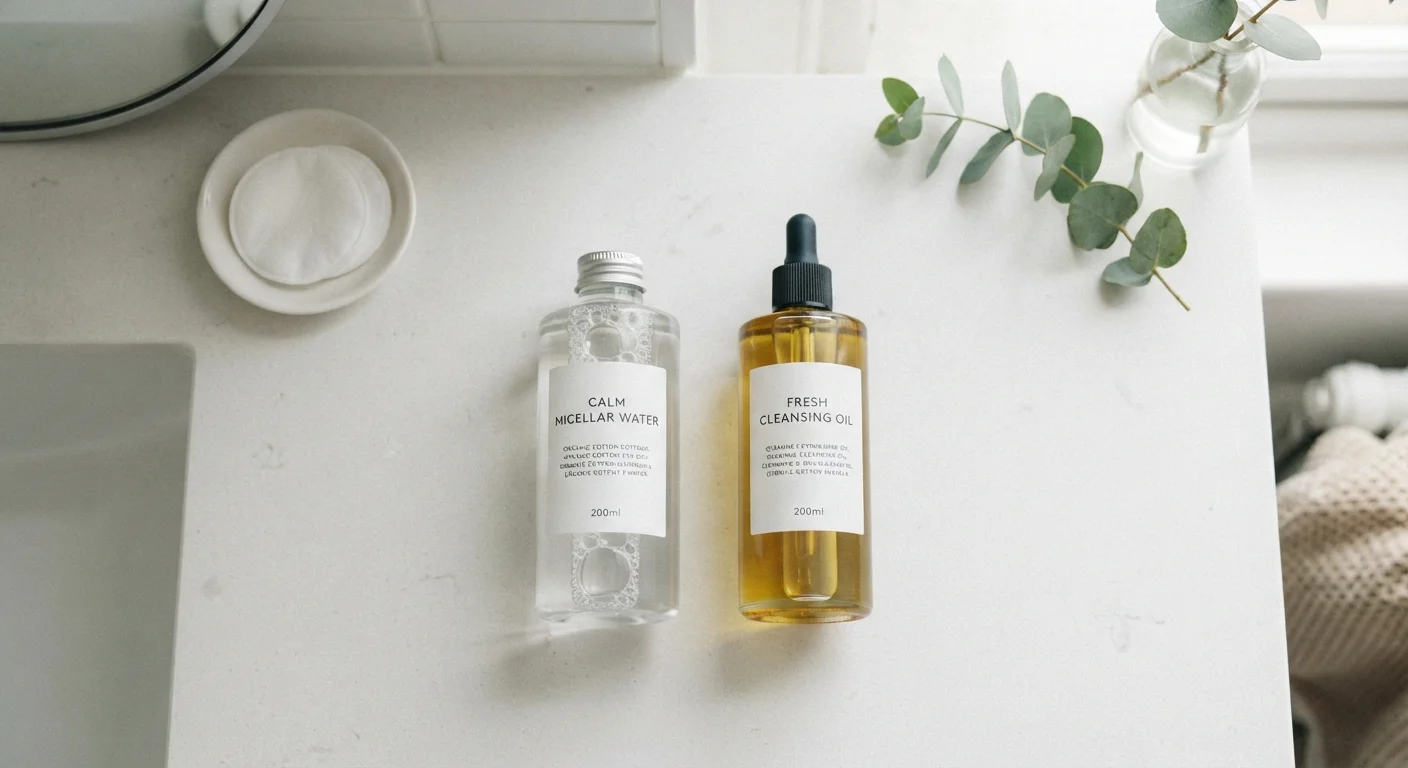
Understanding these two cleansers starts with their chemistry. Micellar water is a water-based solution containing tiny clusters of molecules called micelles. Each micelle has a water-attracting outer shell and an oil-attracting core. When applied with a cotton pad, micelles latch onto dirt, sebum, and makeup particles and lift them away - no rinsing required.
Cleansing oil works on the principle that like dissolves like. An oil-based formula binds with the oily components in sunscreen, foundation, and sebum. When you add water and emulsify - massaging until the oil turns milky - it rinses cleanly from the skin along with the impurities it has captured.
This fundamental difference in mechanism explains most of the practical distinctions between the two. Knowing your skin type is the most useful starting point for choosing between them.
| Criterion | Micellar Water | Cleansing Oil |
|---|---|---|
| Core mechanism | Micelle clusters lift debris | Oil dissolves oil-based impurities |
| Rinsing required | No - wipe and done | Yes - emulsify then rinse |
| Waterproof makeup removal | Moderate; may need multiple passes | Strong; one application usually sufficient |
| Best skin type fit | Sensitive, oily, or acne-prone | Dry, combination, or mature |
| Application method | Cotton pad | Fingertips, then water |
| Typical format | Large liquid bottle | Pump or dropper bottle |
| Skin feel after use | Light, refreshed | Soft, nourished |
Performance, Skin Compatibility, and Everyday Use
In terms of makeup removal power, cleansing oils generally outperform micellar water on waterproof formulas. A single application of a well-formulated cleansing oil can dissolve mascara, long-wear foundation, and SPF more thoroughly than micellar water, which may require multiple cotton pad passes and more friction on the skin.
That friction factor matters. Repeated rubbing to remove stubborn makeup can irritate sensitive or acne-prone skin over time. In that respect, micellar water's gentler mechanical process can be an advantage for reactive skin types - even if its chemical removal power is lighter. For oily skin, however, the thought of applying an additional oil-based product can feel counterintuitive. Oil cleansers do not necessarily worsen oiliness - most emulsify and rinse cleanly - but individuals with oily or acne-prone skin may find micellar water a more comfortable daily choice.
Both products integrate well into a double-cleanse routine, where a first cleanser (either micellar water or oil) removes surface makeup and SPF, followed by a water-based face wash to clean the skin itself. See how cleansing fits into a broader routine in our guide on morning vs. evening skincare timing.
2-step
Double-cleanse routine for SPF wearers
Dermatologists generally recommend a two-step cleanse when wearing sunscreen daily - a first pass with an oil or micellar cleanser, followed by a water-based face wash.
~pH 5.5
Skin's natural surface pH
The skin's surface is mildly acidic; cleansers that remain close to this range are generally considered less disruptive to the skin barrier.
Cost, Convenience, and Choosing What Fits Your Life
Both micellar water and cleansing oil are widely available at drugstores and are generally considered affordable skincare options. Micellar water is often sold in large-format bottles, which can represent good per-use value - though cotton pad usage adds an ongoing cost and generates waste. Cleansing oil requires only fingertip application and rinsing, with no disposable materials needed.
For families managing busy schedules, micellar water's no-rinse format offers a real convenience advantage - particularly for removing light makeup at the end of a long day without a full sink routine. Cleansing oil, by contrast, requires a sink, warm water, and a minute or two of massage and rinsing, making it more suited to a deliberate evening routine.
Neither product is a complete cleanser on its own if you wear SPF daily - both work best when followed by a face wash. Understanding how hydration fits in afterwards is also worth considering; our piece on moisturiser myths and skin hydration covers common misconceptions about what skin actually needs after cleansing. For a broader look at how cleansing product formats differ, our comparison of bar soap vs body wash applies similar logic to body cleansing choices.
A Note on Skin Barrier Health
Repeated use of micellar water without rinsing can leave surfactant residue on the skin, which some research suggests may contribute to barrier disruption over time - particularly for sensitive skin types. If you rely on micellar water daily, rinsing with plain water after wiping is a reasonable precaution. This article provides general skincare information only and is not a substitute for advice from a qualified dermatologist.