

Key Takeaways
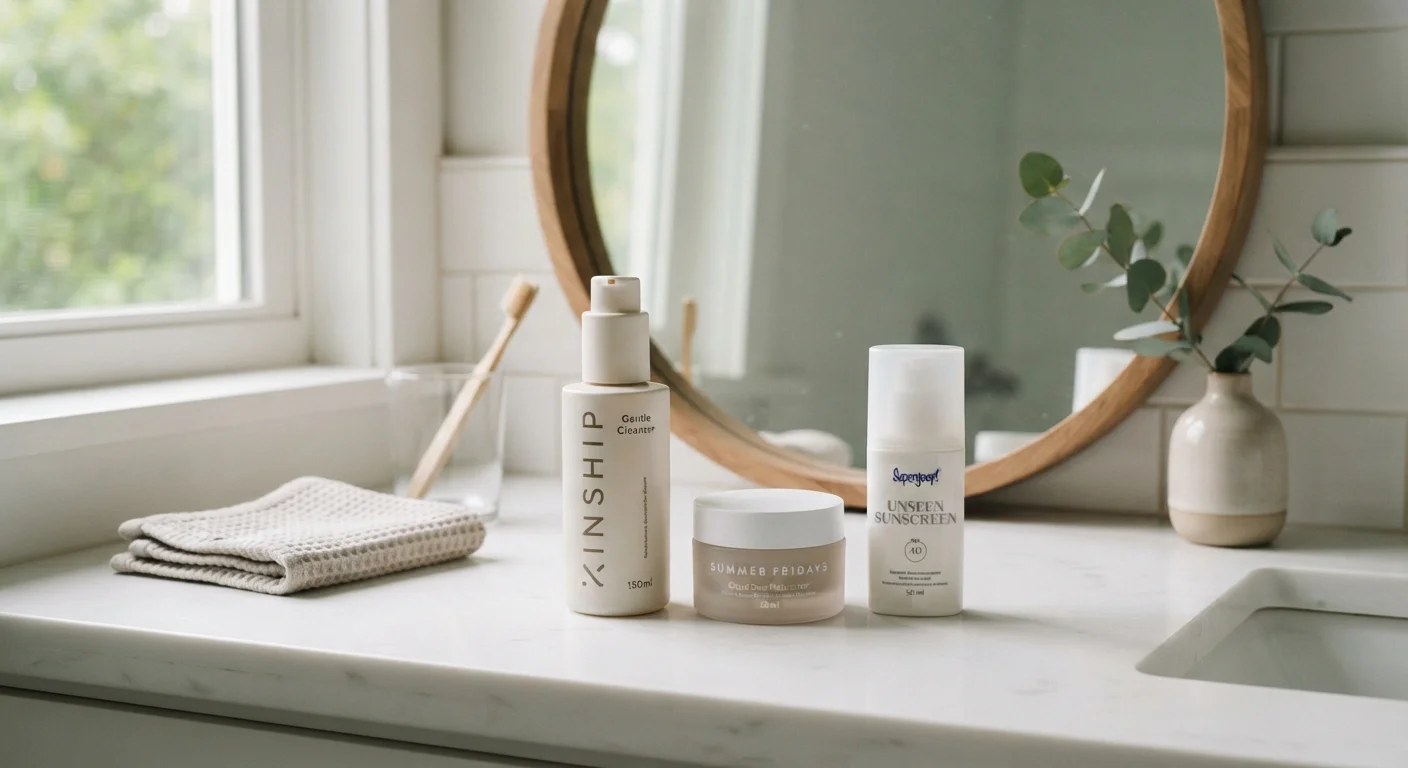
- A functional skincare routine requires only three steps: cleanse, moisturize, and protect.
- Overloading your skin with too many products can cause irritation rather than improvement.
- Understanding your skin type helps you choose the right formulations without wasting money.
- Consistency matters more than product cost - a simple routine used daily outperforms a complex one used sporadically.
- Sunscreen is the single most evidence-supported step for long-term skin health.
Start here
Why Simpler Routines Often Work Better
Next
The Three Non-Negotiables
Then
Choosing Products for Your Skin Type
Apply it
Building the Habit: Morning vs. Evening
When you're ready
When to Consider Adding More
Why Simpler Routines Often Work Better
The skincare industry generates revenue by selling complexity. Multi-step systems, layered serums, and specialized treatments fill store shelves - but for most people, especially those new to skincare, this volume of options creates confusion rather than results. Dermatologists broadly agree that a consistent, stripped-back routine outperforms an elaborate one applied inconsistently.
Layering too many products also introduces real risks. Incompatible ingredients can cancel each other out or cause irritation. The more products in your routine, the harder it becomes to identify what's helping - or what's causing a breakout. As this look at over-complicated routines illustrates, more steps rarely translate to better skin.
Starting minimal also protects your budget. A focused three-product routine costs far less to maintain and lets you put spending where it actually matters. For households managing multiple family members' needs, that efficiency adds up quickly.
Less Is More When Starting Out
If you're new to skincare, resist the urge to add multiple products at once. Begin with your three core steps for at least four weeks before introducing anything else. This gives your skin time to adjust and makes it much easier to pinpoint the cause if a reaction occurs.
The Three Non-Negotiables
Every functional skincare routine rests on three pillars. Everything else is optional.
Skin barrier
The outermost layer of skin that acts as a protective shield, keeping moisture in and irritants out. A healthy barrier is the foundation of well-functioning skin.
Broad-spectrum SPF
A sunscreen rating indicating protection against both UVA rays (linked to aging) and UVB rays (linked to burning). SPF 30 or higher is widely recommended for daily use.
Non-comedogenic
A label indicating a product is formulated to avoid blocking pores, making it a safer choice for people prone to breakouts or oily skin.
Ceramides
Naturally occurring lipids (fats) found in the skin barrier. Moisturizers containing ceramides help replenish and reinforce the skin's protective layer, particularly useful for dry or sensitive skin.
AHA / BHA
Alpha hydroxy acids (AHAs) and beta hydroxy acids (BHAs) are chemical exfoliants that help remove dead skin cells. AHAs work on the skin's surface; BHAs penetrate pores, making them useful for congested or oily skin.
1. A Gentle Cleanser
Cleansing removes daily buildup of dirt, oil, and environmental pollutants that accumulate on skin throughout the day. The keyword here is gentle: harsh cleansers that strip natural oils can compromise the skin barrier, leaving skin more vulnerable to irritation. Look for fragrance-free, pH-balanced formulations - these work for the broadest range of skin types without causing dryness.
2. A Moisturizer
Moisturizers serve two functions: they add hydration to the skin's surface and help seal that moisture in by supporting the skin barrier. Even oily skin types benefit from moisturizing - skipping it can trigger excess oil production as the skin compensates for perceived dryness. Formulation matters: gels and lightweight lotions tend to suit oilier skin, while creamier textures support drier skin types.
3. A Broad-Spectrum Sunscreen (SPF 30 or Higher)
Of the three steps, sunscreen has the strongest body of evidence behind it. Daily UV protection is consistently linked to reduced risk of skin aging and sun damage. Broad-spectrum formulas protect against both UVA and UVB rays. SPF 30 filters approximately 97% of UVB rays; higher SPFs provide incrementally more coverage. Applying sunscreen every morning - even on cloudy days - is the single most impactful skincare habit most people can build.
Choosing Products for Your Skin Type
Skin type influences which formulations work best for you, but identifying yours doesn't require a dermatologist visit. Most people fall broadly into one of five categories: normal, dry, oily, combination, or sensitive. A simple self-assessment after cleansing - before applying any other products - gives you a reasonable starting point.
- Normal skin feels balanced, with no significant oiliness or tightness. Most formulations work well.
- Dry skin feels tight or flaky, particularly after washing. Richer moisturizers with ingredients like glycerin or ceramides help restore barrier function.
- Oily skin appears shiny, especially in the T-zone. Lightweight, non-comedogenic (won't clog pores) products are a better fit.
- Combination skin is oily in some areas and drier in others. A moderate, balanced moisturizer is usually the most practical choice.
- Sensitive skin reacts readily to fragrance, alcohol, or certain active ingredients. Fragrance-free, minimal-ingredient formulas significantly reduce reaction risk. See this guide to simplifying routines for sensitive skin for more detail.
Before adding any new product to your routine, it's worth consulting this practical checklist for switching skincare products safely to minimize the risk of reactions.
Building the Habit: Morning vs. Evening
A bare-minimum routine takes under two minutes, morning and evening. The structure is simple:
Morning
- Cleanse (or rinse with water if skin is not oily)
- Moisturize
- Apply sunscreen
Evening
- Cleanse to remove the day's buildup
- Moisturize
Morning and evening routines serve different purposes - the AM routine focuses on protection, while the PM routine prioritizes repair and recovery. For a deeper look at the logic behind timing, morning vs. evening skincare timing covers each step in detail.
Habit formation is the real challenge here. Attaching your routine to an existing daily anchor - brushing your teeth, making coffee - is a reliable strategy for making it automatic. Consistency over four to six weeks is what delivers visible results, not premium ingredients or additional steps.
Don't Skip Sunscreen on Cloudy Days
UV radiation penetrates cloud cover and can cause cumulative skin damage even when skies appear overcast. Making sunscreen a non-negotiable part of your morning routine - regardless of weather - is one of the most effective long-term skin health habits you can build. Reapply if you're spending extended time outdoors.
When to Consider Adding More
Once your three-step routine is consistent and your skin has stabilized, you may want to address specific concerns. Common additions include:
- Chemical exfoliants (such as AHAs or BHAs) for texture, congestion, or uneven tone - used one to three times per week, not daily
- Targeted serums for concerns like hyperpigmentation or fine lines, introduced one at a time
- Facial oils for additional moisture support, particularly in drier climates or months
If you do begin layering products, the order in which you apply them affects how well they work. Skincare layering order explained breaks down the logic so you get the most from each product without interference.
Value-conscious households may also find it useful to explore habits for stretching your beauty budget before expanding their routines. Spending more isn't necessary - spending smarter is.
This article is for general informational and educational purposes only. It is not a substitute for professional medical or dermatological advice. If you have a skin condition or persistent concerns, consult a qualified healthcare provider.