

Key Takeaways
- Apply products from thinnest to thickest consistency as a general rule.
- Occlusives like heavy creams and oils should always go on last.
- Active ingredients in serums need direct skin contact to work properly.
- Sunscreen is always the final step in a morning routine.
- Fewer well-layered products outperform many poorly ordered ones.
Skincare Layering
Skincare layering is the practice of applying multiple skin products in a deliberate sequence so each one can absorb properly and work effectively. The general principle is to move from the lightest, most water-based formulas to the heaviest, most occlusive ones. Getting this order wrong can prevent active ingredients from reaching the skin where they're needed most.
Occlusive ingredients - such as petrolatum or heavier oils - form a physical barrier on the skin's surface. When applied first, they block subsequent water-based products from penetrating, rendering actives like hyaluronic acid or niacinamide largely ineffective.
The Logic Behind the Layering Rule
Skincare product packaging rarely tells you where in your routine to use something. Yet sequence is one of the most practical decisions you make each morning and evening. The underlying logic is straightforward: skin is a selective barrier, and thicker, oil-based formulas block the passage of lighter, water-based ones. Apply them in the wrong order and you've effectively installed a roadblock in front of your active ingredients.
Think of it like a sponge. A dry sponge absorbs liquid easily. A sponge already coated in oil repels water. Your skin responds similarly - a layer of heavy moisturiser or face oil applied first means the serum you apply second sits on top rather than sinking in.
The practical rule most dermatologists and aestheticians follow: apply products from thinnest to thickest consistency. This isn't arbitrary aesthetics - it reflects how different molecular weights interact with the skin's surface.
pH Matters for Active Ingredients
Some ingredients - particularly vitamin C (ascorbic acid) and AHA/BHA exfoliants - are pH-dependent, meaning they work best in a specific acid range. Applying an alkaline product immediately before or after these can reduce their effectiveness. If your routine includes acid-based products, allow slightly longer between those specific steps.
A Reliable Step-by-Step Sequence
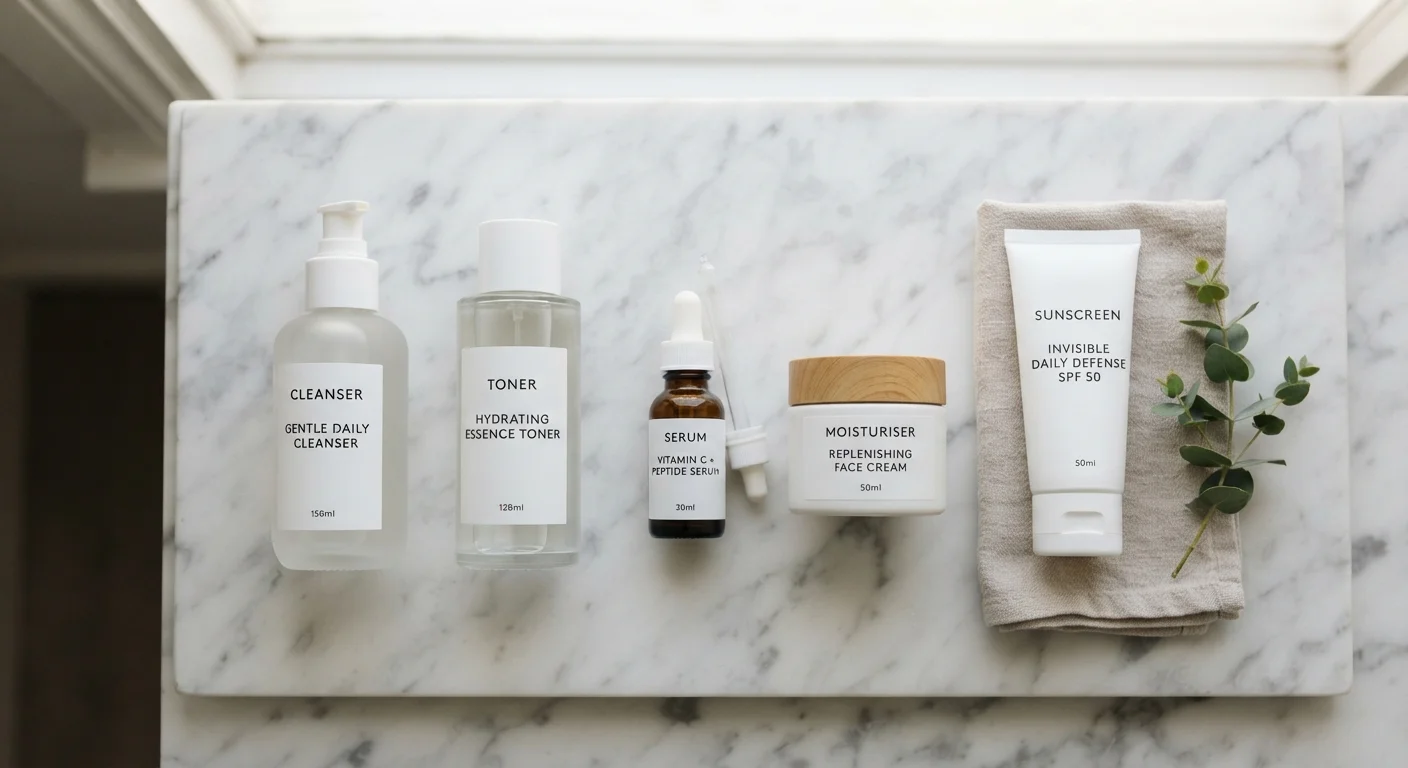
While every routine is personal, a well-established sequence works for the majority of skin types and product combinations:
- Cleanser - Removes surface debris, excess oil, and the previous layer of products. Always the first step.
- Toner or essence - Typically water-based and fast-absorbing. These prep the skin and, in some formulas, begin delivering humectants. For a deeper look at what distinguishes these products, see how toner, essence, and serum differ.
- Treatment serum - This is where most active ingredients live: vitamin C, niacinamide, hyaluronic acid, retinol. Because serums are lightweight and concentrated, they need to be applied directly onto clean skin - not layered over moisturiser.
- Eye cream - Usually a lighter emulsion applied before heavier face cream, if used at all.
- Moisturiser - Locks in the layers beneath and supports the skin's barrier. For more on what moisturisers actually do, common moisturiser myths are worth reviewing before building your routine.
- Face oil (if used) - Applied after moisturiser to seal everything in. Oils sit on top of water-based layers, which is exactly where they belong.
- Sunscreen (morning only) - Always the final step in an AM routine. Applying anything on top of SPF can dilute the protective film it forms.
Give Each Layer a Moment to Settle
You don't need a stopwatch, but a brief 30-60 second pause between steps helps each product absorb before the next is applied. Use that time to do something else - brush your teeth, check the weather - rather than standing and waiting.
Where People Commonly Go Wrong
The most frequent mistake is applying moisturiser before a serum - usually out of habit or because the moisturiser was grabbed first. The result is that the serum's active ingredients can't penetrate the skin effectively. You're not harming your skin, but you may be getting little return on the more expensive product.
A second common error is stacking too many actives without considering their compatibility. Certain ingredients interact poorly or compete for absorption - acid-based exfoliants paired with retinol in the same routine, for instance, can cause unnecessary irritation. If you're working with chemical exfoliants, understanding how different acids behave is a practical next step.
Timing also matters beyond just the sequence within a single routine. What you apply in the morning versus the evening should reflect different skin priorities. AM and PM skincare serve distinct purposes, and understanding that distinction prevents product waste.
~30-60s
Recommended wait time between skincare layers
Most skin professionals suggest a brief absorption pause between steps, though lengthy waits are generally unnecessary for standard formulas.
7+
Steps in the average multi-step skincare routine
Consumer surveys consistently show that multi-step routines have grown in popularity, making layering order an increasingly relevant concern for everyday users.
Keeping It Simple Without Losing Effectiveness
You don't need a ten-step routine for layering logic to pay off. Even a three-product routine - cleanser, serum, moisturiser plus SPF - benefits from correct sequencing. The principle scales down as readily as it scales up.
If you're starting from scratch or simplifying an overcrowded shelf, a bare-minimum routine built around essentials is a useful starting point. And before introducing any new product into your layered routine, a checklist for safely adding new products can help you avoid unnecessary reactions and identify what's working.
The takeaway is consistent: fewer products applied in the right order will nearly always outperform more products applied carelessly. Layering isn't about complexity - it's about giving each product the conditions it needs to do its job.
This article is for general informational and educational purposes only. It is not a substitute for professional dermatological advice. Consult a qualified skincare professional or dermatologist for guidance tailored to your specific skin concerns or conditions.