

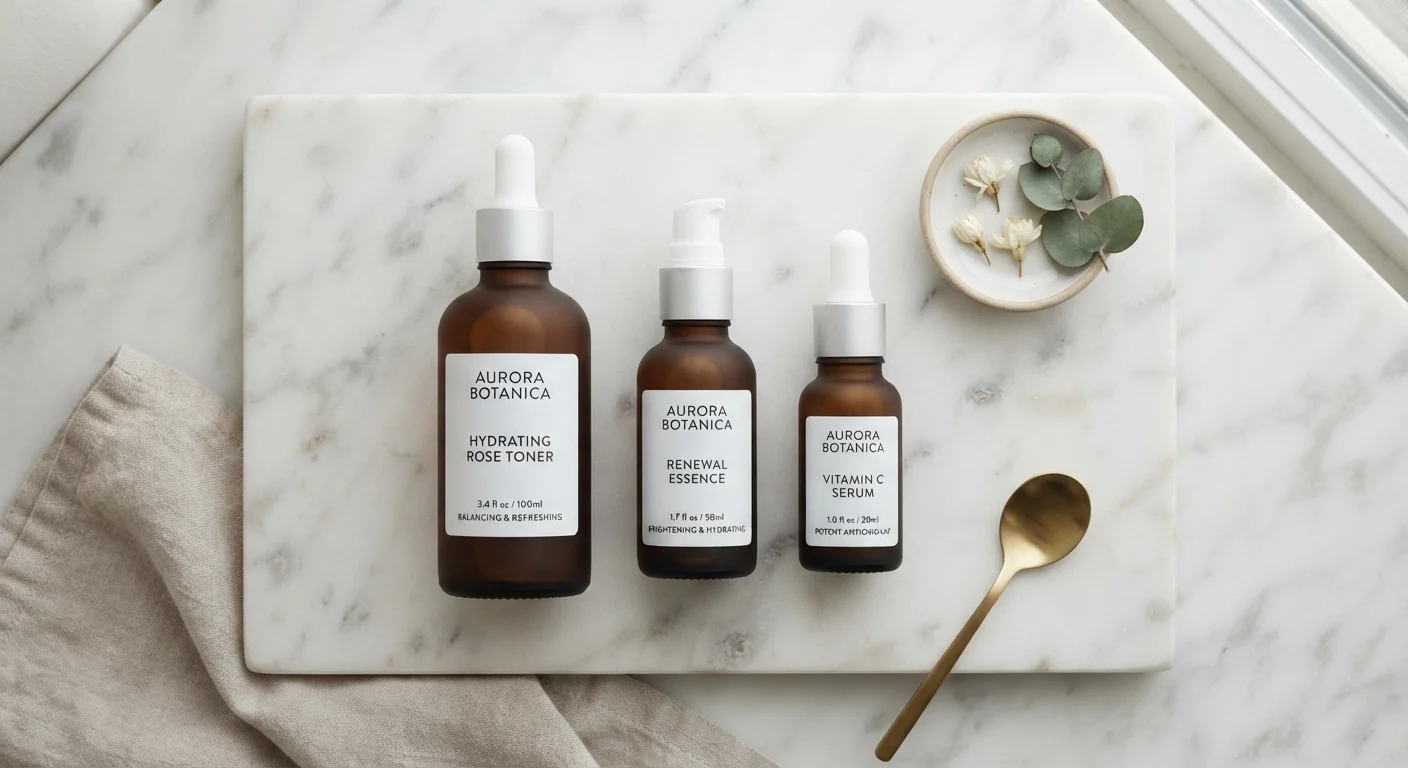
Key Takeaways
- Toner restores skin's pH balance and preps it to absorb what comes next.
- Essence hydrates at a cellular level and bridges the gap between toner and serum.
- Serums deliver the highest concentration of active ingredients for targeted concerns.
- You don't need all three - knowing your skin type and goals helps determine which steps add real value.
- Layering order matters: toner first, then essence, then serum, lightest to heaviest.
Our Verdict
Toner, essence, and serum each occupy a distinct role in a skincare routine, but none is universally mandatory. Toner is useful for rebalancing skin post-cleanse, essence adds a foundational layer of hydration, and serum is the workhorse for targeted treatment. The right combination depends on your skin type, concerns, and how much routine complexity you're willing to manage.
| Best for | Recommended |
|---|---|
| Those building a simple, effective routine from scratch | Toner + Serum |
| Those with dry or dehydrated skin seeking maximum moisture | Toner + Essence + Serum |
| Those targeting a specific concern like dark spots or fine lines | Serum (with active ingredients matched to the concern) |
| Those on a tight budget wanting to streamline | Serum alone after cleansing and moisturizing |
Why These Three Products Create So Much Confusion
Walk down the skincare aisle and you'll find bottles of toner, essence, and serum sitting side by side - often similar in size, watery in texture, and priced across a wide range. It's no surprise that many people use them interchangeably or skip all three out of frustration.
The confusion is understandable. All three products are applied after cleansing and before moisturizer, and all three can feel like thin liquids. But their formulations, concentrations, and purposes are meaningfully different. Before deciding which belongs in your routine, it helps to understand what each is actually designed to do. If you haven't already identified your skin type, start there - understanding your skin type is the foundation for any effective product decision.
What Each Product Is Actually Doing
Toner was historically used to remove residual cleanser and restore the skin's natural pH level (roughly 4.5-5.5 on the acidic side). Modern toners have evolved - many now include hydrating or exfoliating ingredients - but their core role remains preparatory. A well-formulated toner signals to your skin that more steps are coming and helps subsequent products absorb more effectively.
Essence is a concept rooted in Korean skincare (K-beauty) that sits somewhere between a toner and a serum in both texture and function. Essences are typically water-based, lightweight, and focused on delivering hydration at a deeper cellular level. They're not as concentrated with actives as serums, but they amplify the skin's ability to retain moisture and improve overall texture over time.
Serum is where the targeted treatment happens. Serums carry the highest concentration of active ingredients - vitamin C for brightening, retinol for cell turnover, hyaluronic acid for moisture retention, niacinamide for pore appearance - in a delivery system designed to penetrate deeply. Because of this concentration, serums tend to be the most expensive step, and the one where ingredient quality matters most.
| Toner | Essence | Serum | |
|---|---|---|---|
| Primary purpose | Balance pH, prep skin | Deep hydration, skin texture | Targeted active treatment |
| Texture | Watery, thin | Watery to slightly viscous | Thin to gel-like, varies |
| Active ingredient concentration | Low | Low to moderate | High |
| Application order | First after cleansing | Second | Third |
| Who benefits most | All skin types | Dry or dehydrated skin | Anyone with a specific concern |
| Typical price range | $ - $$ | $$ - $$$ | $$ - $$$$ |
| Essential in a routine? | Optional but helpful | Optional, situational | Often the most worthwhile step |
Do You Actually Need All Three?
The honest answer: most people don't. A thoughtful two- or three-step routine can outperform a cluttered shelf of products applied in the wrong order or for the wrong reasons.
Start With One, Add as Needed
If you're new to these product categories, consider starting with just a serum targeted to your main skin concern and building from there. Adding a toner or essence later lets you observe how each step affects your skin individually - which is far more informative than introducing all three at once. Patience with a simplified routine usually produces clearer results than a complex one you're unsure about.
If you have oily or combination skin and few specific concerns, a balancing toner and a lightweight targeted serum may be all you need after cleansing. If your skin tends toward dryness or dullness, adding an essence between the two creates a meaningful hydration boost. For those managing specific skin concerns - uneven tone, visible fine lines, or persistent breakouts - a serum with the appropriate active ingredient is typically the most impactful single investment.
Keep in mind that layering order isn't optional. Applying products from thinnest to thickest - toner, then essence, then serum, then moisturizer - ensures each layer can penetrate rather than sit on top of a heavier barrier. See why skincare layering order matters for a deeper look at the logic behind sequencing.
It's also worth noting that price doesn't always predict performance. Store-brand and generic formulations can deliver comparable results in categories like basic toners and hydrating essences, where the key ingredients (glycerin, panthenol, hyaluronic acid) are inexpensive to source. Serums with patented or complex active ingredients may be one area where formulation investment shows up more clearly - but that varies by product and claim.
If you're curious about what "natural" or "synthetic" labels mean on any of these products, decoding grooming ingredient labels can help you read past the marketing.