

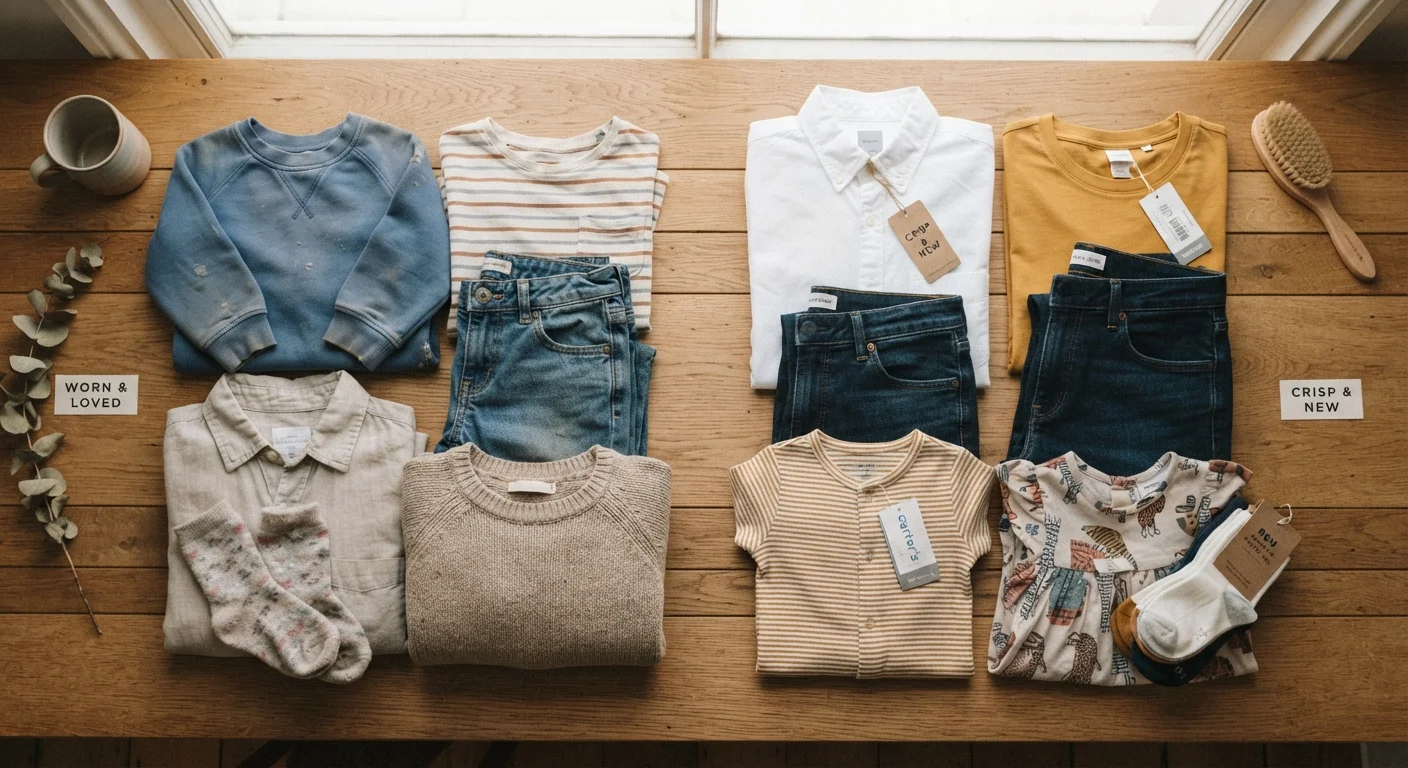
Key Takeaways
- Secondhand clothing typically costs significantly less but requires more time to source and evaluate.
- New clothing offers size and condition certainty, which matters most for fast-growing children and workwear.
- A hybrid approach - buying some items secondhand and others new - suits most family budgets well.
- Fabric quality and garment construction matter in both markets; knowing what to look for saves money either way.
- Certain categories, such as underwear, swimwear, and structured footwear, are generally better purchased new.
Our Verdict
Neither secondhand nor new clothing is universally superior - each fits different purchase scenarios. Families who approach each buying decision by category, item condition, and frequency of use typically get the most out of their clothing budget. The evidence strongly favors a deliberate mix rather than a blanket policy.
| Best for | Recommended |
|---|---|
| Frequently replaced kids' casual wear and outerwear | Secondhand |
| Underwear, swimwear, and structured shoes | New |
| Workwear, school uniforms, and formal occasion pieces | New |
| Seasonal layers, accessories, and play clothes | Secondhand |
Why This Decision Is More Nuanced Than It Looks
For families managing clothing budgets across multiple people and seasons, the instinct to choose one approach - always buy new, or always shop secondhand - is understandable. But a blanket rule tends to underserve both wallet and wardrobe. The more useful question is: which approach fits this particular purchase?
A toddler who'll outgrow jeans in three months presents a very different case from a parent buying a work blazer they'll wear weekly for years. Thinking through trade-offs by category is one of the most practical habits families can build. This comparison lays out the real-world advantages and limitations of each path to help inform those decisions.
The Case for Secondhand Clothing
The most immediate advantage of pre-owned clothing is cost. Garments sold through resale platforms, thrift stores, consignment shops, and community exchanges typically carry prices well below retail - sometimes by 50-80%, depending on the source and item type. For children's clothing especially, this represents genuine value: kids grow quickly, wear items briefly, and are often indifferent to newness.
There's also an environmental dimension. Extending a garment's useful life reduces the resources needed to manufacture new ones. Families who are conscious of consumption often find this aligns with their values without requiring sacrifice.
Secondhand shopping can also surface durable, well-constructed items - particularly older garments made before cost-cutting shifted many manufacturers toward thinner fabrics and faster construction. Understanding fabric types helps shoppers recognize quality regardless of age or price tag.
Inspect Before You Commit
When shopping secondhand in person, check seams, zippers, and fabric around the knees and elbows - these areas show wear earliest. For online resale purchases, read condition descriptions carefully and review seller ratings. A thorough wash before wearing is always worthwhile regardless of how clean items appear.
The main trade-offs are time and unpredictability. Sourcing secondhand requires effort: browsing, inspecting for wear or damage, and sometimes washing thoroughly before use. Size availability can be inconsistent, and specific items may simply not be in stock when needed. For families under time pressure, this friction has real cost.
The Case for New Clothing
New clothing offers something secondhand cannot fully replicate: certainty. The item will be in the size stated, free of prior wear, and consistent with current safety and manufacturing standards. For structured footwear, which needs to properly support developing feet, or for items where hygiene matters - underwear, swimwear, base layers - new is generally the more sensible choice.
New clothing also tends to come with more predictable durability in the short term, and for workwear or school uniforms that need to look presentable day after day, that consistency has practical value. Return policies are also more straightforward, which matters when buying for children whose sizing can be unpredictable. Buying children's clothes a size up is easier to execute and reverse when shopping new.
New Doesn't Always Mean Better Quality
At lower retail price points, new clothing can be made with thin fabrics and minimal construction care. A secondhand garment in good condition from a more durable original can outlast a cheap new equivalent. Price alone - new or used - is not a reliable indicator of how long an item will hold up under regular family wear.
The obvious limitation is price. Retail clothing costs have risen considerably, and buying everything new for a growing family adds up quickly. Quality also varies substantially at lower price points - a new item isn't automatically durable, and cheap new garments may wear out before a well-made secondhand one would.
Applying a Hybrid Strategy by Category
Most families find a practical middle ground once they stop thinking in absolutes. A category-based approach helps: certain items almost always justify buying new, while others present little meaningful downside when purchased secondhand.
| Secondhand | New | |
|---|---|---|
| Cost | Typically 50-80% less than retail | Full retail price; sales vary |
| Size & condition certainty | Variable; requires inspection | Consistent; matches labeled size |
| Time to source | Higher; browsing required | Lower; immediate availability |
| Best for fast-growing kids | Strong fit - worn briefly, low cost | Less efficient for rapid size changes |
| Hygiene-sensitive items | Generally not recommended | Preferred choice |
| Environmental footprint | Lower; extends garment life | Higher; new production required |
| Durability predictability | Depends on prior wear history | Depends on construction quality |
| Return / exchange options | Limited; final sale common | Standard retail return policies |
For seasonal wardrobe planning, secondhand outerwear and layering pieces offer strong value - children often wear coats and fleeces for a single season before sizing out. Stretching children's clothing across seasons is far easier when secondhand sources are part of the mix.
If you're newer to managing a household clothing budget overall, building a practical family fashion budget from the ground up is a useful starting point before deciding where to allocate spending between new and used.