

Key Takeaways
- Shopping without a clear inventory leads to duplicate purchases and wasted spend.
- Emotional and convenience-driven buying are the two most common triggers for clothing excess.
- A simple pre-shop checklist can significantly reduce impulse and redundant clothing purchases.
- Children's clothing is a particular over-buying hotspot due to fast growth and seasonal uncertainty.
- Breaking the cycle starts with understanding your family's actual wearing habits, not intentions.
The Hidden Cost of Good Intentions
Most families don't set out to overspend on clothes. The excess creeps in gradually - a sale item here, a backup pair there, a seasonal haul that turns out to be larger than needed. The result is a wardrobe full of clothes that rarely get worn and a budget that quietly takes a hit month after month.
Understanding why over-buying happens is the first step toward spending more deliberately. The patterns are consistent across households, and once you recognize them, they're surprisingly straightforward to address. If you're newer to managing clothing costs as part of a broader household budget, our practical starting point for family fashion covers foundational planning strategies worth reviewing first.
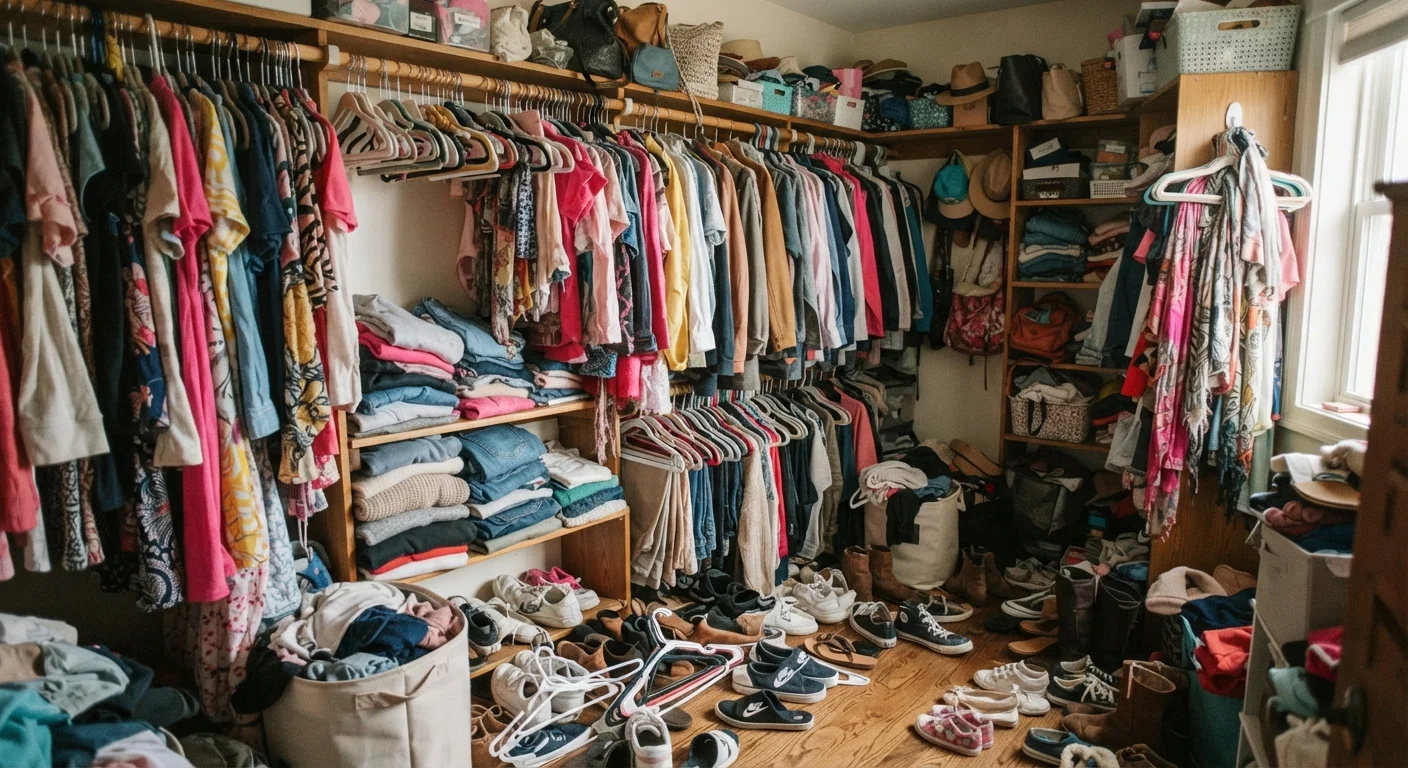
Shopping without checking what you already own.
Why it happens: Wardrobes are often disorganized, making it genuinely difficult to know what's already there. Out of sight means out of mind, especially for seasonal items packed away.
Buying aspirationally rather than for actual lifestyle.
Why it happens: It's easy to picture a version of family life that's slightly more active, formal, or put-together than everyday reality. That mental image drives purchases for occasions that rarely materialize.
Over-purchasing children's clothing due to growth anxiety.
Why it happens: Parents reasonably worry about children outgrowing clothes mid-season, which leads to buying up a size - or several items in the same size 'just in case.' This frequently results in clothes that are either never needed or outgrown before they're worn.
Treating sales as a reason to buy rather than a reason to save.
Why it happens: Promotional pricing creates a psychological sense of urgency and value, making items feel like opportunities rather than expenses. The perceived saving overrides the question of whether the item was needed at all.
Failing to account for items already in the laundry cycle.
Why it happens: When wardrobes are assessed while clothes are in the wash or at the back of the closet, the visible supply looks smaller than it actually is. Purchases made on that basis create redundancy.
Building Habits That Actually Stick
Awareness of these mistakes matters only if it translates into changed behavior. The most effective shift most families can make is introducing a short pause between the impulse to buy and the actual purchase. A 24-hour wait period - applied even to modestly priced items - disrupts the emotional momentum that drives most unnecessary buys.
Online Shopping Makes Impulse Buys Easier
The frictionless nature of online clothing retail - saved payment details, one-click ordering, free returns - removes most of the natural pauses that once slowed impulse buying. Free return policies in particular create a 'try it and decide later' mindset that results in more items arriving at the door than would have been sought out in person. Be especially deliberate when shopping online late in the evening, a period associated with lower decision-making resistance.
A practical pre-shop habit is to do a quick wardrobe count before purchasing any new item in a category. If a child already has seven pairs of pants, the case for buying an eighth needs to be genuinely strong. That sounds obvious, yet it's a step most households skip entirely.
It's also worth noting that clothing over-buying shares psychological roots with other forms of household accumulation. If you recognize similar patterns elsewhere - grooming products that pile up unused are a common parallel - a broader audit of household shopping habits may be worthwhile. The shopping habits that consistently lead to overspending are often the same regardless of category.
For a comprehensive approach to managing clothing across every family member and every season, the complete guide to managing family clothing offers detailed, practical frameworks.