

Key Takeaways
- Brushing covers only about 60% of tooth surfaces, leaving gaps that other tools address.
- Daily flossing removes plaque from spaces a toothbrush physically cannot reach.
- Tongue scraping reduces the bacterial load responsible for bad breath.
- Staying well-hydrated supports saliva production, a key natural defense against tooth decay.
- A consistent, simple routine beats an elaborate one that nobody follows.
Why Brushing Alone Falls Short
Most people brush their teeth twice a day and consider their oral care done. It is a solid foundation - but it is genuinely incomplete. A toothbrush, however good, can only clean the flat and outer surfaces of teeth. The spaces between teeth and along the gumline, where plaque accumulates most dangerously, remain largely untouched.
Dental plaque is a sticky film of bacteria that forms continuously on tooth surfaces. When left undisturbed in hard-to-reach areas, it hardens into tartar within 24 to 72 hours - a form that only professional cleaning can remove. Over time, this buildup is a leading driver of gum disease and cavities, both of which carry costs well beyond the dental chair.
Understanding where brushing ends and where other habits must begin is the first step toward a genuinely protective routine. The good news: the tools and techniques involved are inexpensive and take only a few extra minutes. For families thinking about stretching their household budget, preventing dental problems is among the highest-return health habits available.
~60%
Tooth surface covered by brushing alone
Dental health educators note that interdental and subgingival surfaces are largely inaccessible to a toothbrush.
30%
Adults who floss daily in the US
National surveys on oral health behavior consistently show that most adults brush regularly but far fewer floss daily.
24-72 hrs
Time for plaque to harden into tartar
Once plaque mineralizes into tartar, it can no longer be removed by brushing or flossing and requires professional scaling.
Flossing: The Step Most Families Actually Skip
Flossing is the most frequently skipped element of oral hygiene - and also one of the most clinically supported. The spaces between teeth, known as interproximal areas, account for a significant portion of cavity and gum disease risk. Floss, interdental brushes, or water flossers are currently the primary tools capable of cleaning these zones effectively.
The technique matters as much as the frequency. Simply snapping floss between teeth does little. The correct approach curves the floss around each tooth in a C-shape and slides it gently beneath the gumline, dislodging plaque rather than just popping food debris loose.
Make Flossing Easier to Start
If you struggle to maintain a flossing habit, try attaching it to an existing routine - immediately after brushing at night, for example. Keeping floss visible on the counter rather than in a drawer also reduces the friction that leads to skipping it. Small environmental cues consistently outperform willpower alone.
For children, establishing flossing as part of a supervised routine makes long-term compliance significantly more likely. The age-by-age grooming guide for parents covers when children typically develop the dexterity to floss independently - usually around age eight to ten.
Adults who find traditional floss awkward may find interdental picks or water flossers easier to maintain consistently. The best flossing tool is the one a person will actually use every day.
Tongue Cleaning and Why It Matters
The tongue is a textured surface that harbors a significant concentration of oral bacteria. These bacteria, particularly those that settle in the grooves and folds of the tongue's surface, are a primary source of volatile sulfur compounds - the main chemical drivers of bad breath.
Brushing the tongue with a toothbrush offers some benefit, but a dedicated tongue scraper is generally more effective at removing the soft coating of bacteria and debris. A single pass from back to front, repeated two or three times, takes under thirty seconds.
Scrape your tongue before brushing in the morning, not after - this prevents reintroducing loosened bacteria to freshly cleaned teeth.
Sequencing matters in oral care; removing the tongue's bacterial coating first means brushing captures any residual debris rather than spreading it.
If you floss at night and find your gums bleed consistently after two weeks of daily flossing, mention it to your dentist - it may signal early gum inflammation that warrants a closer look.
Initial bleeding when starting a flossing habit often resolves as gum health improves, but persistent bleeding is worth professional evaluation rather than assumption.
Beyond breath, some research suggests tongue cleaning may modestly reduce overall bacterial load in the mouth, though its direct effect on cavity or gum disease prevention is less established than flossing. Consider it a low-effort, low-cost addition with a clear daily payoff in freshness.
Hydration's Underrated Role in Oral Health
Saliva is one of the body's most underappreciated oral defenses. It neutralizes acids produced by bacteria, washes away food particles, delivers minerals that help remineralize enamel, and contains proteins with antimicrobial properties. When saliva production drops - through dehydration, certain medications, or mouth-breathing - the oral environment becomes significantly more hospitable to harmful bacteria.
Drinking adequate water throughout the day is the simplest way to support healthy saliva flow. Water also physically rinses the mouth after meals, diluting acids and sugars before they can act on tooth enamel.
Medications and Dry Mouth
Hundreds of commonly prescribed medications list dry mouth as a side effect, including antihistamines, antidepressants, and blood pressure medications. If you or a family member takes regular medication and notices increased thirst or mouth dryness, it is worth discussing with a healthcare provider or dentist. Dry mouth management strategies exist and can meaningfully protect oral health.
This is particularly relevant for families monitoring overall wellness through a preventive care lens. Oral health and systemic health are more connected than many people realize - chronic dry mouth, for example, is associated with a notably higher cavity rate.
Mouthwash: Helpful Addition or Marketing Hype?
Mouthwash occupies a complicated place in oral care. It is not a substitute for brushing or flossing - rinsing alone does not remove plaque. However, certain types of mouthwash do offer genuine benefits as a supplementary step.
Fluoride rinses can provide an additional layer of enamel protection, particularly for people at higher cavity risk. Antiseptic rinses containing chlorhexidine are sometimes recommended by dentists for specific gum conditions, though they are generally not intended for everyday long-term use without professional guidance.
Alcohol-Based Mouthwash: A Note of Caution
Some mouthwashes contain relatively high concentrations of alcohol, which can cause dryness and irritation with frequent use - the opposite of what a healthy oral environment needs. People prone to dry mouth or those with sensitive oral tissues may want to seek alcohol-free formulations. Always check with a dentist before adding any therapeutic rinse to a child's routine, as recommendations differ by age.
Cosmetic mouthwashes that primarily freshen breath without an active therapeutic ingredient provide short-term odor masking rather than lasting oral health benefits. Reading labels and understanding what a product actually does - versus what its marketing suggests - is a practical consumer skill here.
For most people, mouthwash is an optional third tier, behind brushing and flossing in order of importance. If budget or time is limited, invest in consistent flossing before adding a rinse to the routine.
Building an Oral Care Routine the Whole Family Will Use
The most effective oral care routine is one that actually gets done. Complexity is the enemy of consistency - elaborate multi-step routines collapse quickly under the pressure of busy family mornings and tired evenings.
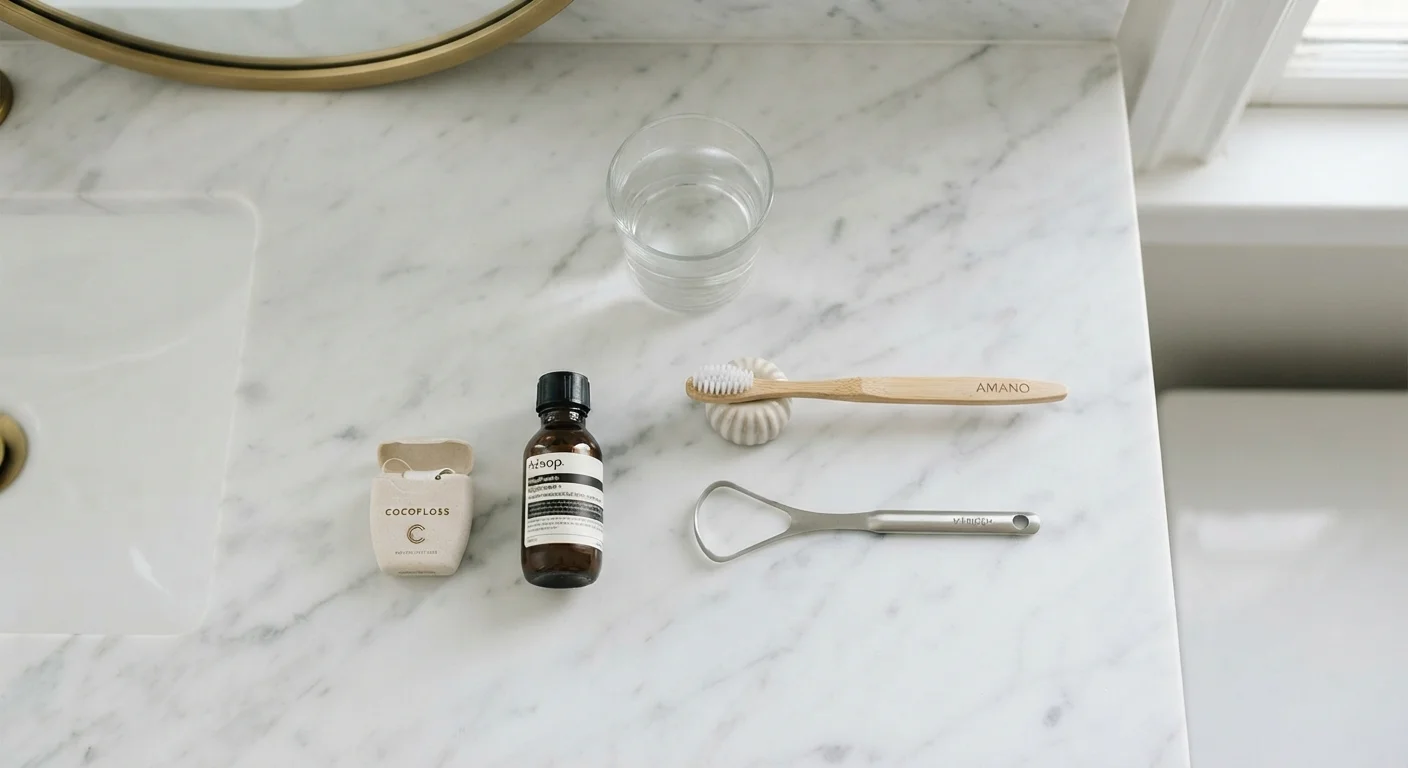
A practical, sustainable approach looks like this: brush for two minutes twice daily, floss once daily (evening works well for most people), scrape the tongue, and drink water regularly. That covers the core bases. Mouthwash can be added based on individual needs or dentist recommendation.
Framing these habits as non-negotiable hygiene - alongside hand-washing and showering - rather than optional extras helps them take root. The family grooming routine guide explores the behavioral mechanics of making habits stick across different ages. For teenagers navigating new routines, a pressure-free approach tends to outperform instruction-heavy enforcement.
Finally, professional dental cleanings every six months remain a critical component that no home routine replaces. Home care and professional care work together - one does not substitute for the other.
This article is for general informational purposes only and does not constitute dental or medical advice. Consult a licensed dentist or healthcare professional for guidance specific to your or your family's oral health needs.