

| First tooth brushing | As soon as the first tooth erupts (American Academy of Pediatric Dentistry guidance) |
| Fluoride toothpaste amount (under 3) | Grain-of-rice smear (Standard dental health guideline) |
| Effective independent brushing age | Around age 6-7 (Based on typical fine motor development) |
| Deodorant introduction window | Ages 8-12 (varies by child) (Aligned with typical adrenarche onset) |
| Recommended dental check-up frequency | Twice yearly (General dental health consensus) |
| Hand-washing duration | At least 20 seconds (CDC hand hygiene recommendations) |
Why Grooming Milestones Matter
Children's grooming isn't just about cleanliness - it's a developmental ladder. Each skill a child masters, from rinsing toothpaste to washing their own hair, builds hand coordination, self-awareness, and the kind of daily discipline that carries into adulthood. Parents who introduce grooming tasks at developmentally appropriate ages tend to encounter less resistance and spend fewer years doing tasks children can eventually handle themselves.
This guide organizes key grooming skills by age range. Think of it as a reference, not a rigid checklist. Children develop at their own pace, and a skill listed under "ages 4-5" may come earlier or later for your child - both are normal. For a household-wide view of keeping routines on track, see the weekly grooming checklist that covers every family member.
| First tooth brushing | As soon as the first tooth erupts (American Academy of Pediatric Dentistry guidance) |
| Fluoride toothpaste amount (under 3) | Grain-of-rice smear (Standard dental health guideline) |
| Effective independent brushing age | Around age 6-7 (Based on typical fine motor development) |
| Deodorant introduction window | Ages 8-12 (varies by child) (Aligned with typical adrenarche onset) |
| Recommended dental check-up frequency | Twice yearly (General dental health consensus) |
| Hand-washing duration | At least 20 seconds (CDC hand hygiene recommendations) |
Ages 1-3: Laying the Foundation
Toddler grooming is almost entirely parent-led, but introducing participation early pays dividends. Key milestones for this stage:
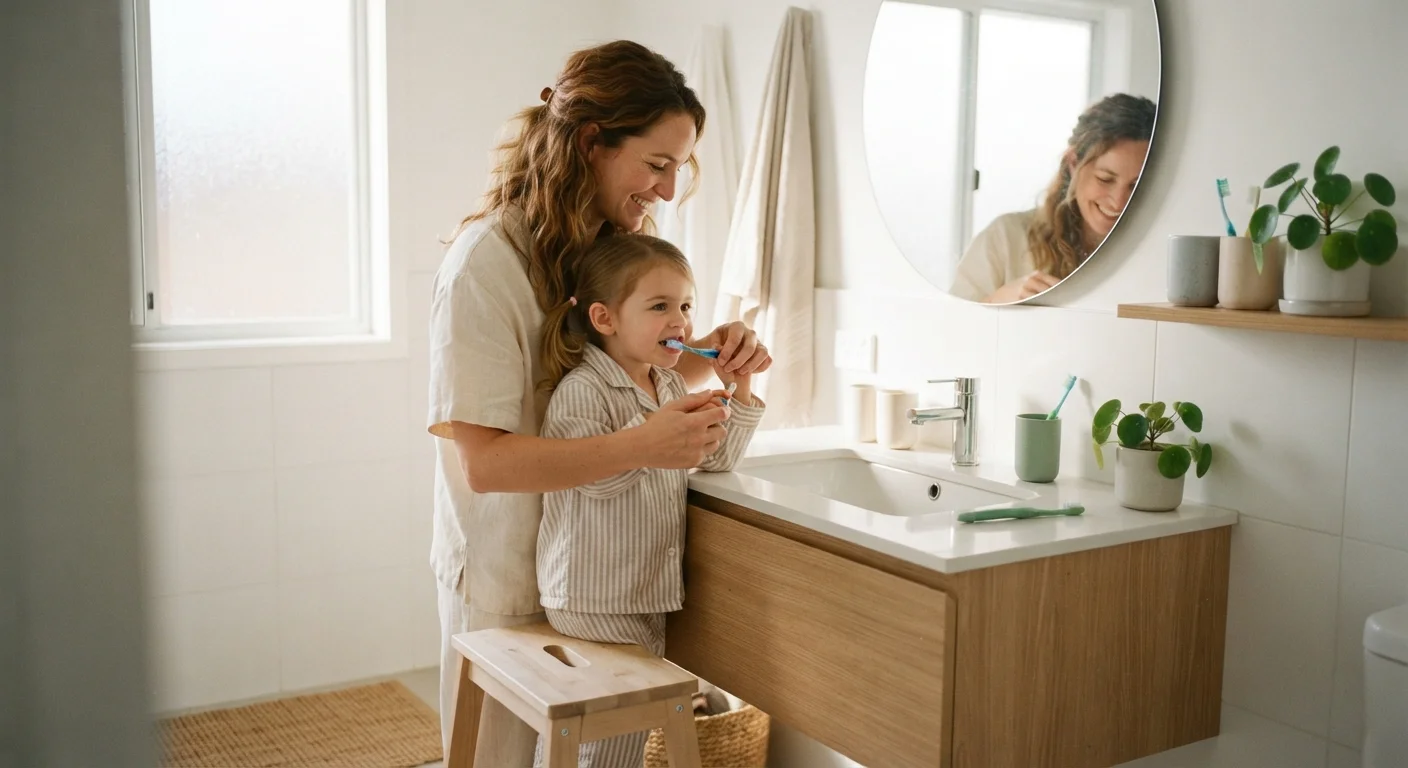
- Tooth brushing: Begin as soon as the first tooth appears. A parent brushes; the child may hold the brush briefly to mimic the motion. Use a smear of fluoride toothpaste (about the size of a grain of rice) as recommended by dental health guidelines.
- Hand washing: Demonstrate the steps - wet, soap, scrub, rinse, dry - and let toddlers practice at the sink with supervision. Song-based timing (roughly 20 seconds) makes the habit stick.
- Hair brushing: Use a wide-tooth comb or soft brush and work gently from ends to roots to minimize tangles and discomfort.
- Bath routine: Parents handle washing, but letting toddlers hold the washcloth and wipe their own face builds early ownership.
At this stage, consistency matters more than perfection. Short, predictable routines reduce fuss.
Adrenarche
The early stage of puberty during which the adrenal glands begin producing androgens, often leading to body odor and oilier skin. It typically occurs between ages 8 and 13.
Fine motor skills
Small muscle movements, particularly in the hands and fingers, that enable precise tasks like brushing teeth, flossing, and using nail clippers. These develop gradually through childhood.
Non-comedogenic
A term used to describe skincare or cosmetic products formulated to avoid blocking pores. Commonly recommended for acne-prone or oily skin types.
Fluoride toothpaste
A toothpaste containing fluoride, a mineral that strengthens tooth enamel and helps prevent cavities. Dental health guidelines specify different amounts by age group.
Ages 4-7: Building Independence
Early school-age children can take on more grooming tasks with light supervision. Expectations for this window:
- Brushing teeth independently: Children around age 6 typically develop enough dexterity to brush effectively, though most dental guidelines suggest parents continue to check or assist until around age 7-8.
- Washing hands without reminders: Reinforce the habit before meals, after outdoor play, and after using the bathroom until it becomes automatic.
- Basic hair care: Children can begin combing or brushing their own hair. Parents may still handle detangling or styling.
- Nail trimming: A parent-led task, but children can learn to identify when nails need trimming and ask for help.
- Body washing in the bath or shower: Guide children to wash their own body with a washcloth or loofah, starting with arms and legs before more thorough independence.
For oral care beyond the brush, the complete oral hygiene picture is worth exploring as children's habits solidify.
Ages 8-12: Toward Full Self-Care
Middle childhood brings more body awareness and the cognitive ability to understand why grooming matters. Milestones to work toward:
- Showering independently: Most children in this range can manage a full shower - washing hair, body, and rinsing - without step-by-step guidance.
- Flossing: Small hands and developing coordination mean flossing often begins reliably in this window. It's a skill worth making a daily habit early.
- Deodorant introduction: Body odor typically begins between ages 8 and 12 as adrenal glands become more active. Introduce a simple, fragrance-minimal deodorant and explain its purpose matter-of-factly.
- Skincare basics: A simple face wash and moisturizer appropriate for children's skin can be introduced, especially for kids prone to dryness or eczema. Always consult a pediatric dermatologist if skin concerns arise.
- Independent nail care: Children can learn to trim fingernails safely with appropriate nail scissors or clippers with supervision.
78%
Children who brush less than twice daily
According to a CDC National Health and Nutrition Examination Survey, a significant share of school-age children do not meet twice-daily brushing guidelines.
Ages 8-13
Typical window for adrenarche onset
Pediatric health literature consistently places the onset of increased body odor and oilier skin within this broad developmental range.
Ages 13+: Teen Routines and Parental Support
Puberty triggers a significant shift in grooming needs - increased oil production, body hair, stronger perspiration, and heightened self-consciousness all converge. The parent's role shifts from instructor to support system.
- Acne management: A gentle, consistent routine - cleanser, non-comedogenic moisturizer, and SPF - is the starting point. Persistent or severe acne warrants a visit to a dermatologist, not just over-the-counter experimentation.
- Hair washing frequency: Oilier scalps may need more frequent washing. Help teens identify their own hair type rather than following blanket rules.
- Shaving: Whether facial or body hair, introduce technique carefully and without pressure. Electric options are often lower-risk for beginners.
- Oral hygiene independence: Teens should manage brushing and flossing entirely on their own, with dental check-ups continuing twice yearly.
Introducing new routines without friction is its own challenge. The pressure-free approach to teen grooming offers practical strategies for navigating this stage. Families watching grooming costs as children's needs expand will also find useful framing in our guide to stretching the grooming budget.
This article is for general informational purposes only. For questions about your child's skin, dental, or developmental health, consult a qualified healthcare professional, pediatrician, or pediatric dermatologist.