

Key Takeaways
- Not every category benefits from the same shopping channel - matching the two reduces regret and wasted trips.
- Return risk, sensory need, and price volatility are the three clearest signals for channel choice.
- A simple pre-purchase checklist can replace guesswork with a repeatable household decision framework.
- Blending channels strategically - researching online, buying in-store, or vice versa - often yields the best outcome.
Why Channel Choice Matters More Than Most Families Realize
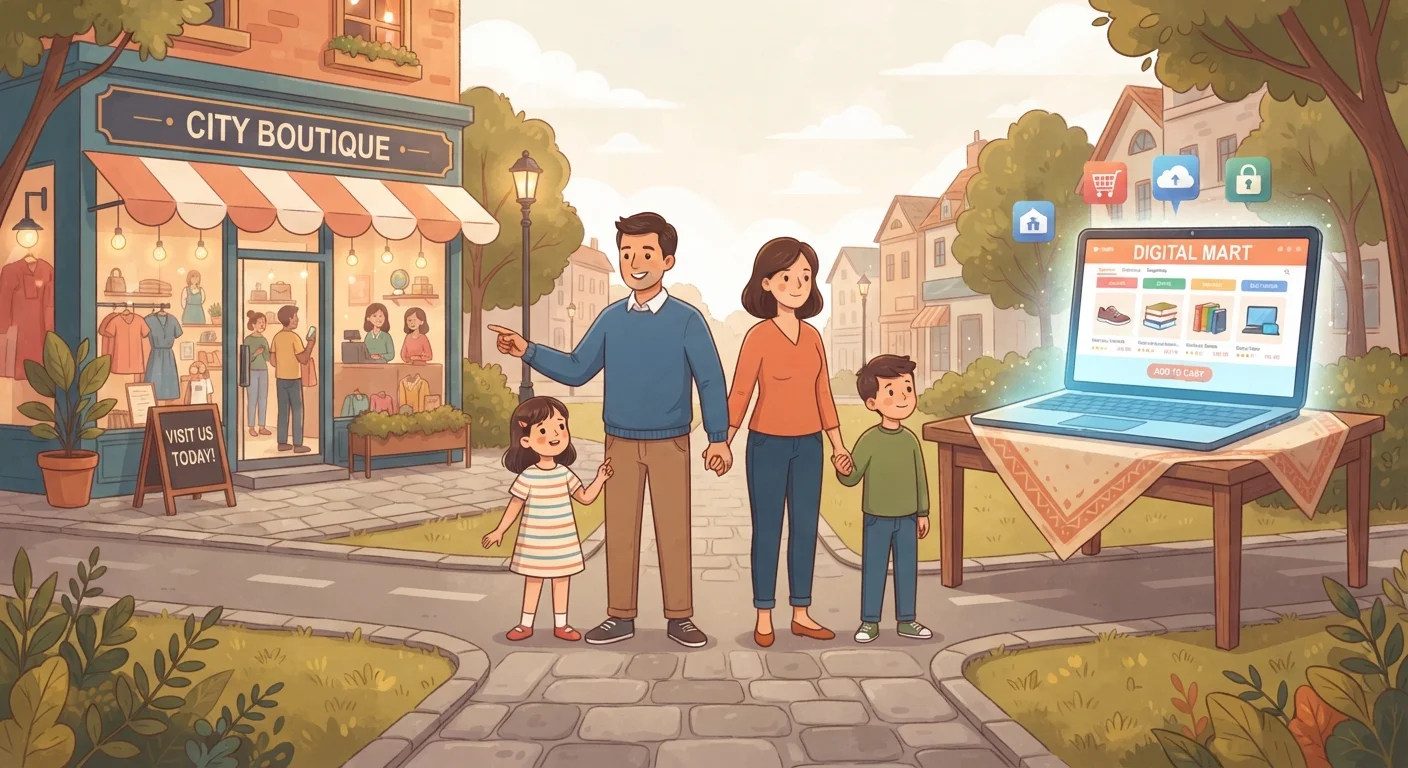
Most households default to habit: groceries in-store, electronics online, everything else wherever is most convenient in the moment. That instinct isn't wrong, but it leaves real value on the table. Channel choice affects not just price but also return ease, product fit, and how much time you actually spend on a purchase.
The full picture on online vs. in-store shopping covers the broad trade-offs between the two channels. This article narrows the focus: how do you build a repeatable system for deciding which channel to use before you buy?
Three questions cut through most of the noise: How important is sensory evaluation? What's the return risk? How volatile is the price? Running any purchase through these three filters takes less than a minute and typically points toward a clear answer.
Assess sensory need before choosing a channel
Products that require touch, fit, or smell - clothing for children, furniture, paint - carry a high return risk when bought online without prior in-store evaluation. Returns cost families time and sometimes money in restocking fees. Routing these purchases through in-store assessment first reduces that friction significantly.
Use price volatility as a channel signal for large purchases
Online prices for electronics and appliances fluctuate frequently and can be tracked with publicly available price-history tools. In-store prices for the same items are often less dynamic. For high-ticket items, checking price history before buying online can reveal whether a posted price reflects genuine value.
Build a short household default list for recurring categories
Decision fatigue compounds across hundreds of annual household purchases. Assigning a default channel to the ten categories you buy most often eliminates repetitive deliberation without sacrificing meaningful savings. The list should be reviewed seasonally, not daily.
Treat in-store visits as research, not just transactions
Showrooming - evaluating a product in-store and then purchasing wherever the channel is more favorable - is a legitimate and widely practiced approach. Retailers are aware of it, and it is not unethical. It allows families to make better-informed decisions without committing to a channel prematurely.
Factor total cost of ownership, not just sticker price
Online prices sometimes appear lower but include shipping, handling, or return-shipping costs that erode the advantage. In-store purchases involve travel time and fuel. Neither channel is universally cheaper - the true comparison requires accounting for all costs associated with the purchase and any potential return.
Categories That Favor Each Channel
Not every product sits neatly in one camp, but most categories lean clearly in one direction once you apply the filters above. Nine specific categories where channel choice makes a measurable difference are worth reviewing alongside this framework.
As a working rule: standardized, replenishable items (paper goods, pet food, household cleaners) almost always reward online purchasing - pricing is transparent and return risk is low. Fit-dependent or high-sensory items (children's shoes, mattresses, paint colors) usually reward in-store purchase, even if the final transaction happens online after a showroom visit.
The needs, wants, and nice-to-haves framework pairs naturally here: higher-stakes purchases justify more deliberate channel selection, while routine replenishment can follow a set-and-forget online approach.
Building a Household Channel Decision Habit
Consistency matters more than optimization on any single purchase. Families that establish a shared mental model - even a rough one - make fewer impulse decisions and fewer return trips.
“The best purchasing decisions aren't made at the point of sale - they're made when you slow down long enough to ask whether this is actually the right context in which to buy.”
— Consumer Decision Research literature, Widely cited principle in behavioral economics of consumer choice
Start with a simple household default list: which five to ten recurring purchase categories will you buy online by default, and which will you default to in-store? Review it once a season. When a purchase falls outside the list, run the three-filter check rather than guessing.
Return policies deserve their own attention in this system. Rules differ sharply between channels and between retailers - understanding return windows and restocking fees before buying prevents expensive surprises. Similarly, seasonal sales work differently by channel, so your default approach may shift temporarily around major sale periods.
For families still building foundational habits, the practical starting point for smart family shopping and finding genuine value across major categories are useful complements to this channel-selection framework.
Channel Choice Is a Starting Point, Not a Rule
No framework eliminates every trade-off. Local availability, household urgency, and individual store policies can all override a general channel preference. Treat your household default list as a time-saving heuristic, not a rigid policy. The goal is fewer regret purchases, not perfect optimization on every transaction.