

| Typical in-store return window | 30-90 days (Common retail industry standard) |
| Typical online return window | 30-60 days (Varies by retailer; marketplace sellers may differ) |
| Common restocking fee range | 10%-25% (Frequently applied to electronics and appliances) |
| Return shipping cost responsibility | Often the buyer's cost for online returns (Unless retailer explicitly covers it) |
| Marketplace seller return rules | Set independently by each seller (May not match the host platform's policy) |
| Categories most likely marked final sale | Clearance, digital goods, personalized items (Standard retail practice across channels) |
Why Return Policies Differ by Channel
Return rules are not uniform - they shift depending on whether you bought in a physical store or through an online channel, and they vary further by product category, retailer, and even the specific seller. Families who assume one retailer's generous policy applies everywhere frequently get caught out.
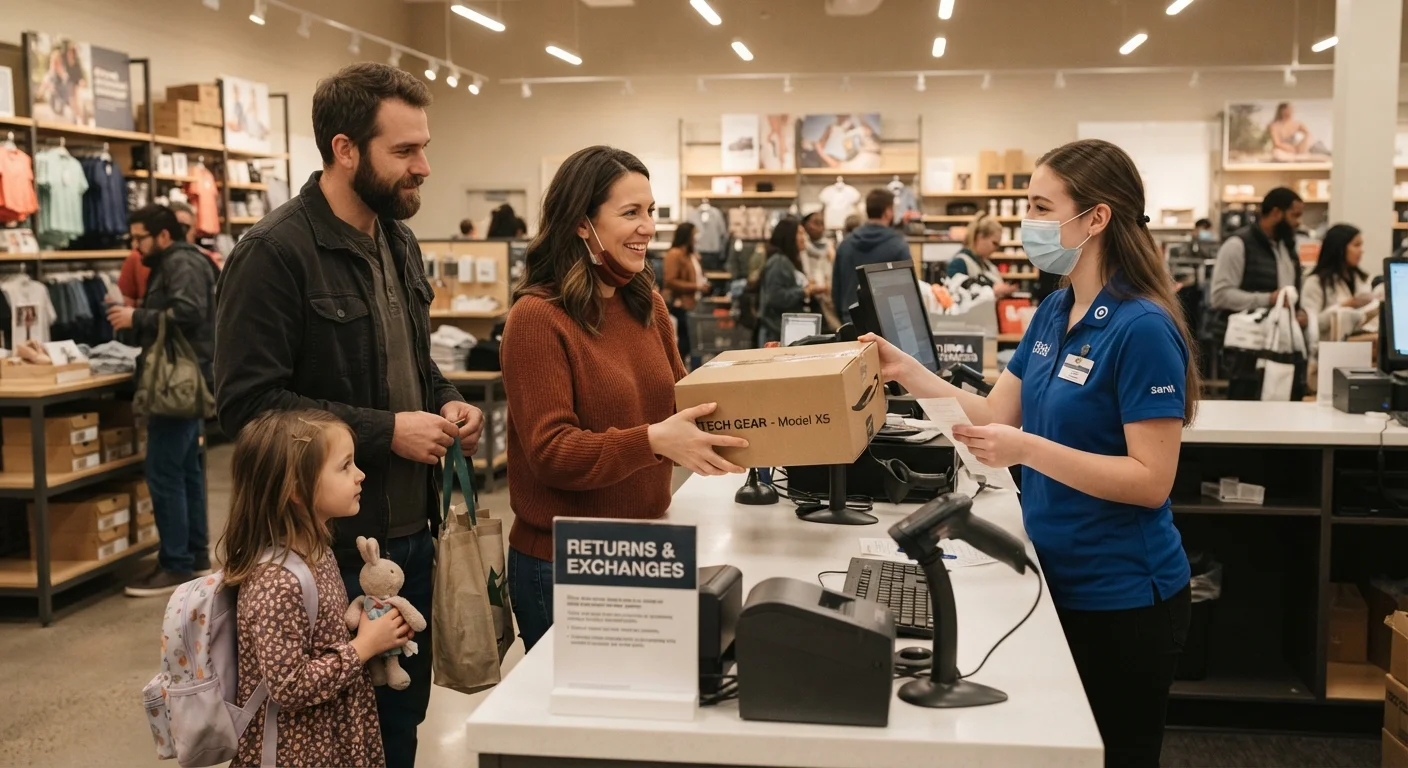
In-store returns tend to be more straightforward: you bring the item back, show a receipt, and the associate processes it on the spot. Online returns introduce added steps - generating a return label, repackaging, dropping off at a carrier or locker, and waiting for the refund to process. That friction matters when you're managing household schedules.
For a broader orientation on how each channel operates, see our family shopping channels guide. Understanding channel mechanics helps you anticipate return friction before it becomes a headache.
| Typical in-store return window | 30-90 days (Common retail industry standard) |
| Typical online return window | 30-60 days (Varies by retailer; marketplace sellers may differ) |
| Common restocking fee range | 10%-25% (Frequently applied to electronics and appliances) |
| Return shipping cost responsibility | Often the buyer's cost for online returns (Unless retailer explicitly covers it) |
| Marketplace seller return rules | Set independently by each seller (May not match the host platform's policy) |
| Categories most likely marked final sale | Clearance, digital goods, personalized items (Standard retail practice across channels) |
Key Policy Differences to Read Before You Buy
These are the specific terms families should locate and compare before completing any significant purchase:
- Return window length: In-store policies often run 30-90 days. Online windows frequently start at 30 days and may be shorter for marketplace sellers. Some retailers offer extended windows during the holiday shopping season - verify whether that applies to your purchase date or the gift recipient's use date.
- Restocking fees: Electronics, large appliances, and opened software are common targets for fees of 10%-25%. These are rarely flagged at checkout and can significantly reduce what you recover on a return.
- Condition requirements: Many policies require original packaging, all accessories, and tags intact. An item returned in non-original condition may be refused or subject to a partial refund.
- Who pays return shipping: For online purchases, return shipping is frequently the buyer's responsibility unless the retailer explicitly offers free returns. Always locate this detail before assuming you can return cost-free.
- Refund method: Retailers may default to store credit rather than returning funds to your original payment method, especially without a receipt. If a cash or card refund matters to you, verify this upfront.
Marketplace Sellers Have Their Own Rules
When you buy from a third-party seller on a major platform, that seller's return policy - not the platform's - usually governs your return. Always check the individual seller's terms before completing a purchase. For a full vetting process, see our step-by-step guide to verifying online sellers.
Categories marked as final sale - including clearance items, digital downloads, and personalized products - are generally non-returnable regardless of channel. Treat any final sale purchase as permanent.
Glossary and Practical Takeaways
Knowing the terminology gives you an accurate read on policy language, which retailers often bury in fine print.
Return Window
The period of time after purchase during which a retailer will accept a return. Windows vary widely - from 14 days to 365 days - depending on the retailer, product category, and purchase channel.
Restocking Fee
A charge deducted from a refund to cover the retailer's cost of processing a returned item. Common on electronics and large appliances, typically ranging from 10% to 25% of the item's price.
Return Merchandise Authorization (RMA)
A code or document issued by an online retailer that must accompany a return shipment. Without a valid RMA, some retailers will reject the package or delay the refund.
Marketplace Seller
A third-party vendor selling through a major retail platform. Their return policies may differ entirely from the platform's own policies, which can catch shoppers off guard.
Final Sale
A purchase condition indicating the item cannot be returned or exchanged under any circumstance. Often applies to clearance items, digital downloads, and personalized goods.
Store Credit
A refund issued as in-store credit rather than back to the original payment method. Some retailers default to this, especially for returns without a receipt.
Before purchasing anything a family member might need to return - clothing in uncertain sizes, electronics that need testing, or gifts - run through these checks: confirm the return window, ask whether restocking fees apply, determine who covers return shipping for online orders, and establish what refund method the retailer uses by default.
For a full view of how shopping decisions across channels connect to your household budget, explore our end-to-end guide for families shopping across channels. And if you're navigating seasonal promotions, our article on where seasonal savings actually live explains how return policy exceptions during sale periods can change your calculus.
~17%
Average retail return rate in the US
According to the National Retail Federation's 2023 annual return rate report.
3x
Higher return rate online vs. in-store
Industry research consistently finds online purchases are returned at significantly higher rates than in-store purchases.