

Key Takeaways
- Online and in-store seasonal sales follow different mechanics - strategy should match the channel.
- End-of-season clearance often delivers deeper discounts than headline shopping events like Black Friday.
- Price history matters more than the sale tag; verify discounts before assuming genuine savings.
- Certain product categories perform better in one channel over the other during sale periods.
- Shipping costs and return restrictions can quietly offset online sale savings.
Our Verdict
Neither online nor in-store shopping consistently wins during seasonal sales - the smarter approach is matching the category and sale type to the right channel. In-store clearance shines for apparel and home goods at season's end, while online channels tend to offer stronger competition on electronics and appliances during major shopping events. The families who come out ahead are those who verify prices before the sale begins and resist urgency-driven decisions.
| Best for | Recommended |
|---|---|
| Families shopping apparel and home goods | In-store end-of-season clearance |
| Electronics and large appliance purchases | Online during major shopping events |
| Shoppers who need flexible returns | In-store purchases with verified return policy |
| Price-conscious buyers who want to compare across channels | Multichannel comparison before committing |
How Seasonal Sales Actually Work
Seasonal sales fall into two broad categories: calendar-driven events (Black Friday, back-to-school, holiday) and inventory-driven clearance (end-of-season markdowns). These operate on fundamentally different logic, and confusing one for the other is a reliable way to overpay.
Calendar events are marketing-coordinated. Retailers set promotional pricing in advance, but the depth of the discount varies enormously by category and by whether a retailer is moving actual excess inventory or simply participating in the cultural moment. Inventory-driven clearance, by contrast, is mechanically motivated - the retailer genuinely needs the shelf space, and prices often drop further the longer merchandise sits. Understanding when prices on common categories typically drop is a foundational skill before engaging with any sale event.
The other structural factor is channel. Online and in-store sales are not mirror images of each other - they differ in how prices are set, how inventory is managed, and how quickly deals change.
| In-Store Clearance | Online Major Sales Events | |
|---|---|---|
| Discount depth | Very deep on end-of-season inventory | Competitive on high-demand electronics |
| Price transparency | Markdown tags visible; history harder to verify | Price history tools available; reference prices manipulable |
| Selection | Limited as season closes | Broad, but popular items sell out quickly |
| Immediate possession | Yes | No - subject to shipping timelines |
| Return experience | Generally straightforward in-person | May require return shipping at buyer's cost |
| Best product categories | Apparel, home goods, seasonal décor | Electronics, appliances, standardized goods |
In-Store: Where Clearance Tends to Win
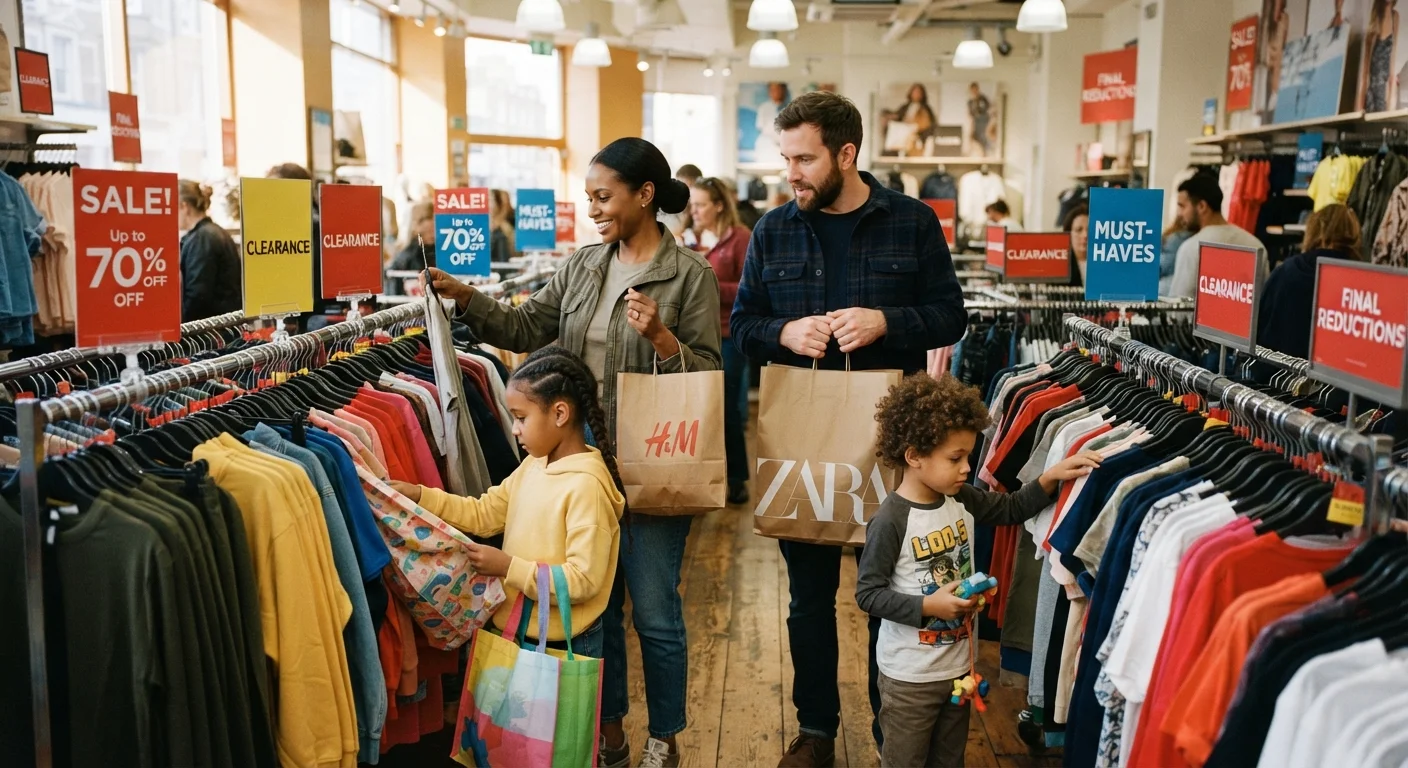
Physical retail clearance - particularly end-of-season apparel, seasonal home goods, and holiday décor - regularly produces the steepest markdowns available anywhere. When a store needs to move a winter coat to make room for spring inventory, the discount motivation is real and structural, not manufactured. Markdowns often progress in waves: an initial 30%, then 50%, then 70% or more as the season closes.
The tradeoff is selection and timing. Deep clearance means limited sizes and styles. Shoppers who can be flexible on specifics - buying next winter's coat at the end of this winter, for instance - are best positioned to take advantage.
Buy Next Season's Gear at This Season's End
End-of-season clearance rewards patient, forward-planning shoppers. Purchasing winter outerwear in late February or patio furniture in September typically yields the deepest discounts of the year. The limitation is that popular sizes and colors sell through first - flexibility on style makes this strategy much more effective.
In-store shopping also provides immediate possession and makes returns straightforward. Before any major purchase, it's worth reviewing return policies for both channels, since sale items frequently carry modified return windows regardless of where you buy.
Online: Where Competition Drives Pricing
Online channels perform differently during major shopping events. Because price comparison is frictionless - shoppers can check multiple retailers in seconds - competition among online sellers tends to compress margins on high-demand categories, particularly consumer electronics and appliances. This is where online sales often deliver genuine value that in-store cannot easily match.
However, online sales come with costs that aren't always visible in the headline price. Shipping fees, handling charges, and return-shipping requirements can meaningfully reduce actual savings. Free shipping thresholds and slow delivery windows are worth scrutinizing before checkout.
There's also the price history problem. Online retailers can and do adjust reference prices before sale events, making a modest discount appear larger. Sale prices are not always lower than usual - browser extensions that track price history across major platforms can verify whether a deal is real before you commit.
~36%
Online shoppers who check prices across multiple sites
Consumer research consistently finds that a significant share of online shoppers compare prices across at least three retailers before purchasing during major sale events.
60-70%
Typical end-of-season clearance markdown depth
Apparel and seasonal home goods frequently reach 60-70% off original retail during final clearance phases, according to retail industry observations.
Building a Channel Strategy That Works
The families who extract genuine value from seasonal sales treat channel selection as a deliberate decision, not a default. A practical framework: use in-store clearance for categories where fit, feel, and flexibility on style matter (apparel, bedding, cookware); use online channels for categories where specifications are fixed and price comparison is easy (electronics, small appliances, standardized household goods).
For families juggling multiple categories, splitting your shopping between channels intentionally reduces the guesswork. Not every purchase needs to go through the same door.
Finally, the best protection against inflated sale prices is a baseline. Before any major shopping event, note the everyday price of items on your list. Understanding how retailers structure discounts makes it much harder to be misled by a sale tag that's doing more marketing than arithmetic. For a broader view of tactics across categories, see finding genuine value across every major shopping category.