

Key Takeaways
- No single channel wins across all categories - strategic mixing outperforms loyalty to one.
- Online pricing advantages are real but narrower than most families assume after factoring in shipping and returns.
- In-store shopping reduces sizing and fit errors, especially for children's clothing.
- A consistent household shopping routine reduces impulse spending and duplicate purchases.
- Return policies vary significantly by retailer and channel - always verify before buying.
Why the Online vs. In-Store Debate Misses the Point
Most shopping advice frames this as a binary choice - shop online for convenience, shop in-store for certainty. For families managing real budgets across groceries, clothing, electronics, and household supplies, that framing leaves money and time on the table.
The more useful question isn't which channel is better but which channel is better for this specific purchase, today, given our constraints. A family stocking up on shelf-stable pantry items has different needs than one buying school shoes for three kids in different sizes.
Research consistently shows that household purchasing decisions involve multiple touchpoints - a consumer might discover a product in-store, research it online, and complete the purchase through whichever channel offers the best terms at that moment. Families who adopt this fluid approach generally report less buyer's remorse and fewer costly return cycles. For a structured framework on dividing purchases by category, see our channel-splitting guide.
2-3×
Higher return rates for online apparel vs. in-store
Industry logistics data consistently shows online clothing return rates significantly exceed in-store equivalents, especially for children's sizing.
~20-30%
Return cost underestimation by online shoppers
Consumer research suggests families routinely undercount return-related costs - postage, time, and refund delays - when comparing channel prices.
Multiple touchpoints
Average purchase journey for household goods
Most household purchasing decisions involve both online research and physical evaluation before a final channel is chosen, per consumer behavior studies.
Where Each Channel Genuinely Has the Edge
Online advantages worth keeping: Wider selection without geographic constraint, easy price comparison across multiple sellers, subscription or auto-replenishment savings on consumables, and detailed product specifications that often exceed what's on a shelf tag. For bulky, heavy, or low-urgency items - water filters, printer ink, pet food - online ordering reduces labor and often lowers per-unit cost.
In-store advantages worth keeping: Immediate possession (no shipping wait), tactile product evaluation, real-time stock confirmation, and zero shipping-damage risk. For perishables, clothing that requires fit assessment, or any item where texture or color accuracy is critical, physical retail still earns its place. Online size charts have well-documented limitations that translate directly into return freight costs and delays families can avoid entirely by trying before buying.
Use Each Channel at the Right Stage
Research and comparison shopping often work better online, while final evaluation - especially for fit-sensitive or texture-dependent items - often works better in-store. Separating discovery from purchase decisions by channel reduces errors and unnecessary returns.
Pricing: What Families Often Get Wrong
Online list prices are frequently lower - but the all-in cost is what matters. Add shipping fees, expedited delivery upcharges, packaging waste disposal, and the time and cost of returning an unsuitable item, and the gap narrows considerably. Consumer advocacy research indicates that families often underestimate return-related costs by 20-30% when comparing channels.
In-store pricing isn't static either. Clearance cycles, manager discretion on floor models, and loyalty program pricing can produce genuinely lower in-store prices on specific items - particularly apparel, small appliances, and seasonal goods nearing the end of a selling season.
All-In Cost Is What Matters, Not List Price
A lower sticker price online can easily become a higher real cost once shipping, potential return freight, and processing delays are factored in. Always calculate the total cost of acquisition and return before deciding which channel is cheaper for a given purchase. This is especially true for categories with high return rates, such as children's apparel and footwear.
For a category-by-category look at where genuine value lives, the savvy deal-finding guide offers tactics grounded in how real families shop across groceries, electronics, fashion, and more.
Returns, Fit, and Product Discovery
Returns are where the convenience calculus shifts sharply. Online return rates in apparel routinely run two to three times higher than in-store, according to industry logistics data. For families buying children's clothing across multiple age groups, that return overhead compounds quickly - postage, repackaging, and refund processing windows that can stretch 7-14 business days.
Product discovery is equally channel-dependent. Physical browsing allows for serendipitous finds and side-by-side comparison that algorithm-driven online recommendations often suppress in favor of sponsored or high-margin items. However, online review ecosystems - when filtered for verified purchasers and sorted by recency - provide durability and real-world use data that no shelf tag replicates.
Families managing wardrobes across multiple children and adults face compounding sizing complexity. End-to-end family wardrobe planning, including fabric selection and sizing strategy, can reduce the volume of returns that eat into any apparent online savings.
Before buying clothing online for kids, measure against a garment that already fits well - not just the child. Sizing charts vary by brand and country of manufacture, and a confirmed measurement beats a label size every time.
Children's clothing sizing is notoriously inconsistent across manufacturers, and return cycles for ill-fitting items cost families both time and money.
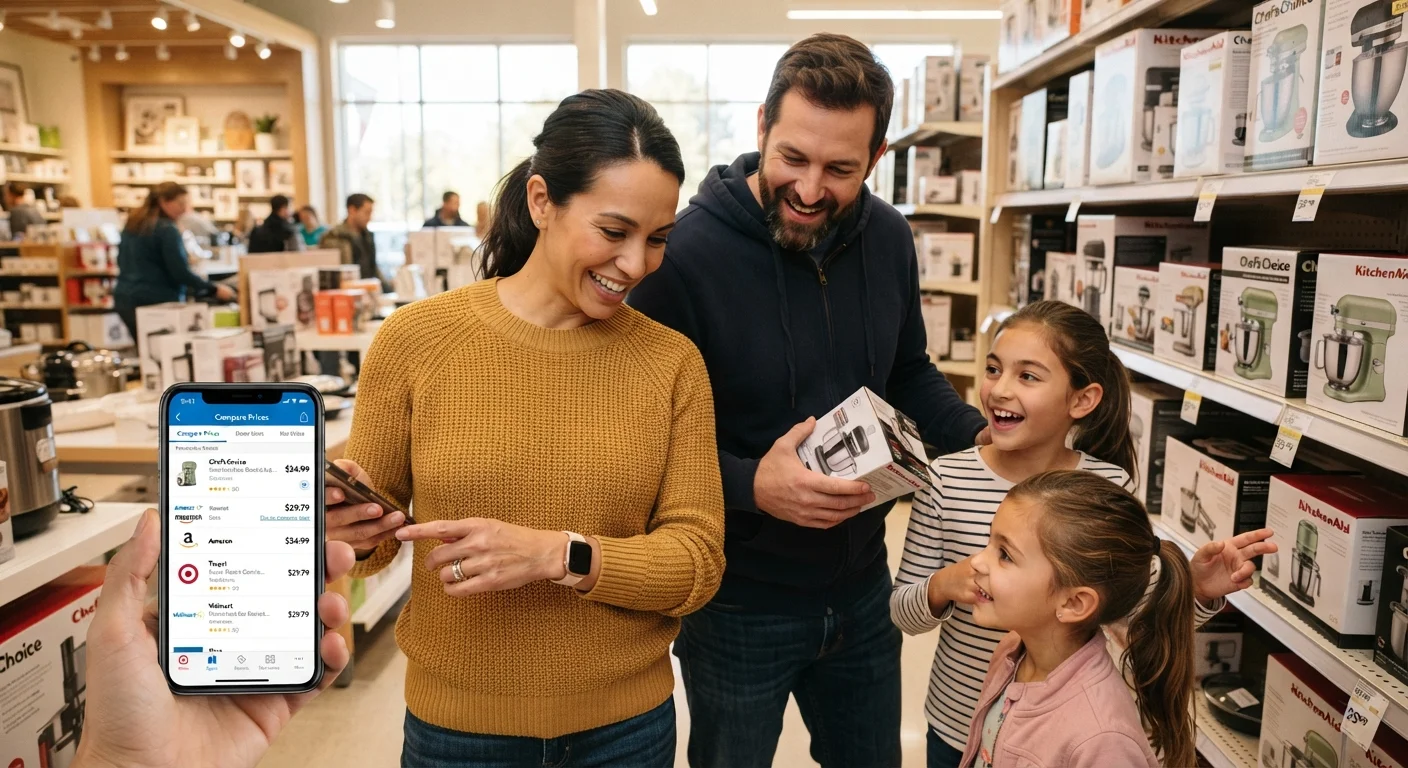
When comparing online and in-store prices for electronics, check whether the in-store version includes a local warranty or setup support that the online listing omits - that support has real dollar value.
Support and warranty terms can meaningfully shift the total cost of ownership for electronics, yet they're rarely factored into a quick price comparison.
Building a Household Shopping System That Works
The families who extract the most consistent value don't rely on deal-hunting instincts - they build repeatable routines. A practical system involves three elements:
- A running household list by category. Segregate consumables (replenish online on cadence), clothing (evaluate in-store first unless fit is already confirmed), and electronics (research online, evaluate in-store, purchase wherever terms are better).
- A return policy log. Before any significant purchase, note the return window, method, and who bears return shipping cost. This takes 90 seconds and prevents expensive surprises.
- A pre-purchase pause for discretionary items. A 48-hour gap between discovery and purchase reduces impulse buying without eliminating genuine needs.
For families also navigating financial products tied to shopping - store credit cards, deferred payment plans, or rewards programs - the financial products hub offers plain-language explanations of what each instrument actually costs and who it serves. The Savvy Deal Finding hub is also a useful ongoing resource as shopping habits evolve across life stages.
This article is for general informational purposes only. It does not constitute financial, legal, or professional advice. Readers should evaluate their own circumstances and consult qualified professionals for decisions specific to their situation.