

Key Takeaways
- No universal sizing standard exists across clothing brands in the US, making cross-brand size comparisons unreliable.
- Size charts measure your body, but they do not account for garment ease, fabric stretch, or cut style.
- Fabric type significantly affects how a garment fits and feels after washing.
- Return policies and detailed product reviews can partially compensate for what size charts miss.
- Taking your own body measurements before shopping online reduces costly return cycles.
Online Size Chart
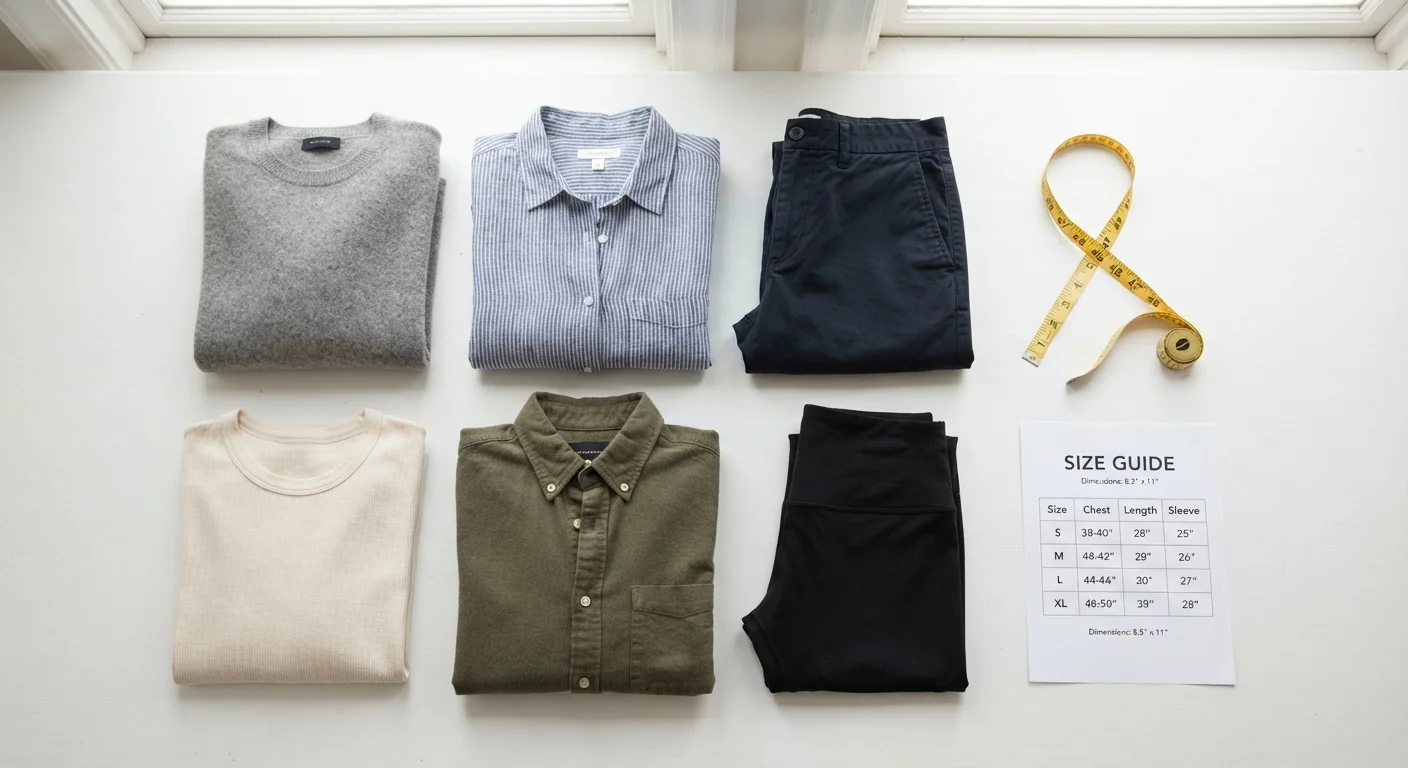
An online size chart is a reference table published by a clothing brand that maps standard size labels - such as S, M, L, or numeric sizes - to body measurements like chest, waist, and hip circumference. Shoppers use these charts to select clothing without trying it on first. However, because there is no universal sizing standard across brands, the same measurements can correspond to different size labels depending on the manufacturer.
Sizing is further complicated by 'ease' - the extra fabric built into a garment beyond your body measurements - and fabric stretch, both of which vary by design and are rarely disclosed on size charts.
Why Size Charts Vary So Dramatically
Walk into any physical store and you know instinctively to try things on. Shopping online strips that option away, leaving most families dependent on a brand's size chart. The problem: those charts are not built on a shared standard.
The US has no mandatory sizing regulation for apparel. Each brand creates its own templates based on internal fit models, target demographics, and design choices. The result is that a size 8 dress from one label can differ by two or more inches in chest or hip measurement from a size 8 at another. This isn't a flaw - it's an intentional design reality. Brands cut clothing for their anticipated customer base, and those bases differ widely.
The broader implication for families is that brand loyalty matters more for sizing predictability than any universal chart. If you consistently wear a large in a brand you've purchased from before, that history is more reliable than a chart measurement from a brand you've never tried.
No standard
Universal US apparel sizing regulation
The US has no federal standard mandating how clothing sizes must correspond to body measurements, leaving each brand to set its own sizing templates.
2+ inches
Typical variation in same-size measurements across brands
Consumer testing has consistently found that garments carrying identical size labels from different brands can differ by two or more inches in key dimensions like chest and hip.
~30%
Online clothing purchase return rate (estimated)
Industry estimates suggest roughly 30% of online clothing purchases are returned, with poor fit cited as the leading reason, according to retail industry research.
What Size Charts Don't Tell You
Even a well-constructed size chart only tells you whether your body measurements fall within the garment's intended range. It doesn't tell you how the garment will actually feel or move on your body. Several factors go unmentioned:
- Ease: Garments are intentionally cut larger than the body they're designed for. The extra room - called 'ease' - varies by style. A relaxed-fit shirt has more ease than a slim-fit shirt in the same size, even when the size label is identical.
- Cut and silhouette: A high-waisted trouser and a mid-rise trouser in the same numeric size sit and fit entirely differently on the body.
- Fabric behavior: Woven fabrics have little to no stretch, while knit fabrics stretch across the body. Two garments sharing the same measurements but different fabric constructions will feel completely different in motion. Understanding fabric types before buying can prevent a lot of guesswork.
- Shrinkage: Cotton and linen can shrink after washing. Buying to your exact measurement in these fabrics often means the first laundering produces a poor fit.
For children especially, these gaps are significant. Sizing up for children is a common strategy, but it only works predictably when the fabric and cut are accounted for alongside the measurement.
How to Use Size Charts More Effectively
The chart itself isn't the problem - using it without additional context is. Here are practical ways to extract more value from the information available:
- Measure yourself or your family member directly before checking any chart. Body measurements in inches give you concrete numbers to compare, rather than relying on a size you've worn before elsewhere.
- Cross-reference multiple measurements. If your chest puts you in a medium but your hips put you in a large, consider which measurement matters most for the garment type - and whether the brand offers different fits (e.g., curvy or athletic).
- Read verified customer reviews with body data. Shoppers who share their height, weight, and the size they ordered are providing real-world fit data the chart can't. Patterns across multiple reviewers are especially reliable.
- Check the fabric content label or product details. A woven cotton shirt with no stretch needs more size buffer than a jersey-knit top in the same measurements.
- Understand the return policy before purchasing. Free, easy returns reduce the risk of a sizing miss. Tight return windows or paid return shipping shift that risk back to the buyer.
Keep a Personal Size Reference Card
Write down each family member's current body measurements and keep the list accessible when shopping online. Update it every six months for growing children. Having actual numbers on hand prevents the habit of defaulting to a familiar size label that may not translate across brands.
Reducing return cycles is one of the more overlooked aspects of managing a family clothing budget. Every return has a time cost even when shipping is free.
Online vs. In-Store: Matching the Channel to the Purchase
Not every clothing purchase carries the same sizing risk. A basic item like a plain cotton T-shirt from a brand you regularly buy carries low risk online. A structured blazer, a pair of fitted jeans, or a garment in an unfamiliar cut from an unfamiliar brand carries substantially more.
Choosing between online and in-store shopping is ultimately about matching the channel to the level of uncertainty in the purchase. For high-stakes fits - formal clothing, uniforms, anything where exact dimensions matter - an in-store trial may save more than any online discount offers.
Families shopping across multiple members and age groups face compounded sizing complexity. A strategy that works for adults doesn't necessarily translate to clothing for growing children or adolescents whose measurements shift quickly. Thinking through the full household picture is part of managing clothing across every age group without accumulating returns and waste.
International Sizing Adds Another Layer
Many online marketplaces stock items from international sellers who use European, UK, or Asian sizing conventions. A European size 40 is not the same as a US size 40, and Asian sizing in many categories runs smaller than US equivalents. Always convert using the specific brand's chart - not a generic international conversion table - when ordering from overseas sellers.
When sizing uncertainty leads to over-ordering or repeated returns, it can quietly contribute to clothing over-buying patterns that inflate household clothing spend over time.