

Key Takeaways
- Price trackers log historical pricing so you can verify whether a sale price is a real reduction.
- They work best for big-ticket, non-perishable items like electronics, appliances, and furniture.
- Trackers cannot detect personalized pricing or real-time inventory shifts.
- A low historical price on a chart does not guarantee the item will reach that level again.
- Combining a tracker with other tactics - like price-matching and cost-per-use analysis - gives a fuller picture of value.
Price Tracking Tool
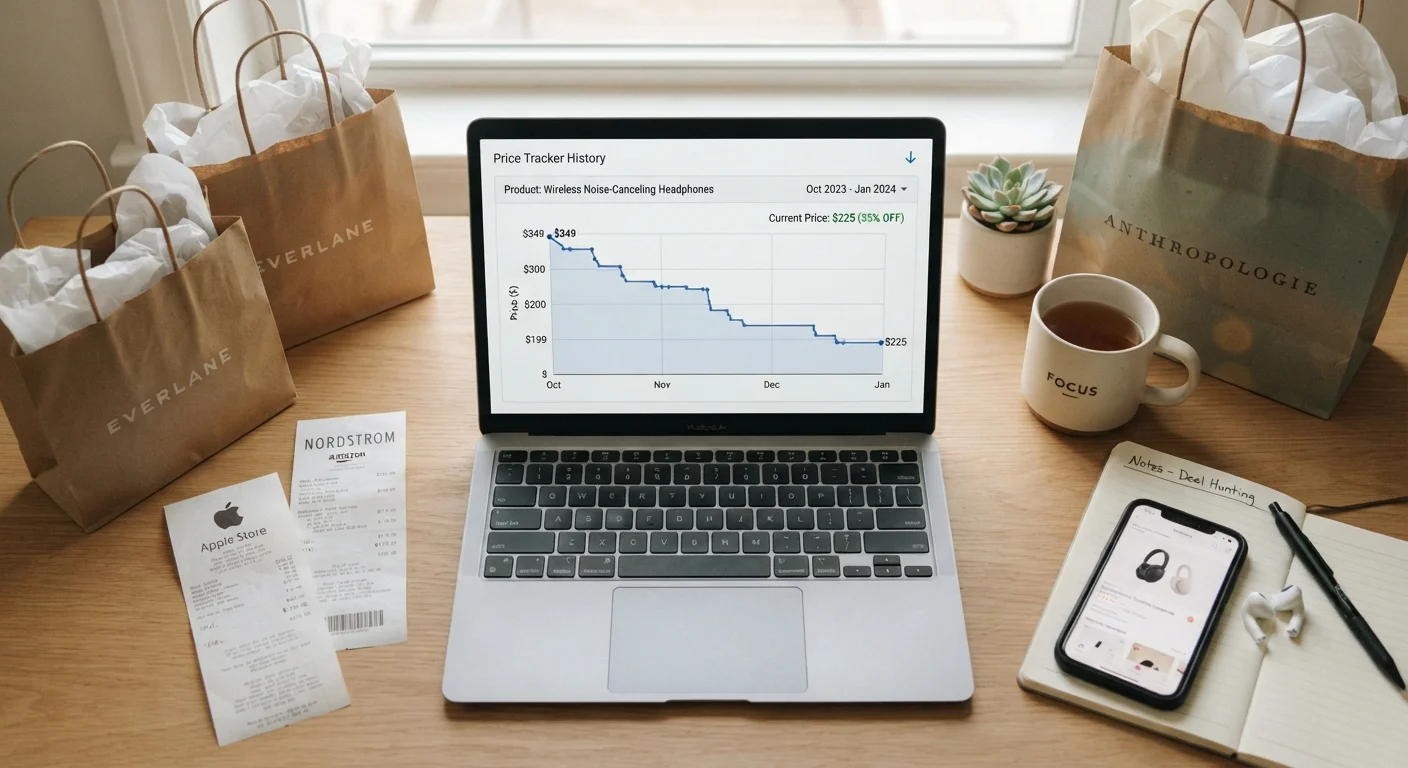
A price tracking tool is a browser extension, website, or app that monitors the selling price of a product over time and logs every change. When you view a product, the tool overlays or displays a chart showing what that item has sold for in the past - days, weeks, or months back. This lets you judge whether today's price is genuinely low or just normal.
Most tools work by scraping publicly listed retail prices at regular intervals - often every 24 hours - and storing the data in a historical database. They do not have access to private, personalized, or dynamically adjusted prices some retailers show to individual users.
How Price Tracking Actually Works
When a retailer lists a product online, that price is publicly visible. Price tracking tools send automated requests to product pages at regular intervals - typically once per day - and record whatever price is shown. Over weeks and months, this builds a timeline you can view as a chart.
When you install a browser extension or visit a tracking site, you're querying that stored database. The tool matches the product you're viewing to its historical record and displays a graph alongside the live listing. You can see at a glance whether the current price sits at a multi-month high, low, or somewhere in between.
This is straightforward and useful - but it's worth understanding what it doesn't capture. Prices shown to logged-in users, prices from flash sales lasting only a few hours, and retailer-specific personalized pricing may not appear in the historical record. The tracker knows what was publicly listed; it doesn't know what any specific shopper was actually charged.
Trackers Capture Public Prices Only
Price tracking tools log what is publicly shown on a product page. They do not capture prices shown exclusively to logged-in accounts, loyalty members, or users identified by browsing behavior. If you suspect you are seeing a personalized price, opening the product page in a private browser window can provide a basic comparison point - though this is not foolproof.
When a Price Tracker Gives You Real Leverage
Trackers deliver the most value in specific circumstances. The clearest use case is high-involvement purchases - electronics, appliances, furniture, fitness equipment - where price volatility is high and the dollar stakes justify a few extra minutes of research.
~23%
Products with inflated pre-sale reference prices
An analysis by consumer advocacy researchers found roughly one in five or more online products carried a reference price that did not reflect the item's typical market price in the weeks prior to a sale.
90 days
Minimum history window recommended for context
Consumer guidance organizations generally suggest at least 90 days of price history before drawing conclusions about whether a current price represents genuine value.
Seasonal sales events are another area where trackers shine. Retailers routinely inflate reference prices before a promotional period, making a modest reduction look dramatic. A price history chart can show you that an item labeled "40% off" has spent the majority of the past year at its so-called sale price. This connects directly to the tactics covered in retail pricing tricks that inflate perceived savings.
Trackers also help with patience-based buying. If you can see that an item dropped to a historical low three months ago and is currently elevated, you have data to decide whether waiting is reasonable - rather than guessing.
Where Trackers Fall Short
Price tracking is not a complete picture of value. A few important limitations apply:
- Personalized pricing: Some retailers adjust prices based on user behavior or device type. A tracker's public-price history won't reflect what you specifically are being shown.
- Short-lived drops: A tracker polling once per day can miss a price that dipped and recovered within hours.
- Coverage gaps: Not every retailer or product category is tracked equally. Niche sellers, marketplace third-party listings, and in-store prices often have incomplete or no data.
- Historical lows aren't guarantees: Seeing a price was lower six months ago tells you nothing about whether it will reach that level again. Supply changes, product discontinuations, and market conditions all intervene.
It's also worth pairing tracker data with a genuine value assessment. A historically low price on something you'll rarely use isn't a saving - it's spending. The cost-per-use framework is a practical companion check: divide the price by realistic uses to see whether the purchase holds up regardless of the discount.
Set an Alert Before You Need to Buy
Many tracking tools let you set a target price and notify you when an item hits it. Setting this alert before urgency sets in - well ahead of when you need the item - removes pressure from the decision. You act when the data says it's reasonable, not when a countdown timer tells you to.
Fitting Price Trackers Into a Broader Shopping Strategy
Used alone, a tracker tells you about price history. Combined with other tactics, it becomes genuinely powerful. Consider layering it with:
- Price-matching policies: If a tracker shows a competing retailer has a lower listed price, you may be able to use a retailer's price-match guarantee to get that price without changing where you shop. Price-matching policies have significant exclusions worth reviewing before you ask.
- Discount anatomy checks: Knowing an item is at a historical low is only half the story. Understanding what constitutes a genuine discount helps you assess whether the retailer's framing is honest.
- Deal aggregator skepticism: Sites that surface deals across the web can complement tracker data, but they carry their own reliability issues. Verify deal aggregator claims before acting on them.
Price tracking is one instrument in a broader toolkit, not a shortcut to certainty. Retailers operate sophisticated pricing systems designed to create urgency and perceived value - a historical chart is one of the few objective counters available to ordinary shoppers. Used with clear expectations, it's a genuinely useful one.