

Key Takeaways
- Habits anchored to existing routines are far more likely to stick than standalone new behaviours.
- Simpler routines tend to outlast complex ones, especially under time or financial pressure.
- Consistency matters more than the quality of any individual grooming session.
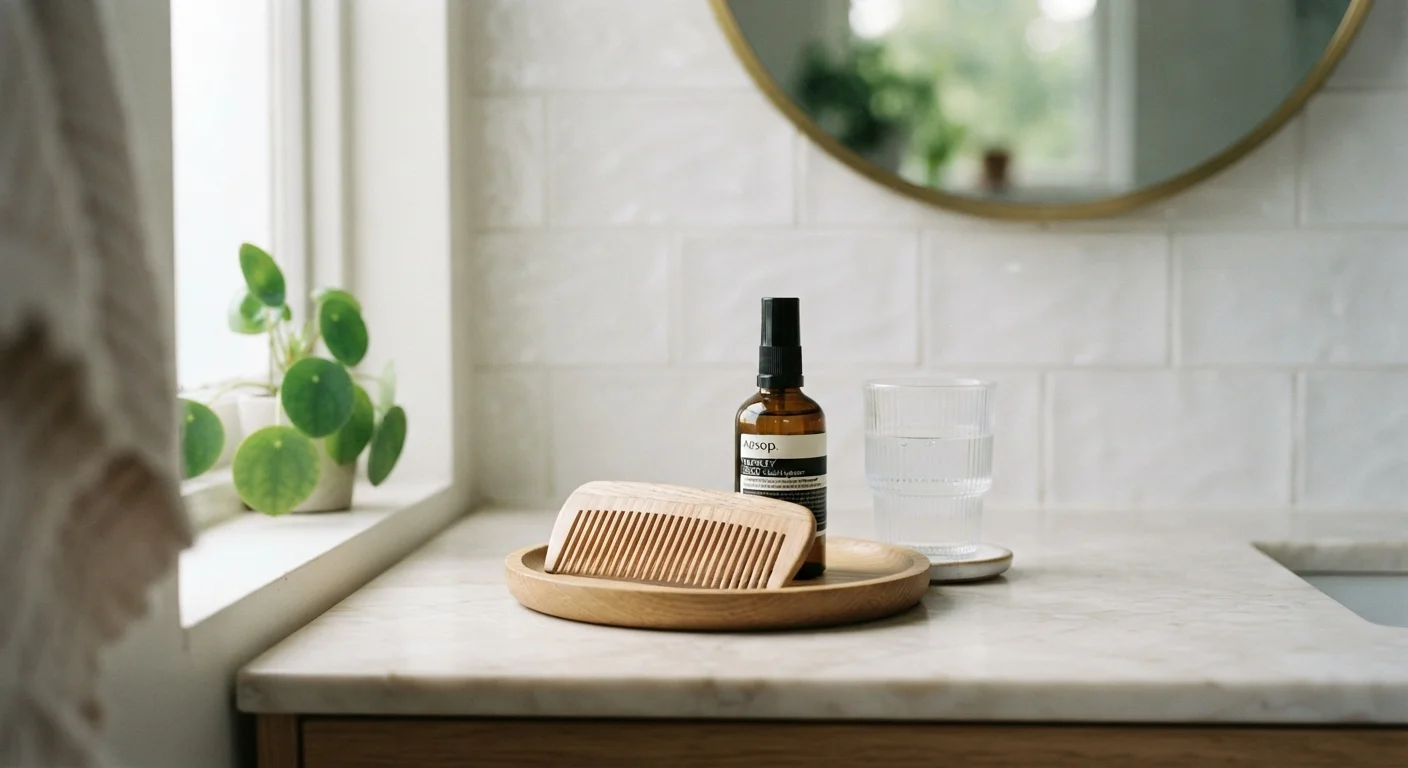
- Environmental cues - like a visible product placement - powerfully reinforce daily follow-through.
- The cost of a habit affects its sustainability; budget-friendly routines face fewer abandonment triggers.
Sustainable Grooming Habit
A sustainable grooming habit is a self-care routine that continues reliably over time without requiring constant willpower, expensive products, or significant disruptions to daily life. It fits naturally into existing schedules, demands minimal friction, and delivers results consistent enough to reinforce the behaviour itself. Unlike elaborate regimens built around novelty, sustainable habits survive the mundane middle ground - busy mornings, tired evenings, and tight budgets.
Behavioural research distinguishes between habits driven by motivation (which fluctuates) and those driven by environmental cues and reward loops - the latter are significantly more durable over time.
Why Most Grooming Routines Don't Survive Contact With Real Life
It's a familiar pattern: a new skincare system arrives, gets used diligently for two weeks, then quietly disappears into a cabinet. Or a multi-step morning routine works brilliantly until the first stressful work week - and never quite recovers. The failure isn't a character flaw. It's a design problem.
Elaborate routines carry a hidden fragility. Each additional step is another point of failure. Each premium product is a future budget decision. The routines most people abandon aren't the ones they dislike - they're the ones that demand too much, too consistently, under real-world conditions.
As our piece on the hidden cost of complicated grooming routines explores, more steps rarely mean proportionally better results. What they reliably mean is more abandonment risk.
Motivation Is Not the Same as a Habit
Feeling motivated to improve your grooming routine is a useful starting point - but motivation fluctuates with stress, sleep, and circumstance. Habits, by design, operate below the level of conscious motivation. The goal of building a sustainable routine is to reduce how much you need to feel like doing it.
The Behavioural Science Behind Habits That Actually Last
Habit formation research consistently points to a three-part loop: a cue that triggers the behaviour, the routine itself, and a reward that reinforces repetition. When grooming habits are built on this structure rather than on motivation alone, they become dramatically more durable.
Cue stacking - attaching a new behaviour to an existing one - is one of the most practical tools available. Flossing after brushing, applying moisturiser immediately after washing your face, or doing a quick scalp check while showering all exploit existing cues. The behaviour becomes linked to a trigger you already perform automatically.
Reward matters too, though it doesn't need to be elaborate. The clean feeling after a simple skincare step, the minor friction removed by keeping a comb on the counter rather than in a drawer - these micro-rewards accumulate into reinforcement. For a deeper look at how individual habits like hair care fit this model, the guidance in hair washing habits that may be working against you is worth reading.
66 days
Average time for a habit to become automatic
According to a study published in the European Journal of Social Psychology by Phillippa Lally and colleagues at University College London.
~40%
Daily behaviours that are habitual, not deliberate
Research published in Personality and Social Psychology Bulletin suggests roughly 40% of daily actions are performed out of habit rather than conscious decision-making.
3x
Likelihood of habit survival with environmental cues
Behavioural studies consistently find that environment-based cues are significantly more effective at sustaining behaviour than motivation or willpower alone.
Simplicity as a Strategic Choice
The most sustainable grooming habit is almost always the simpler one. This isn't settling - it's strategy. A three-step routine completed daily for a year outperforms a ten-step routine completed sporadically for a month, both in terms of results and cost efficiency.
Budget is a sustainability factor that rarely gets discussed openly. When a routine depends on products that feel like a financial stretch, any pressure on household spending creates a natural exit point. Routines built around genuinely affordable products don't carry this vulnerability. Our coverage of grooming budget strategies addresses this directly.
The same logic applies across grooming categories. Oral care habits that involve just one or two additional steps beyond brushing - such as those covered in oral care beyond toothbrushing - are far more likely to persist than complete overhauls of dental hygiene.
Start With One Habit, Not a Routine
Rather than overhauling your entire grooming approach at once, identify one specific behaviour to anchor first. Once it becomes automatic - typically after several weeks of consistency - adding a second becomes significantly easier. Building incrementally is more reliable than restructuring everything at once.
What Durable Routines Look Like in Practice
Durable grooming habits share a few structural features regardless of what they involve. They require minimal decision-making - the product is visible, the sequence is fixed, and the time required is predictable. They fit within time windows that already exist: the two minutes before leaving the house, the five minutes before bed.
They also tend to be transferable. A habit that works during a normal week should survive a travel week, a sick day, or a stretch of particularly demanding family logistics. If stripping a routine down to its essentials still covers the core function - cleanliness, skin protection, dental hygiene - then that core is the sustainable habit. Everything else is optional enhancement.
For families, this transferability extends to other members. The principles that make adult habits stick apply when introducing grooming routines to teenagers - and even to pet care, where a consistent weekly pet grooming routine follows the same cue-based logic that underpins human habit formation.